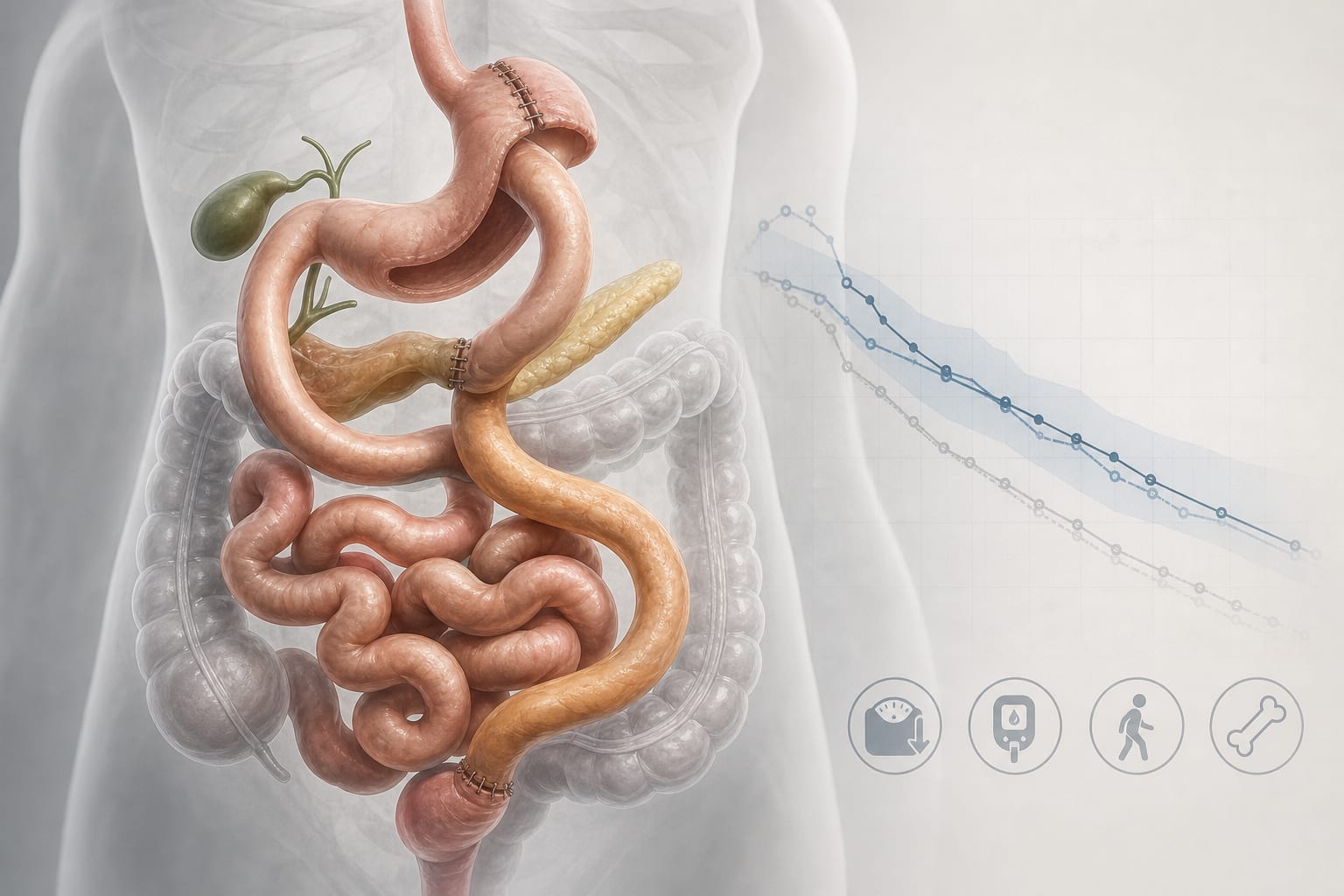
To investigate the effects of sleeve gastrectomy (SG) and truncal vagotomy (TV) on gut microbiota and metabolic outcomes in diet-induced obesity (DIO) mice, specifically focusing on the role of the genus Parabacteroides.
Key Findings:
SG and SG-TV resulted in distinct changes in gut microbiota composition, particularly an increase in the genus Parabacteroides.
The pathway for polyketide sugar unit biosynthesis increased in the SG-TV group.
BW and FBG levels decreased significantly post-surgery, with the SG-TV group showing the lowest BW and FBG at 12 weeks.
Interpretation:
The findings suggest that the vagus nerve and associated gut microbiota may play a significant role in the metabolic benefits observed after bariatric surgery, particularly in weight loss, potentially through mechanisms involving the genus Parabacteroides.
Limitations:
The study was conducted on a small sample size of mice, which may limit the generalizability of the results.
The long-term effects of the observed changes in gut microbiota on health outcomes were not assessed, and further research is needed to explore these implications.
Conclusion:
The study highlights the potential role of the genus Parabacteroides in mediating the beneficial effects of truncal vagotomy-related bariatric surgery on weight loss and metabolic health, suggesting avenues for future research.