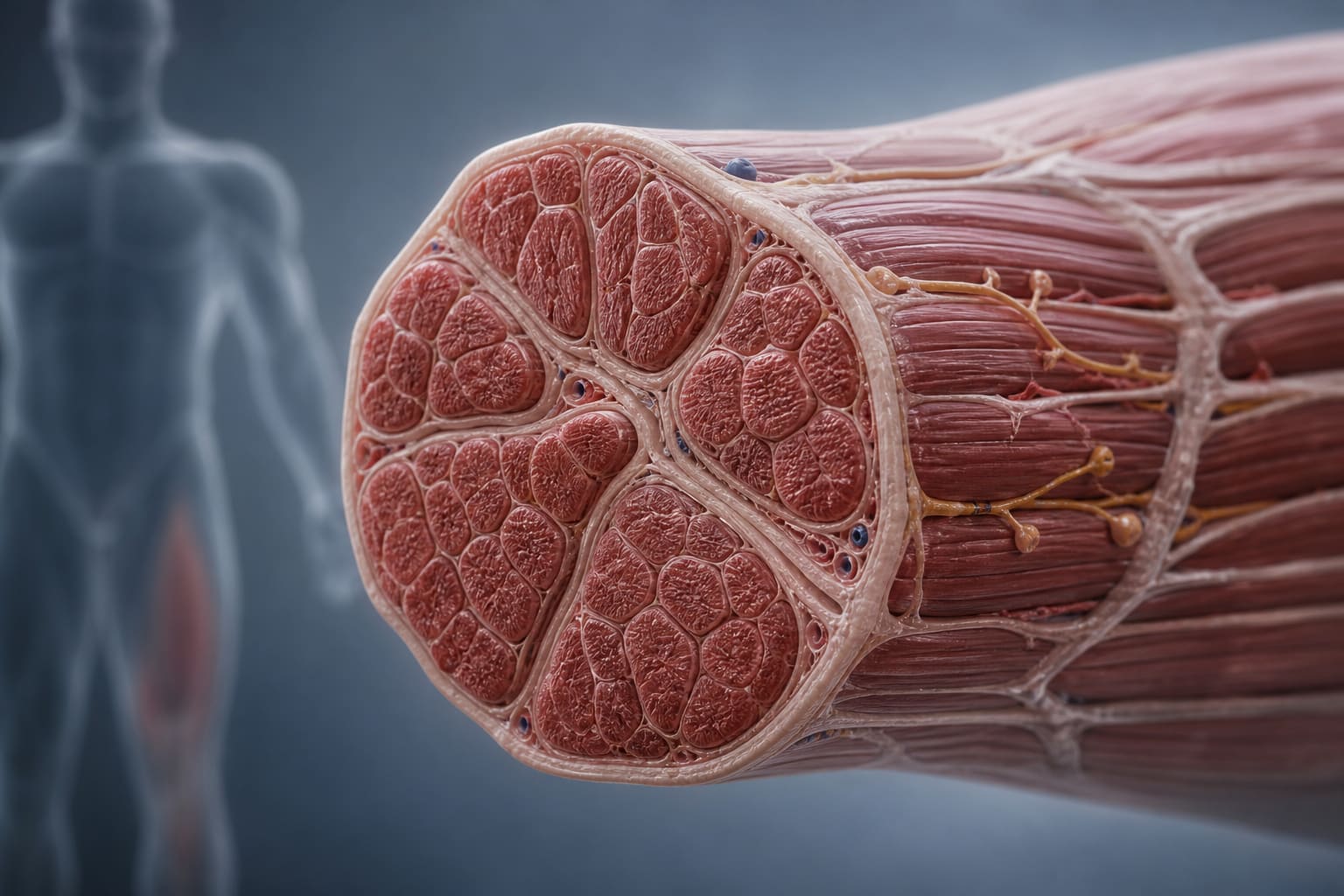
To examine how acute muscle protein synthesis findings after resistance exercise and protein ingestion should be interpreted in ICU survivors, particularly what they establish about the magnitude of the response.
Approach:
Study results reviewed: The letter examines reported fractional synthesis rates (FSR), baseline group differences, post-intervention comparisons, and the study’s measurement methods.
Interpretive concerns: It discusses muscle size and quality, exercise stimulus, biopsy-leg differences, protein dose, and the limits of acute synthesis measurements.
Key Findings:
The reported FSR group-by-time interaction was significant, but survivors had higher baseline FSR followed by convergence; the authors of the letter argue that the change-score difference should not be interpreted as evidence of impairment.
Using intracellular precursor enrichment, neither the interaction nor baseline difference was statistically significant.
The post-intervention comparison was not designed to establish equivalence; no confidence interval or prespecified equivalence margin was reported.
Survivors had lower quadriceps thickness and lower measured concentric and eccentric power than controls, despite similar perceived exertion.
The post-intervention FSR calculation used biopsies from different legs and assumed equivalent baseline values between legs, which were not assessed.
A single exercise bout and protein dose cannot establish a maximal response or define the integrated anabolic response, according to the letter.
Interpretation:
The letter concludes that the data establish neither persistent anabolic resistance nor its absence. Acute FSR measurements alone do not demonstrate preserved muscle capacity, protein balance, or equivalent functional response.
Limitations:
The study measured mixed rather than myofibrillar protein synthesis.
The post-intervention FSR contrast was not designed to assess equivalence; no confidence interval or prespecified equivalence margin was reported.
Exercise was not adjusted to participants’ individual capacity, leaving the relative stimulus across groups uncertain.
Baseline values from the two legs were not assessed despite being used in the rate calculation.
Only one exercise bout and one protein dose were administered, so a maximal response was not established.
Conclusion:
The authors of the letter call for caution in interpreting acute synthesis rates and state that trials using functional endpoints are needed to determine rehabilitation tolerance and benefit.
In a randomized trial, additional imaging increased preventive treatment but did not significantly reduce subsequent myocardial infarction or cardiac mortality over 3 years.