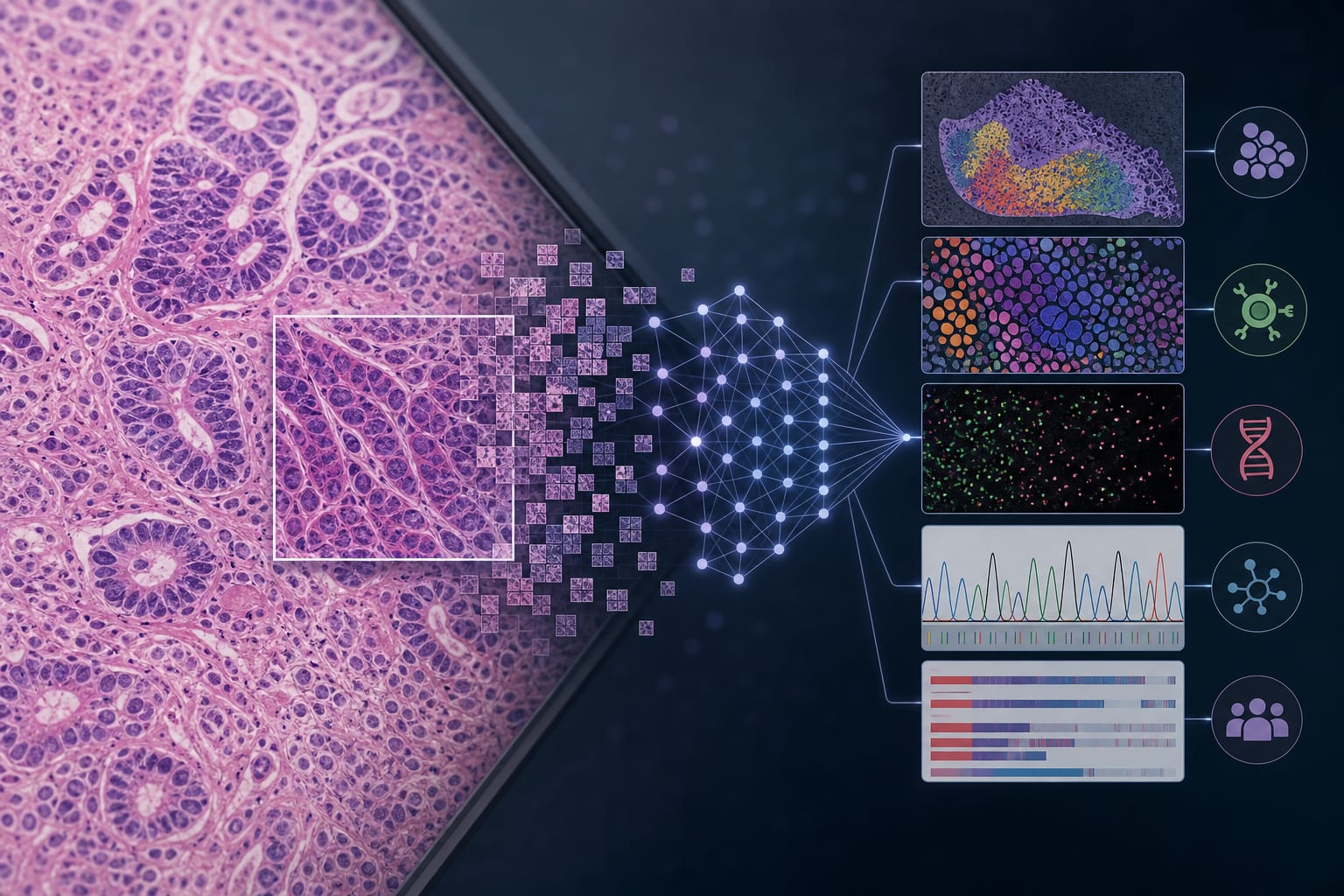
To synthesize recent advances in AI-based whole-slide image analysis for biomarker assessment in gastric cancer, highlighting its potential to enhance precision oncology.
Approach:
Key Findings:
AI models can predict microsatellite instability and Epstein–Barr virus status, serving as prescreening tools, which may streamline the diagnostic process.
Quantitative characterization of the tumor microenvironment is possible through AI, providing prognostic insights that could inform treatment decisions.
Multimodal approaches improve predictive performance for recurrence and treatment responses compared to single-modality methods, indicating a need for integrated diagnostic strategies.
Interpretation:
AI-enabled digital pathology has significant potential for enhancing precision oncology in gastric cancer by improving biomarker assessment and providing deeper insights into tumor biology, ultimately leading to better patient outcomes.
Limitations:
Challenges include model interpretability and variability in performance across datasets, which necessitate further research.
Incomplete data across modalities may hinder effectiveness, highlighting the need for comprehensive data collection strategies.
Conclusion:
AI in gastric cancer is transitioning from generic image classification to biomarker-oriented decision support, complementing traditional methods and paving the way for more personalized treatment approaches.