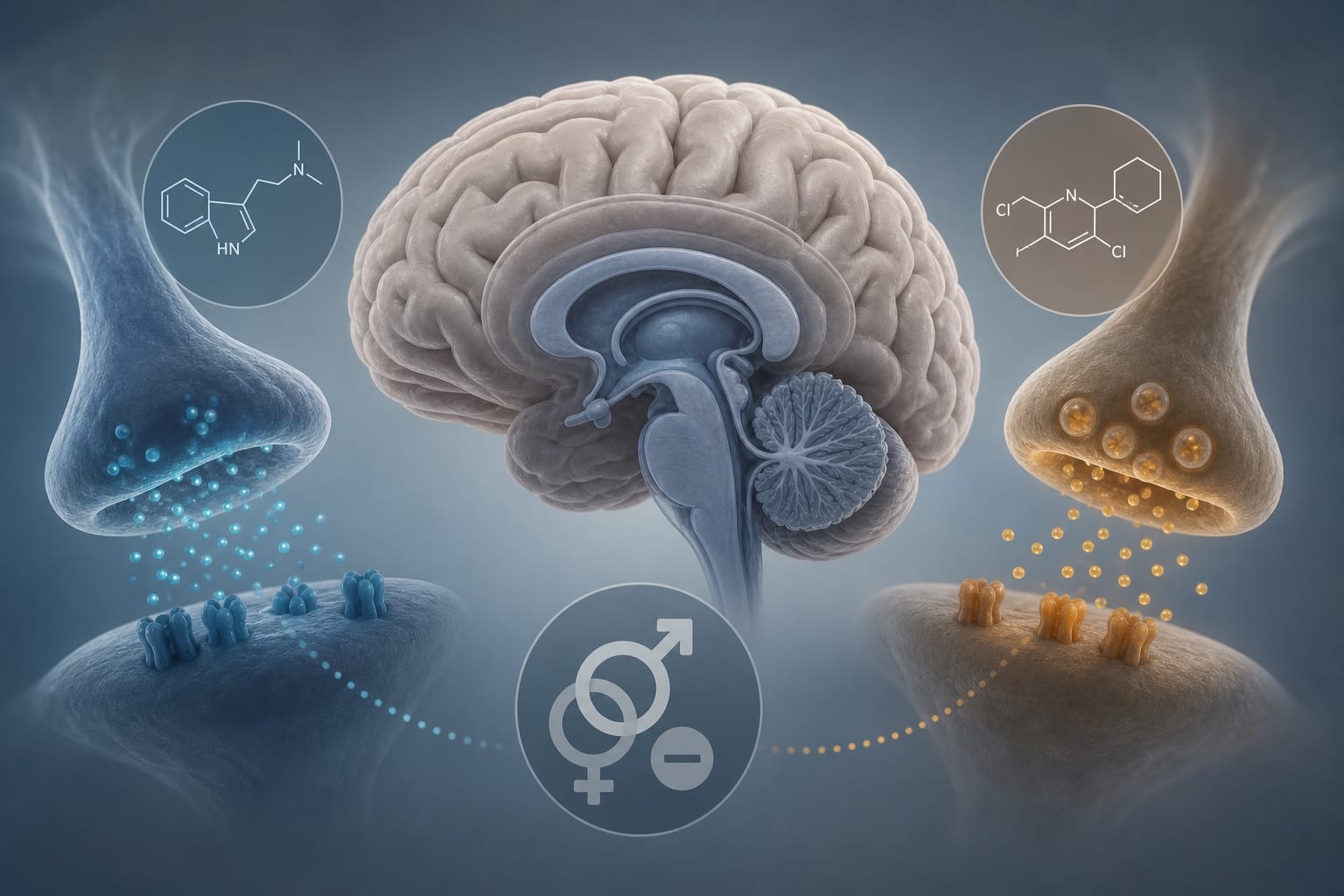
To synthesize available preclinical and clinical evidence on transcranial focused ultrasound stimulation (tFUS) in schizophrenia, focusing on mechanisms, safety, stimulation targets, methodological limitations, and translational challenges.
Approach:
Literature Review: A structured literature search was conducted across PubMed, Web of Science, and PsycINFO to gather evidence on tFUS in schizophrenia, including preclinical and clinical studies.
Key Findings:
tFUS has shown potential in reversing cognitive deficits and preventing psychotic-like behaviors in rodent models, restoring parvalbumin-positive GABAergic interneuron markers in the prefrontal cortex, and upregulating NMDA receptor-related signaling.
Early clinical studies indicate that tFUS is feasible and generally well tolerated in patients with schizophrenia.
Targets for tFUS include the dorsolateral prefrontal cortex for negative symptoms, the globus pallidus/globus pallidus internus for sensory gating-related circuits, and striatal circuits for auditory hallucinations.
Efficacy data from clinical studies remain preliminary and require further investigation.
Interpretation:
Current evidence is insufficient to support definitive clinical conclusions regarding the therapeutic potential of tFUS in schizophrenia.
Limitations:
Bone-conducted auditory confounds may affect blinding.
Incomplete and heterogeneous reporting of stimulation parameters.
Small sample sizes and short follow-up periods.
Limited evidence for durable clinical benefits.
Conclusion:
Larger, well-controlled studies are required to better understand the therapeutic potential of tFUS in schizophrenia.