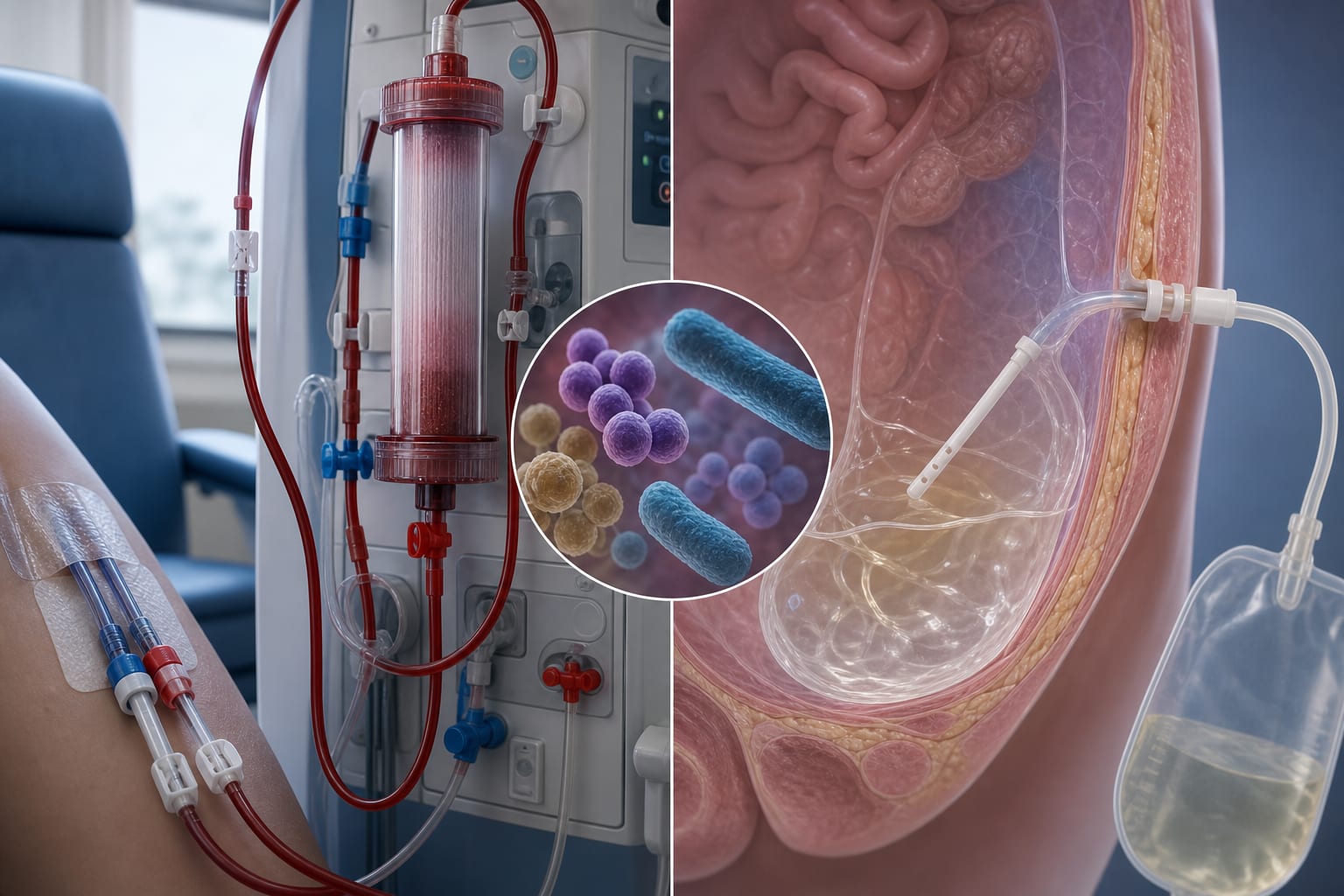
To compare dialysis-related infection prevalence, microbiological profiles, hospitalization events, and biochemical factors between HD and PD patients over a 3-year period in a predominantly Saudi tertiary dialysis cohort.
Approach:
Study Design: Retrospective observational cohort study conducted in the dialysis unit of King Khalid Hospital, Hail region, Saudi Arabia, covering January 2023 to December 2025.
Participants: 267 adult patients with ESRD receiving maintenance dialysis, including 216 HD and 51 PD patients.
Data Collection: Data obtained from dialysis registry, electronic medical records, laboratory information system, and infection-control surveillance database.
Key Findings:
Infection frequency was 18% in HD patients and 9% in PD patients.
HD patients had higher rates of bloodstream infections, primarily catheter-related, while PD patients had higher peritonitis incidence.
Infection-related hospitalization rates were higher in HD patients (12% vs. 6%).
CRP concentrations were higher during infection periods in HD patients.
Staphylococcus aureus was more prevalent in HD, while Staphylococcus epidermidis was more prevalent in PD.
Interpretation:
HD patients experienced a higher infection burden and more severe outcomes compared to PD patients, indicating a need for targeted prevention strategies.
Limitations:
Study conducted in a single tertiary center, which may limit generalizability.
Retrospective design may introduce bias in data collection and interpretation.
Conclusion:
HD patients had higher infection burden and more severe outcomes compared to PD patients, necessitating specific prevention strategies.