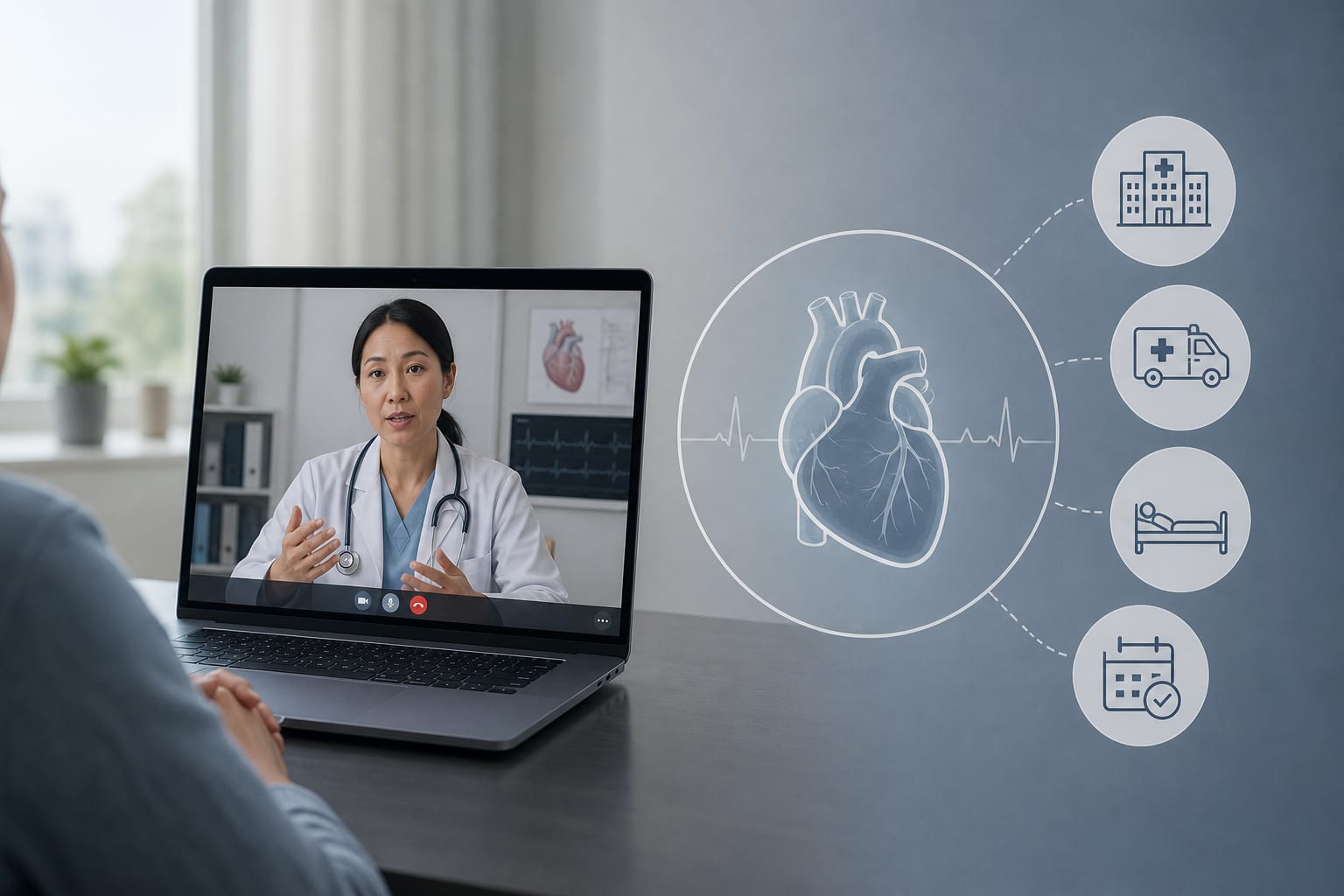
To compare telemedicine and in-person initial cardiology visits for subsequent health care utilization and time to cardiovascular diagnosis among adults referred with undifferentiated symptoms.
Approach:
Design and population: Retrospective study of 5,735 adult Kaiser Permanente Northern California members completing cardiology referrals from June 1, 2020, through May 31, 2022. Initial visits were classified as telemedicine (video or telephone) or in-person.
Analysis: Adjusted logistic regression compared repeat cardiology visits within 90 days, ED visits and hospitalizations within 30 days, and time to cardiovascular diagnosis within 60 days. Analyses were stratified by suspected heart failure, coronary artery disease, and…
Key Findings:
Telemedicine was used by 4,064 patients (70.9%).
After adjustment, telemedicine was associated with lower odds of a repeat cardiology visit within 90 days overall (OR, 0.77; 95% CI, 0.62-0.95).
Among patients with suspected coronary artery disease, telemedicine was associated with lower odds of an ED visit within 30 days (OR, 0.67; 95% CI, 0.46-0.98).
Telemedicine was not associated with hospitalization within 30 days or time to cardiovascular diagnosis within 60 days.
Interpretation:
In this health system, telemedicine visits were associated with fewer repeat cardiology visits and no detected differences in hospitalization or time to diagnosis compared with in-person visits.
Limitations:
Postpandemic follow-up was brief.
Selection bias related to visit-type choice and residual unmeasured confounding were possible.
Telephone and video visits were analyzed together because telephone visits were infrequent.
Conclusion:
Compared with in-person care, telemedicine was associated with fewer repeat cardiology appointments, with no detected difference in follow-up ED visits, all-cause hospitalizations, or time to cardiovascular diagnosis.
by Scott D. Casey, Matthew D. Solomon, Andrew W. Huang, Alan S. Go, Madeline J. Somers, Jie Huang, Andrea K. Millman, Elisha A. Garcia, Deborah Low, Douglas W. Roblin, Mary E. Reed
Incidental pulmonary embolism detection increased following AI deployment on routine contrast-enhanced CT, with the clearest increase occurring in segmental emboli.