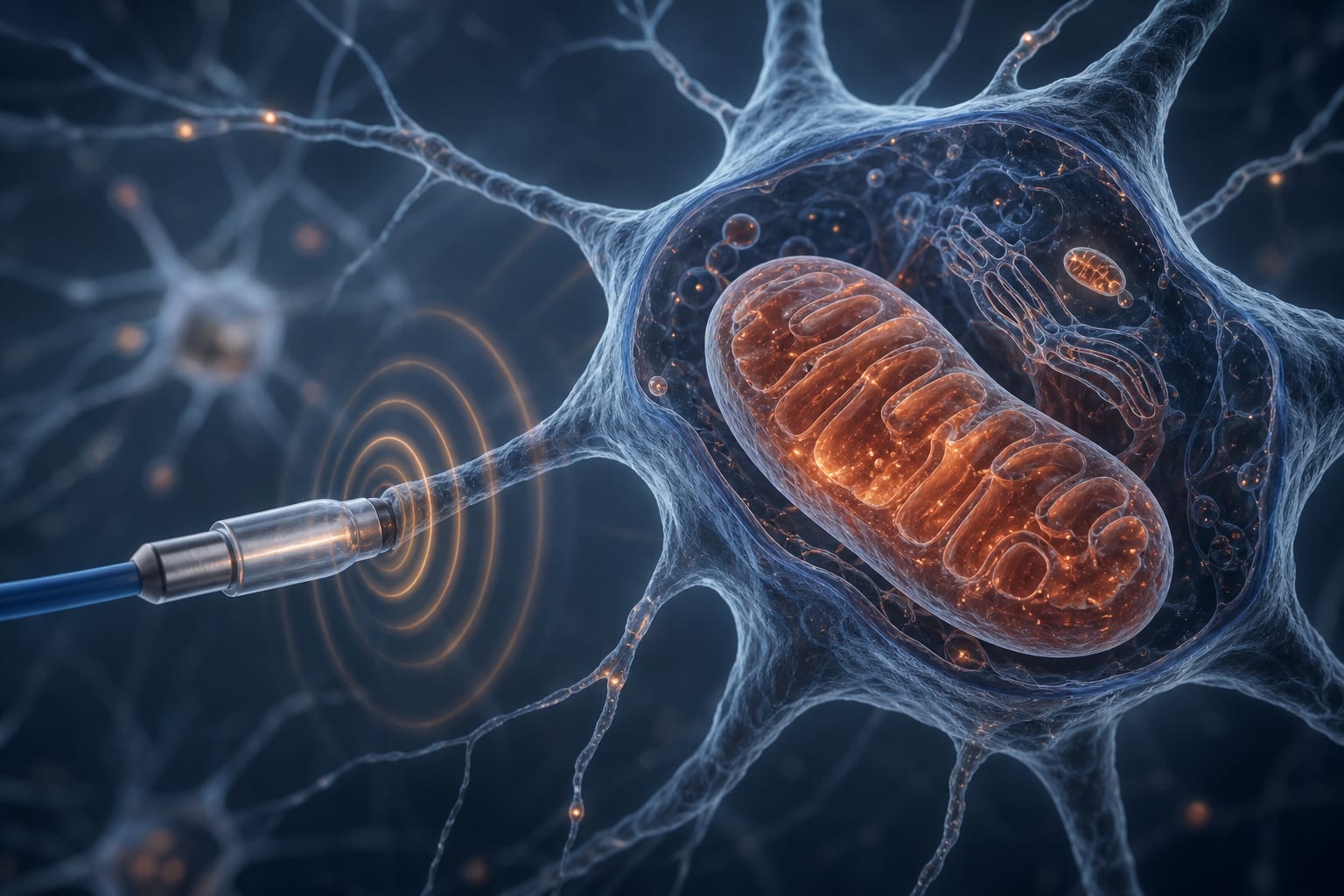
To systematically explore and map the literature investigating the effects of pulsed radiofrequency (PRF) stimulation on mitochondrial function within neurons and the nervous system.
Approach:
Key Findings:
PRF preserves mitochondrial ultrastructure compared to continuous radiofrequency (CRF), which induces severe mitochondrial pathology, including swelling, cristolysis, and necrosis.
PRF decreases mitochondrial membrane potential (ΔΨm) while increasing cytosolic ATP, effectively reversing the bioenergetic profile associated with central sensitization.
PRF treatment is associated with mitochondrial hyperplasia, which may indicate compensatory biogenesis for structural repair.
PRF exerts effects through multiple mitochondrial mechanisms, including an acute analgesic phase mediated by depolarizing the mitochondrial membrane and reducing excitotoxic calcium influx, and a sub-acute neuroregenerative phase bioenergetically supported by the neuro-glial metabolic unit.
Interpretation:
Further exploration into the specific mechanisms by which neuromodulation impacts mitochondrial health and function in neuropathies is warranted.
Limitations:
The review did not prospectively register a protocol.
Exclusion of review articles, case studies, and clinical trial registries may limit the comprehensiveness of the findings.
Conclusion:
Understanding the direct effects of PRF on mitochondrial function is critical to elucidating the biological basis of PRF therapy.
Acidic gum beat sugar-free at cranking out nitric oxide from beetroot juice — exactly backward from what test-tube studies predicted. Also this week: a sleep gene that ignores amyloid, and jackfruit sap moonlighting as a bone-building drug delivery system.