To investigate the level and course of psychological complaints in patients undergoing awake-awake-awake craniotomy for brain tumours, specifically focusing on anxiety, depressive complaints, and PTSD symptoms.
Key Findings:
1 out of 8 patients experienced PTSD symptoms post-surgery, but none met the criteria for PTSD, indicating a low prevalence of severe psychological distress.
Psychological complaints did not increase after awake-awake-awake craniotomy, suggesting the procedure is well-tolerated.
Previous studies indicated similar findings with small sample sizes, highlighting the need for larger studies to confirm these results.
Interpretation:
The findings suggest that awake craniotomy does not significantly contribute to psychological distress, challenging concerns regarding increased anxiety or PTSD symptoms, and supporting its use in clinical practice.
Limitations:
Small sample sizes in previous studies limit generalizability and warrant caution in interpreting results.
The study only included Dutch-speaking patients, which may affect applicability to broader populations and necessitates further research in diverse groups.
Conclusion:
Awake craniotomy appears to be a safe surgical option with no significant increase in psychological complaints post-operatively, reinforcing its viability as a treatment for brain tumours.
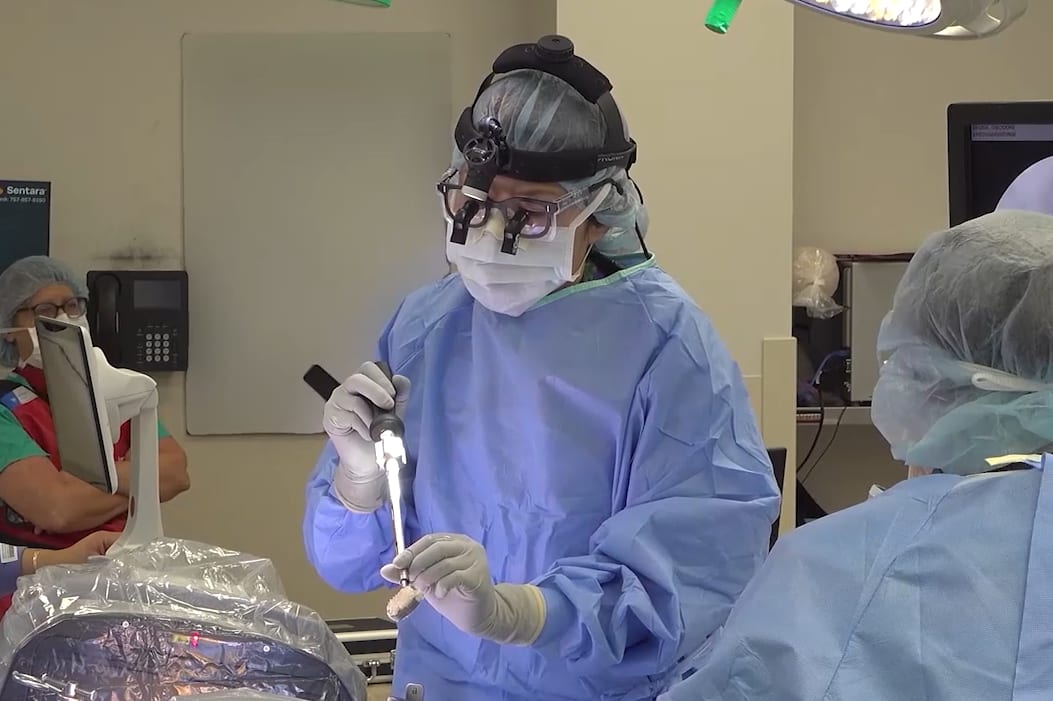
In this procedural case review, vascular surgeon Dr. Samuel Steerman and neurosurgeon Dr. Shannon Clark collaborate to perform an anterior lumbar interbody fusion (ALIF).