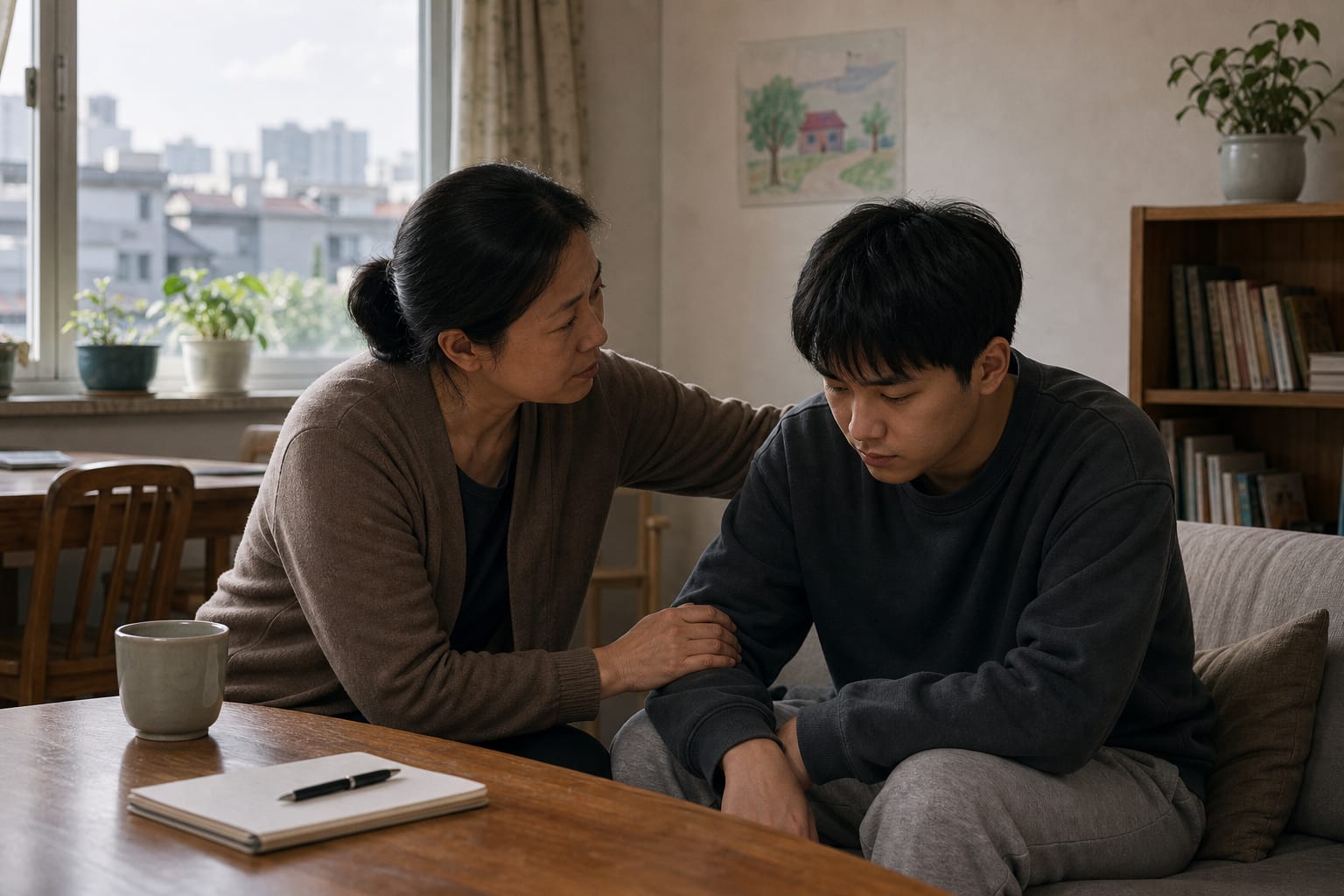
To explore family caregivers’ involvement and adaptive processes in supporting home-based recovery of patients with schizophrenia in China.
Approach:
Study Design: Qualitative study using interpretative phenomenological analysis through semi-structured interviews.
Participants: 20 family caregivers recruited from four community health service centers across urban and rural areas of Beijing.
Data Collection: Interviews were audio-recorded, transcribed verbatim, anonymized, and analyzed iteratively to identify themes.
Key Findings:
Caregivers redefine recovery as stability rather than cure.
Routine involvement includes medication management and symptom monitoring.
Tensions exist between promoting patient independence and preventing relapse.
Caregivers experience family obligation and personal strain.
Uncertainty persists regarding sustaining caregiving and patients’ future stability.
Interpretation:
Family caregivers develop their capacity to support home-based recovery but face complex challenges with limited support from community health service centers.
Limitations:
Study focused on a small sample size of 20 caregivers.
Findings may not be generalizable beyond the specific cultural context of Beijing, China.
Conclusion:
Strengthening recovery-oriented family support within community mental health services may enhance caregivers’ capacity to support patients’ independence and social participation.