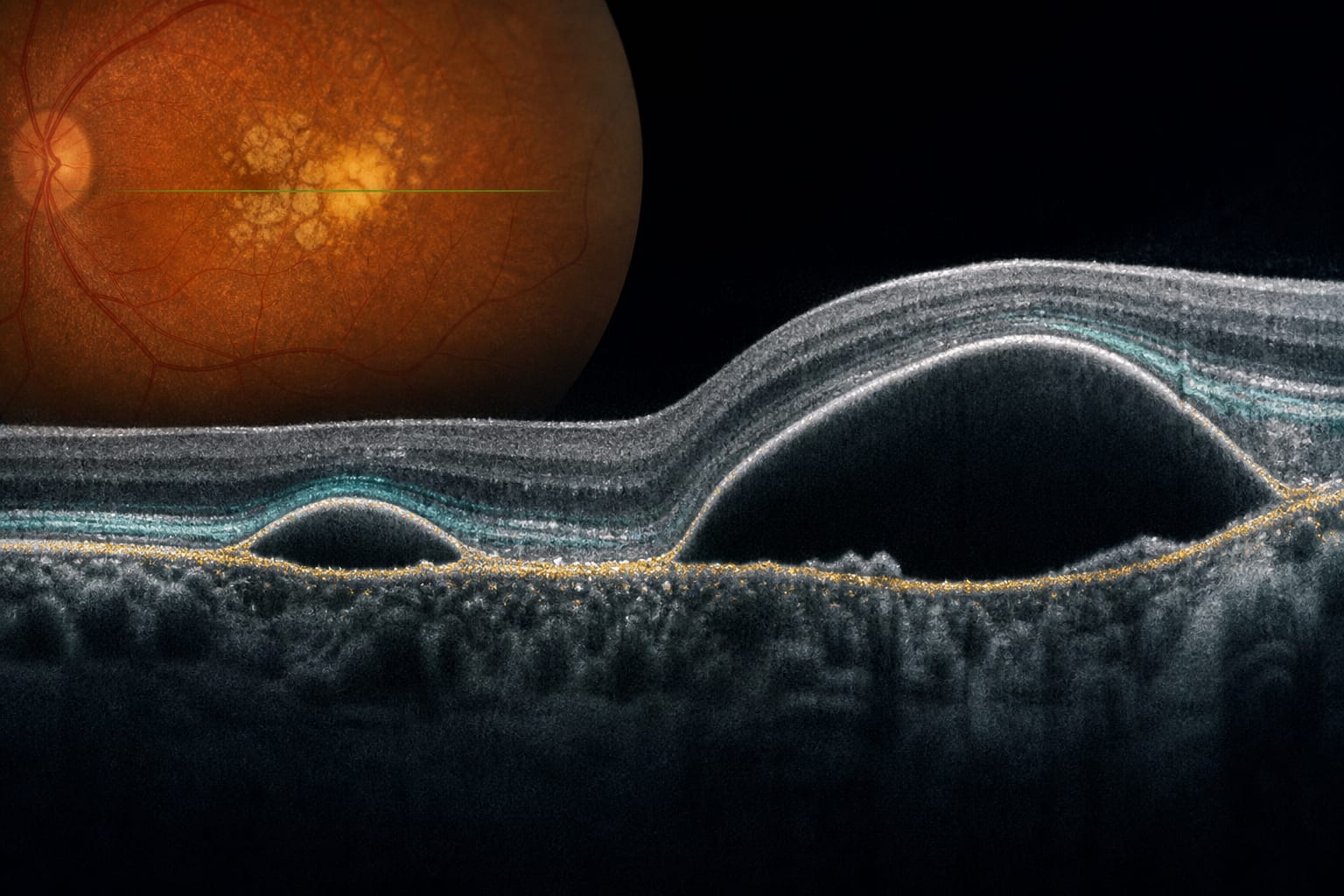
To assess the prevalence and associations of retinal pigment epithelium (RPE) elevations and detachments within a population-based cohort, including participants without maculopathies.
Approach:
Study Design: The Beijing Eye Study, an epidemiological investigation, included participants aged 50 and older from urban and rural areas of Greater Beijing.
Participant Selection: 3468 of 4403 eligible individuals participated, with inclusion criteria focusing on early-stage or intermediate-stage AMD or geographic atrophy.
Ocular Examination: Participants underwent comprehensive ocular examinations, including OCT imaging to assess RPE elevations and detachments.
Classification of RPE Lesions: RPE elevations were classified as shallow elevations (RPEEs) or bullous detachments (RPEDs) based on specific height and basal length criteria.
Statistical Analysis: Prevalence estimates and relationships between RPEE/RPED occurrence and other factors were analyzed using logistic regression.
Key Findings:
The study included 953 eyes from 621 participants with a mean age of 63.3 years.
RPE elevations and detachments were associated with a higher risk of AMD progression.
The study design addressed limitations of previous studies by including a larger cohort and control participants.
Interpretation:
The findings indicate a significant prevalence of RPE elevations and detachments in the studied population.
Limitations:
The study may still have selection bias despite including a broader cohort.
The cross-sectional nature limits causal inferences regarding RPE elevations and AMD progression.
Conclusion:
The study provides insights into the prevalence of RPE elevations and their association with AMD in a population-based cohort.