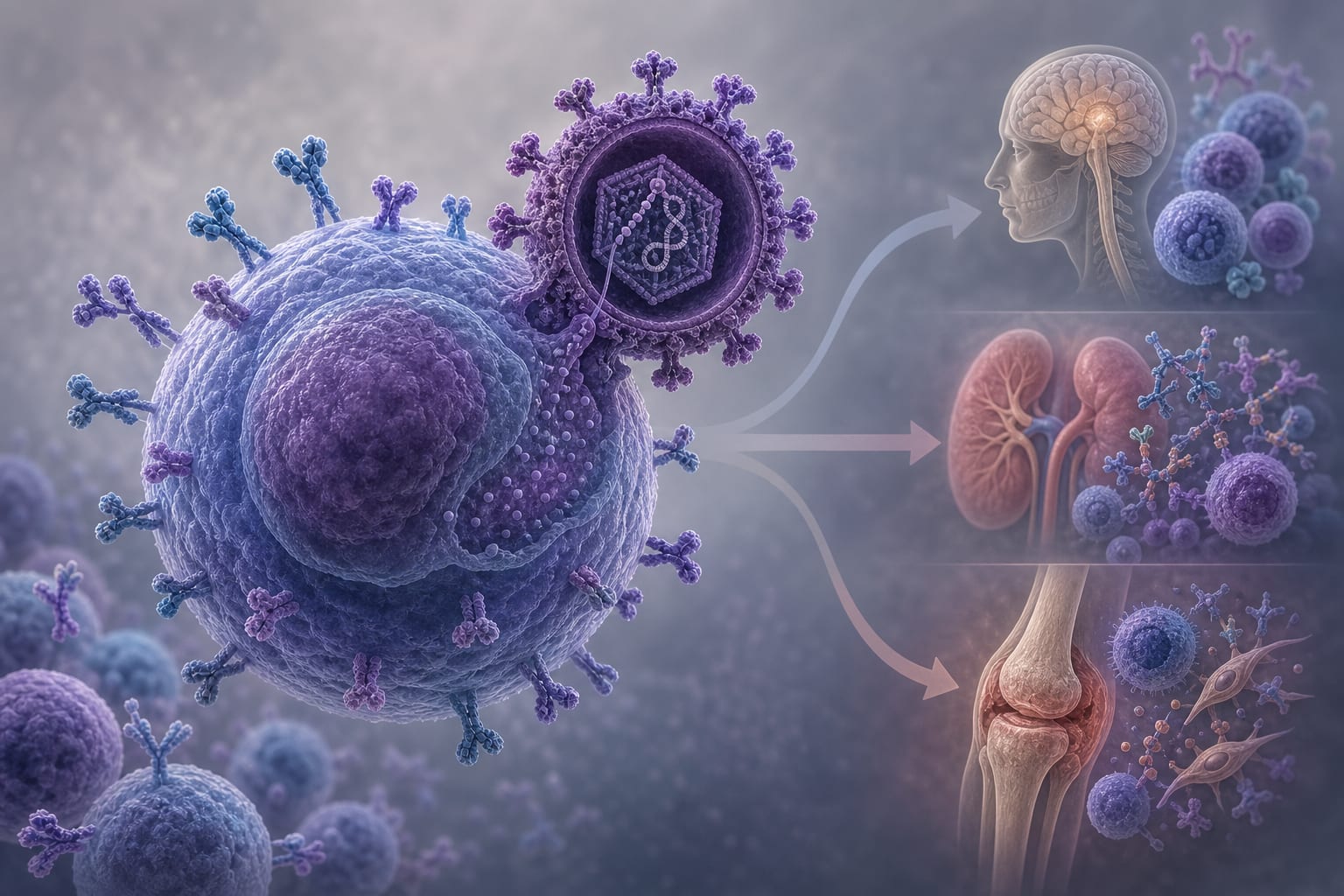
To examine the association between Epstein-Barr virus (EBV) and autoimmune diseases, focusing on shared and disease-specific immunopathogenic pathways.
Approach:
Shared Mechanisms: The article discusses shared mechanisms of EBV in autoimmune diseases, including immune dysfunction triggered by EBV latent proteins, molecular mimicry, infection of autoreactive B-cells, and type 1 interferon (IFN-1) response dysfunction.
Disease-Specific Mechanisms: The review highlights specific mechanisms for multiple sclerosis (MS), systemic lupus erythematosus (SLE), and rheumatoid arthritis (RA) related to EBV.
Key Findings:
EBV is implicated in the pathogenesis of MS, SLE, and RA through various immunological mechanisms.
In MS, EBV is associated with CNS-compartmentalized CD8+ T-cell responses and molecular mimicry with neural antigens.
In SLE, EBV contributes to systemic autoimmunity via mimicry with autoantigens and recurrent viral reactivation.
In RA, EBV promotes synovial ectopic lymphoid structures and enhances anti-citrullinated protein antibody production.
Host genetic variations, particularly in HLA alleles, influence susceptibility to EBV-associated autoimmune diseases.
Interpretation:
EBV's role in autoimmune diseases is influenced by various factors, including the timing of infection and genetic background.
Limitations:
The study does not establish a direct causative relationship between EBV and autoimmune diseases.
The complexity of genetic and environmental factors complicates the understanding of EBV's role in autoimmunity.
Conclusion:
Understanding the mechanisms by which EBV influences autoimmune diseases is crucial for future research.