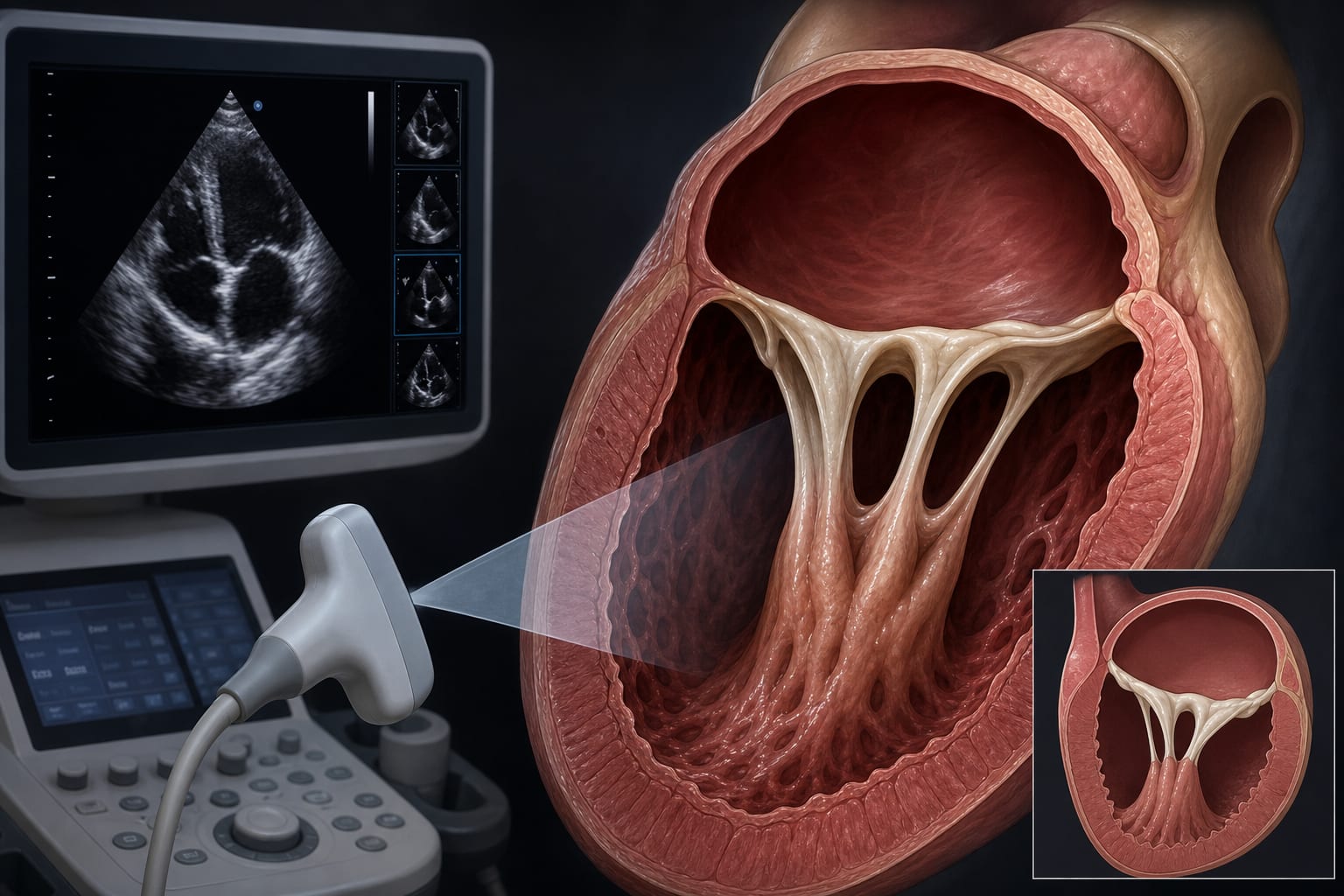
To enhance clinical recognition of a rare congenital defect involving the absence of mitral chordae tendineae and fusion of papillary muscles, which can lead to significant diagnostic challenges.
Key Findings:
TTE revealed severe mitral stenosis, absence of chordae tendineae, and fusion of papillary muscles.
Surgical findings confirmed the echocardiographic diagnosis, showing hypertrophied mitral leaflets directly attached to fused papillary muscles.
Postoperative TTE indicated improved hemodynamics and valve function, with reduced regurgitation.
Interpretation:
The case illustrates the critical role of TTE in diagnosing complex congenital heart anomalies, which can be easily misinterpreted as acquired conditions, potentially delaying appropriate treatment.
Limitations:
The rarity of the condition limits the generalizability of findings and may hinder awareness among clinicians.
Potential for misdiagnosis due to overlapping features with more common valvular diseases, emphasizing the need for thorough echocardiographic evaluation.
Conclusion:
This case underscores the importance of echocardiographic assessment in identifying congenital mitral valve anomalies, facilitating timely surgical intervention and improving patient outcomes.