Analysis of Risk Factors for Heart Failure in Patients with Type 2 Diabetes Mellitus and Acute ST-Segment Elevation Myocardial Infarction after Percutaneous Coronary Intervention - Summary - MDSpire
Advertisement
Analysis of Risk Factors for Heart Failure in Patients with Type 2 Diabetes Mellitus and Acute ST-Segment Elevation Myocardial Infarction after Percutaneous Coronary Intervention
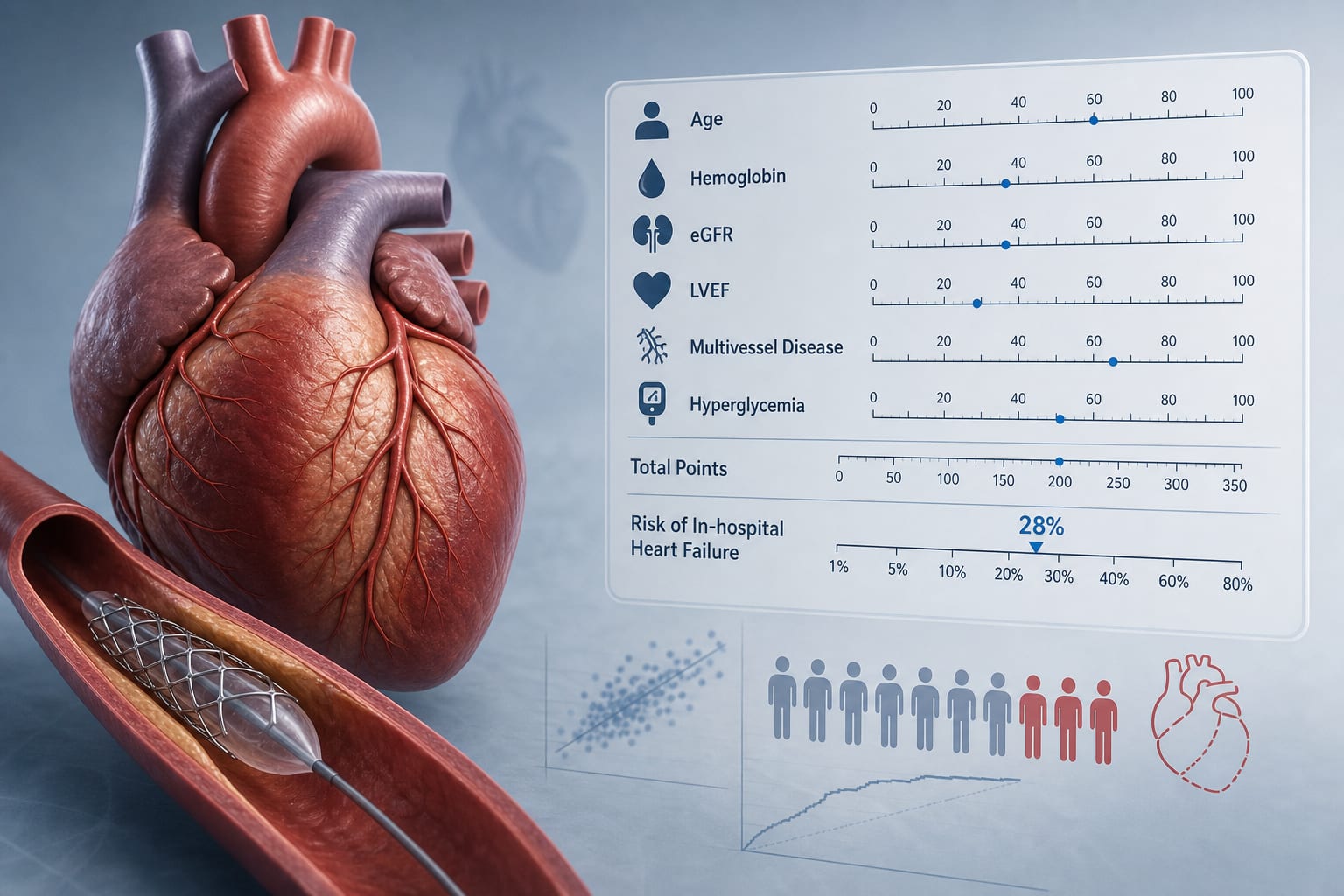
To identify independent risk factors for in-hospital heart failure (HF) in T2DM patients with acute STEMI post-PCI from January 2022 to June 2025 and to create a personalized risk prediction model.
The nomogram showed an AUC of 0.845 and good calibration (P=0.712).
Sensitivity analysis confirmed model stability with no significant multicollinearity (all VIF <1.5).
Interpretation:
The nomogram model effectively predicts in-hospital HF risk in T2DM patients post-PCI, providing a quantitative tool for early detection of high-risk individuals.
Limitations:
Single-center study limits generalizability; external validation required for clinical applicability and to assess performance in diverse populations.
Conclusion:
The nomogram demonstrates strong predictive capability but needs external validation across multiple centers for broader clinical use.