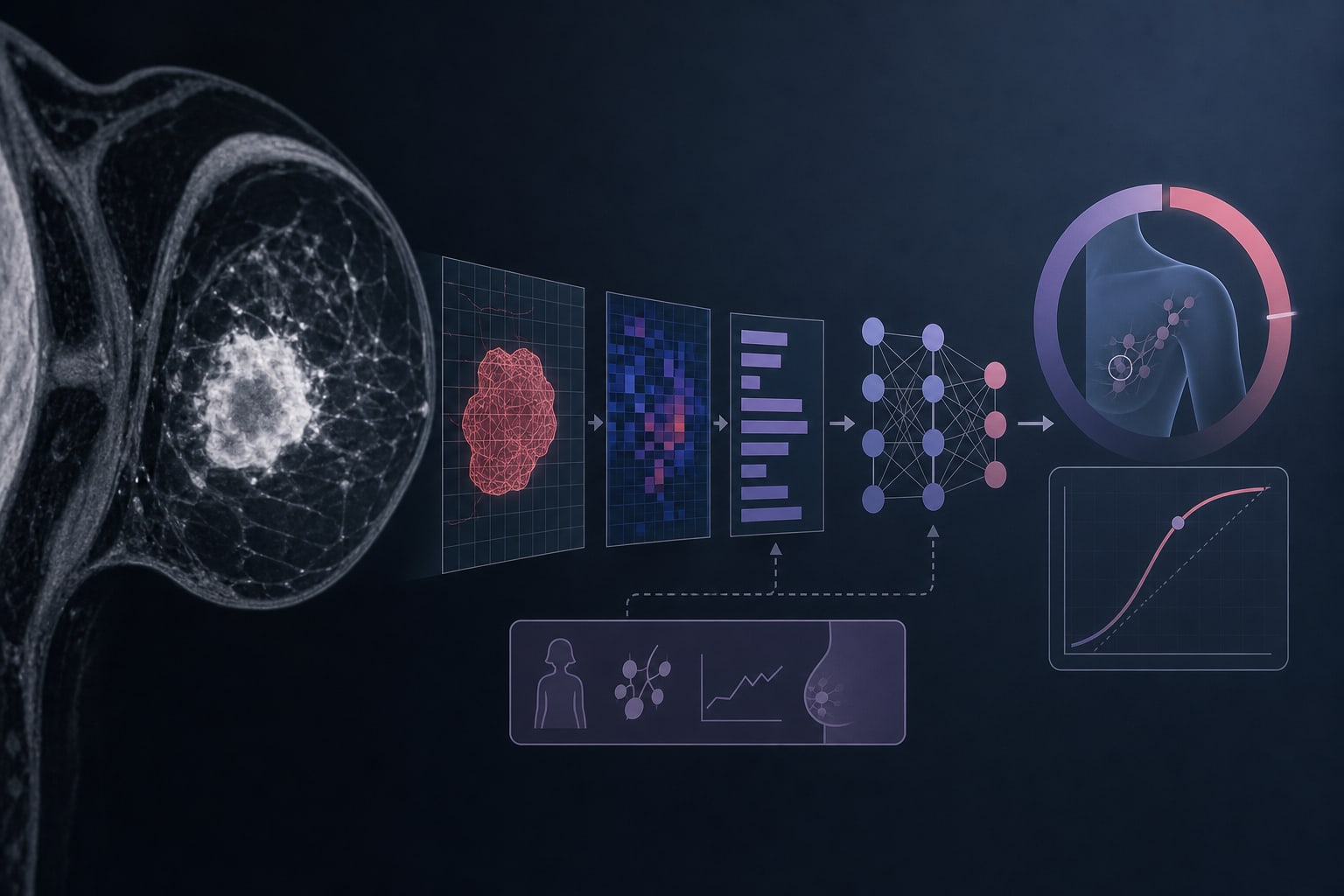
To explore influencing factors and construct predictive models for the efficacy of postoperative adjuvant ¹³¹I therapy in patients with differentiated thyroid cancer (DTC).
Approach:
Study Design: Retrospective analysis of 376 DTC patients who underwent total thyroidectomy and received initial adjuvant ¹³¹I therapy.
Data Collection: Patients were divided into excellent response (ER) and non-excellent response (nER) groups based on the 2025 ATA evaluation criteria at 6-month follow-up.
Statistical Analysis: Multivariate binary logistic regression, ROC curve analysis, support vector machine (SVM), and random forest (RF) were used to identify independent factors and establish predictive models.
Key Findings:
The incidence of non-excellent response (nER) was 48.40%.
Independent risk factors for nER included BMI (OR = 1.112), number of metastatic lymph nodes (LNM) (OR = 1.061), stimulated thyroglobulin (s-Tg) (OR = 1.198), BRAF mutation (OR = 3.041), and mean residual ¹³¹I uptake count (C-mean) (OR = 1.103).
Maximum residual ¹³¹I uptake count (C-max) was identified as an independent protective factor (OR = 0.995).
The RF model demonstrated the best predictive performance with an AUC of 90.77%.
Concurrent high s-Tg, multiple LNM, and elevated BMI indicated a 100% risk of nER.
Interpretation:
A significant proportion of DTC patients do not achieve excellent response after 100 mCi adjuvant ¹³¹I therapy, with specific factors influencing outcomes.
Limitations:
Retrospective design may introduce selection bias.
Findings are based on a single institution's data.
Conclusion:
The RF model shows excellent predictive ability for adjuvant ¹³¹I treatment response, with specific risk factors identified for nER.