Enhanced Recovery After Surgery in Pediatric Urology Patients Undergoing Complex Lower Urinary Tract - Summary - MDSpire
Coming Soon: Introducing MDSpire News. Learn more
Conexiant’s news site is now MDSpire News. Learn more

Enhanced Recovery Protocols for Children Undergoing Complex Lower Urinary Tract Surgery in Pediatric Urology

  • By

  • Kyle O. Rove

  • Andrew C. Strine

  • David I. Chu

  • Duncan T. Wilcox

  • Darren Ha

  • Gino J. Vricella

  • Douglas E. Coplen

  • Erica J. Traxel

  • Austin R. Acks

  • Rajeev Chaudhry

  • Brian VanderBrink

  • Elizabeth B. Yerkes

  • Yvonne Y. Chan

  • Nicholas E. Burjek

  • Rebecca S. Zee

  • C.D. Anthony Herndon

  • Jennifer J. Ahn

  • Paul A. Merguerian

  • Bhalaajee Meenakshi-Sundaram

  • Adam J. Rensing

  • Dominic Frimberger

  • Megan A. Brockel

  • October 1, 2026

Share

Objective:

To develop and implement a pediatric urology enhanced recovery after surgery (ERAS) protocol and prospectively assess implementation and clinical outcomes compared with historical controls.

Approach:
  • Design: Prospective multicenter cohort study using a hybrid implementation-effectiveness design; historical controls were drawn from the five years before local ERAS implementation.
  • Participants and sites: Eight centers enrolled patients aged 4–24 years undergoing complex lower urinary tract reconstruction between 2017 and 2022. Eligible procedures included bowel-based urinary augmentation or diversion and continence-channel formation.
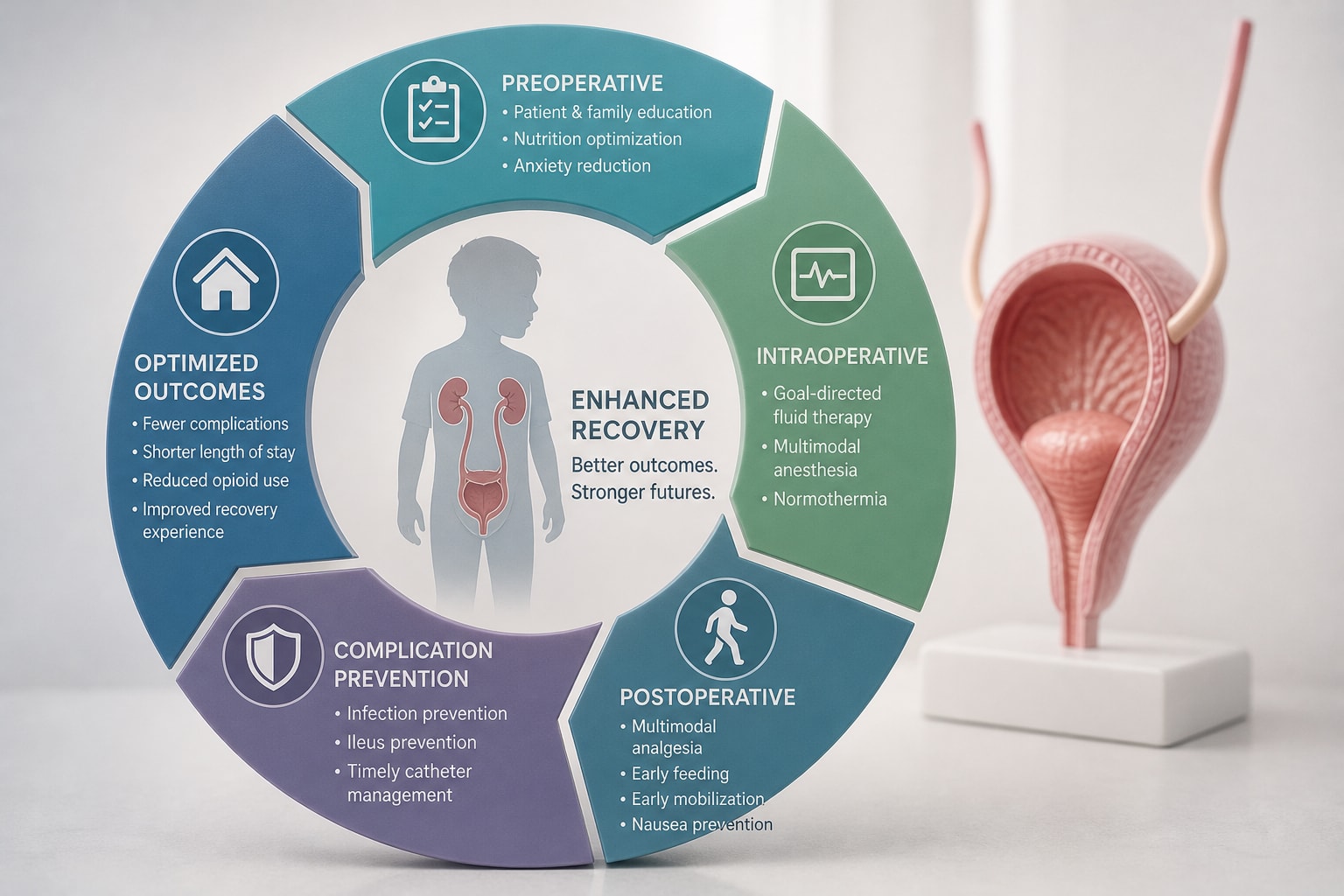
  • Protocol: The consensus protocol comprised 20 elements, including standardized education, no formal bowel preparation, carbohydrate loading, multimodal analgesia, avoidance of drains and nasogastric tubes, early feeding, timely discontinuation of intravenous fluids, and…
  • Evaluation: Implementation was measured by the number of protocol elements completed. Clinical outcomes included length of stay, readmissions, reoperations, emergency visits, complications, pain ratings, and opioid use. ERAS patients were propensity-score matched 1:1 to h…
Key Findings:
  • The supplied context describes the study rationale, design, protocol, and planned outcome measures but does not provide results.
Interpretation:

The study was designed to evaluate whether a standardized, multicenter ERAS protocol could be implemented and to compare recovery outcomes with historical care.

Limitations:
  • The provided context does not include study results, so implementation adherence and clinical effects cannot be summarized.
  • The comparison used historical rather than randomized controls; propensity-score matching was used to address confounding.
Sources:

Original Source(s)

Related Content