Association between remnant cholesterol inflammation Index and in-hospital New-onset atrial fibrillation in patients with ST-segment elevation myocardial infarction - Summary - MDSpire
Conexiant’s news site is now MDSpire News. Learn more
Advertisement
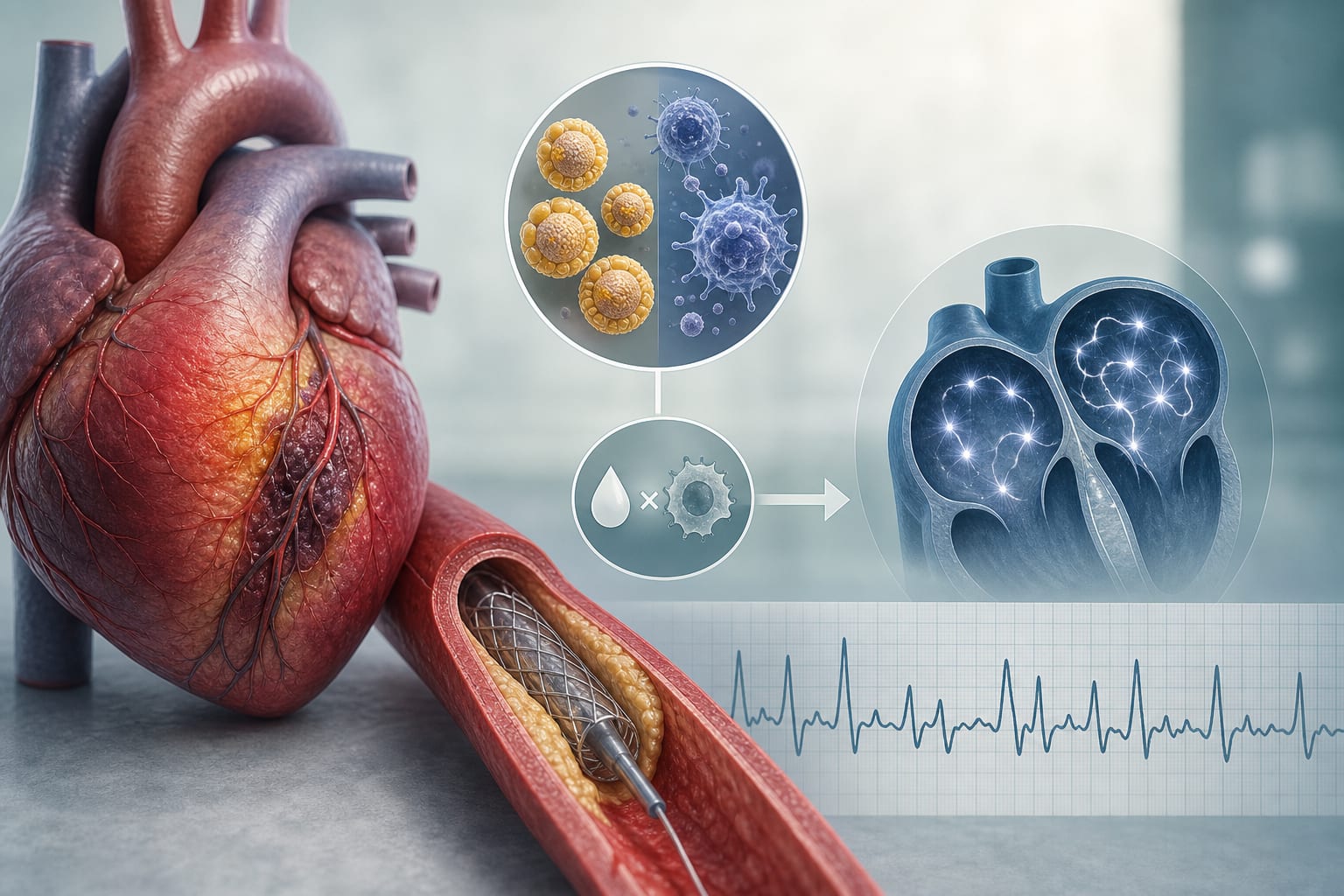
Link Between Remnant Cholesterol Inflammatory Index and New-Onset Atrial Fibrillation During Hospitalization in ST-Segment Elevation Myocardial Infarction Patients
To investigate the association between remnant cholesterol inflammatory index (RCII) and the occurrence of in-hospital new-onset atrial fibrillation (NOAF) in patients with ST-segment elevation myocardial infarction (STEMI).
Approach:
Study Design: Single-center retrospective observational study enrolling patients with first-time acute STEMI undergoing emergency percutaneous coronary intervention (PCI) from January 2022 to December 2025.
RCII Definition: RCII was defined as the product of remnant cholesterol (RC) and high-sensitivity C-reactive protein (hs-CRP).
Statistical Analysis: Multivariable logistic regression and restricted cubic spline analysis were used to assess the relationship between RCII and NOAF.
Key Findings:
Out of 945 STEMI patients, 79 (8.36%) developed NOAF.
Patients with NOAF had significantly higher levels of RCII, RC, and hs-CRP compared to those without NOAF.
Multivariable logistic regression showed hs-CRP (OR = 2.96), RCII (OR = 4.71), and RC (OR = 2.78) were independently associated with NOAF.
RCII demonstrated a significant nonlinear dose–response relationship with NOAF risk.
RCII identified NOAF with an area under the curve of 0.756, outperforming RC and hs-CRP alone.
interpretation
limitations
conclusion
Interpretation:
Higher RCII is independently associated with an increased risk of in-hospital NOAF and shows moderate discriminatory ability.
Limitations:
Single-center study may limit generalizability.
Retrospective design may introduce selection bias.
Conclusion:
RCII may serve as a simple, cost-effective, and efficient early risk stratification tool for identifying patients at high risk of NOAF.