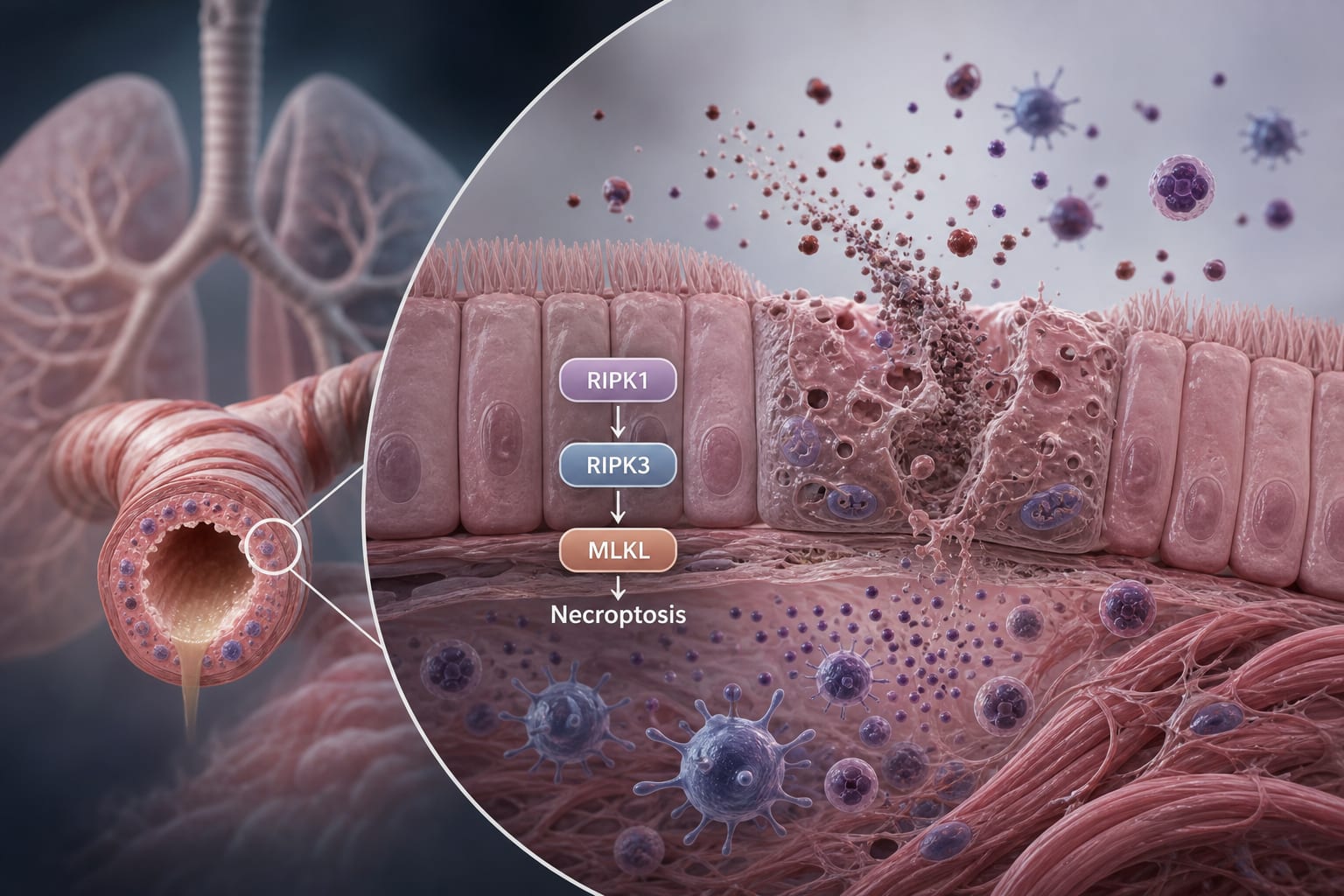
To explore the role of necroptosis in asthma pathophysiology and its implications for immune dysfunction and airway remodeling.
Approach:
Key Findings:
Necroptosis is an active pathogenic hub in asthma, contributing to sustained inflammation and tissue remodeling.
Triggers such as allergens, viruses, and pollutants activate necroptosis in a cell-specific manner, leading to the release of DAMPs that amplify type 2 inflammation.
The asthmatic airway microenvironment is conducive to necroptosis due to recurrent exposure to triggers and oxidative stress.
Interpretation:
The review posits that necroptosis plays a critical role in translating environmental and immunological insults into chronic immune dysregulation and airway remodeling in asthma.
Limitations:
Most insights are derived from preclinical models, which may not fully replicate human asthma pathology.
Species-specific differences exist in the regulation of necroptotic pathways.
Technical challenges in obtaining longitudinal human airway tissue limit dynamic assessments of necroptotic activity.
Conclusion:
Integrating necroptosis into the asthma pathophysiological network provides a unified framework for understanding disease mechanisms and potential therapeutic targets.