Mortality trends and disparities in older U.S. adults with atrial fibrillation and COPD: a 1999–2020 CDC WONDER analysis with forecast to 2030 - Summary - MDSpire
Advertisement
Mortality trends and disparities in older U.S. adults with atrial fibrillation and COPD: a 1999–2020 CDC WONDER analysis with forecast to 2030
To examine mortality trends and disparities among U.S. adults aged 65 and older affected by both atrial fibrillation (AF) and chronic obstructive pulmonary disease (COPD) from 1999 to 2020.
Approach:
Key Findings:
Total of 399,413 deaths recorded from 1999 to 2020.
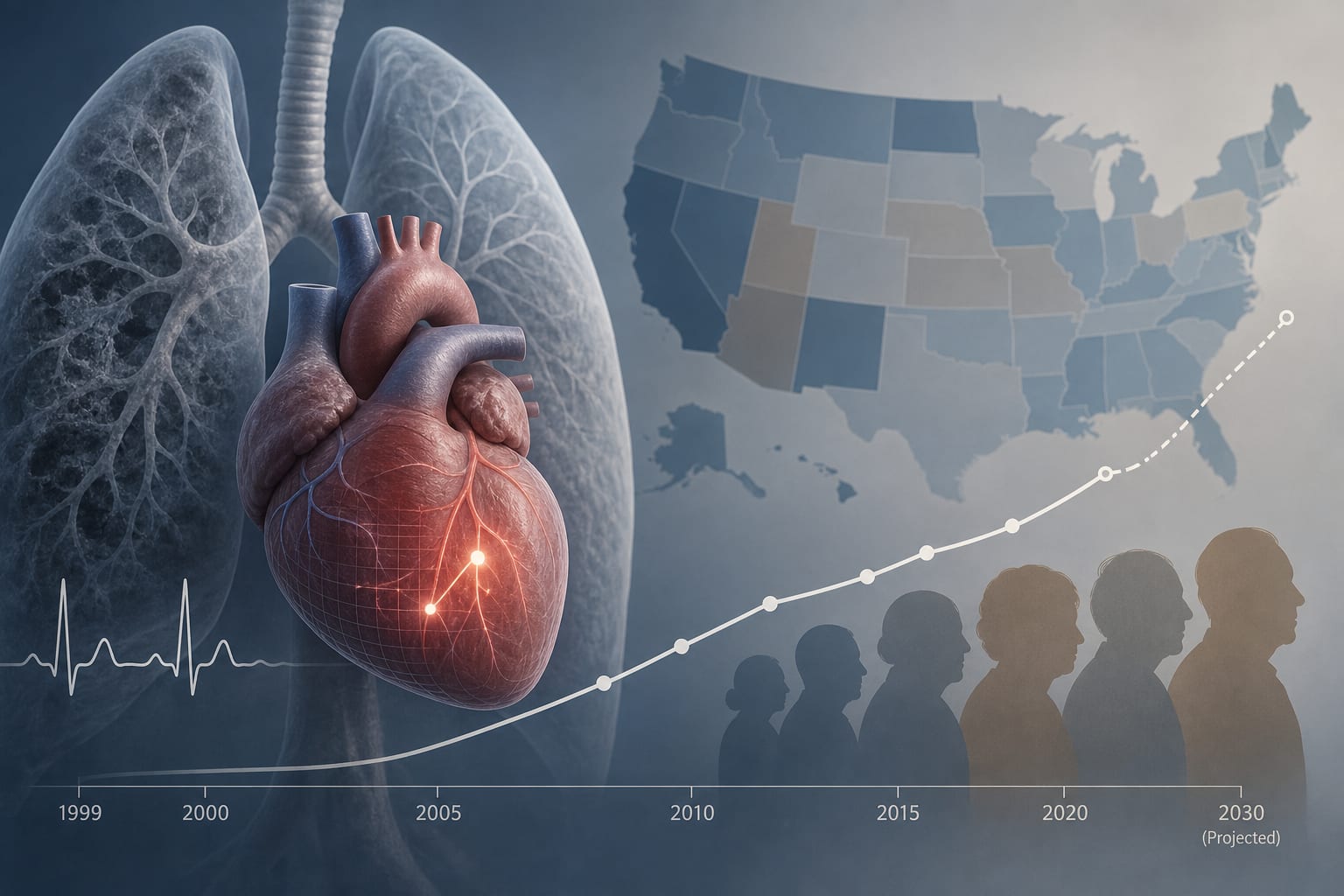
AAMR increased from 27.39 in 1999 to 65.29 in 2020, with an average annual percent change (AAPC) of 4.21 (95% CI: 3.75–4.68).
Men had a higher AAMR (57.01) than women (34.96).
Non-Hispanic White individuals had an AAMR 2.8 times higher than Hispanics.
Non-metropolitan areas had a higher AAMR than metropolitan areas.
Leading causes of death included COPD, ischemic heart disease, and cancer, with a shift in the most common place of death from medical facilities to home by 2020.
Projections suggest the AAMR will reach 92.62 by 2030, particularly in individuals aged ≥85.
Interpretation:
Mortality involving coexisting AF and COPD in older adults has increased over the past two decades, with notable disparities across sex, race, and geography.
Limitations:
The study is based on death certificate data, which may have limitations in accuracy and completeness.
The analysis is confined to older adults (aged 65 and older), which may not represent trends in younger populations.
Conclusion:
Mortality rates for older adults with AF and COPD are projected to continue increasing, highlighting the need for targeted interventions in high-risk populations.