FCGBP Links Hormonal Imbalance and Hepatic Steatosis in PCOS–NAFLD Comorbidity: An Integrative Bioinformatics and Experimental Study - Summary - MDSpire
Advertisement
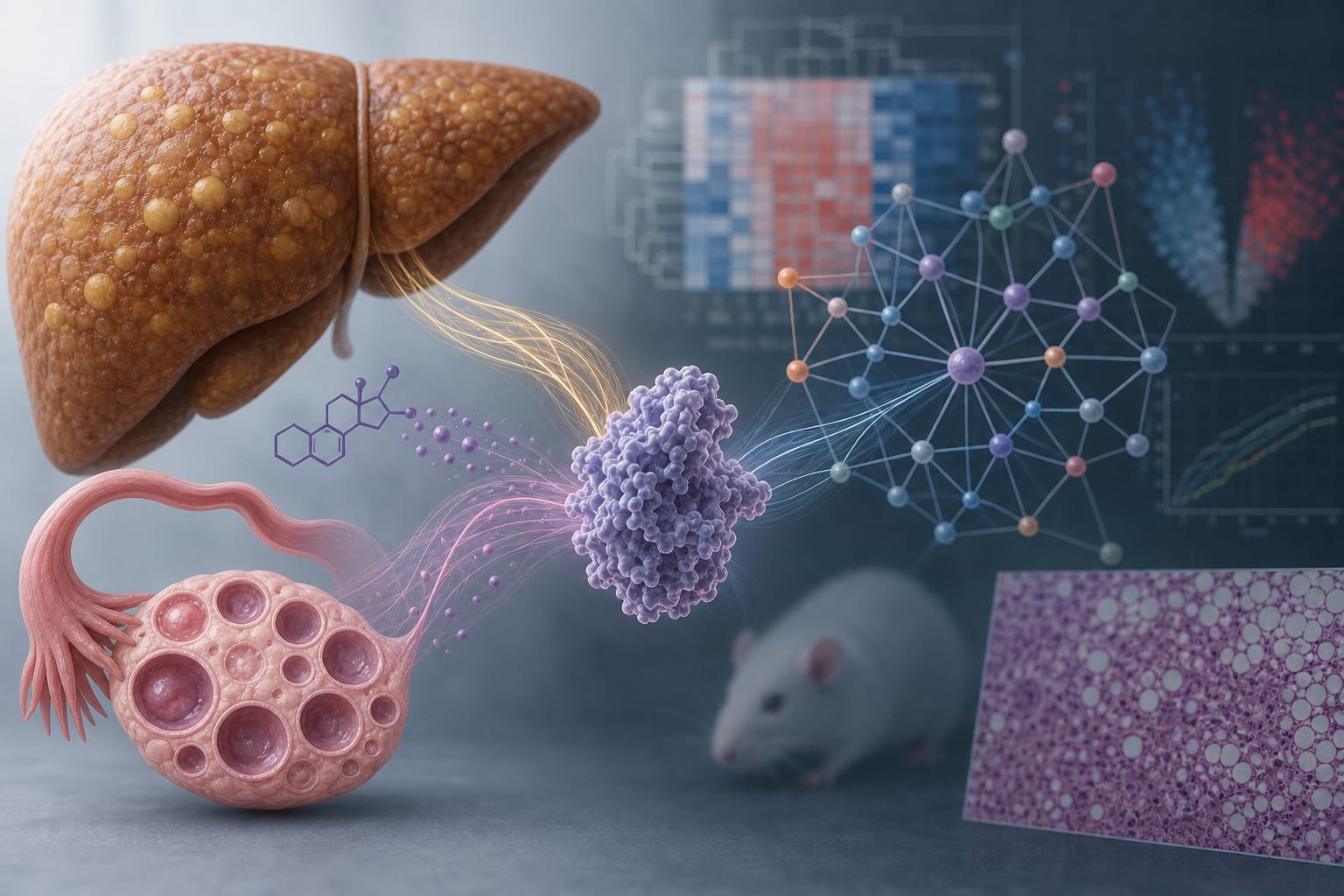
FCGBP Links Hormonal Imbalance and Hepatic Steatosis in PCOS–NAFLD Comorbidity: An Integrative Bioinformatics and Experimental Study
To identify and validate key co-expressed genes driving the comorbidity of PCOS and NAFLD.
Key Findings:
FCGBP expression was significantly elevated in ovarian and hepatic tissues in the rat model (P < 0.01).
In KGN cells, FCGBP knockdown restored E2 secretion and upregulated CYP19A1 and HSD17B1 (P < 0.001).
In HepG2 cells, FCGBP silencing reduced lipid accumulation and reversed SCD1 upregulation and ATGL downregulation (P < 0.05).
Interpretation:
FCGBP is associated with hormonal dysregulation and hepatic lipid metabolic abnormalities under hyperandrogenic conditions.
Limitations:
The study primarily relies on animal models and in vitro experiments, which may not fully replicate human conditions.
Further clinical validation is needed to confirm the findings in human subjects.
Conclusion:
FCGBP is identified as a potential molecular regulator in PCOS-NAFLD comorbidity and a candidate target for addressing reproductive and metabolic dysfunctions.
So get this: sodium may track with memory decline (in men), steroids might not be “immunosuppressive” in the ICU, and second pregnancies reshape the brain differently than first. Same theme: biology is less binary than we teach it.