Fighting Back Against HOAs
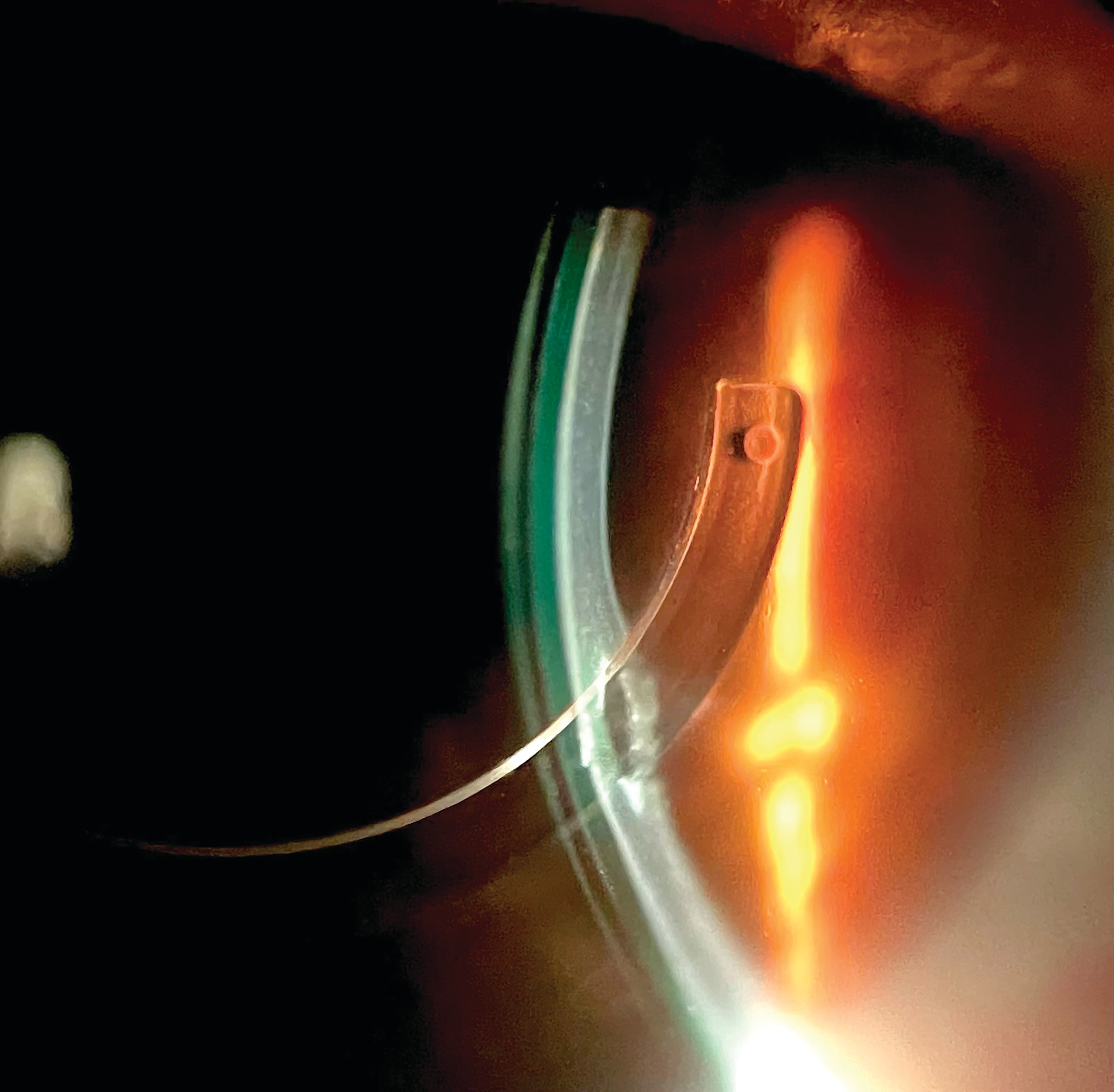
This article will discuss the HOAs associated with keratoconus, how contact lenses can be used to correct aberrations, the efficacy of this correction, and the concept of neuroadaptation; it will conclude with cases of successful HOA reduction with scleral lenses.
By
Aaron Zimmerman, OD, MS
Jamie Kuzniar, OD
Trevor Fosso, OD
July 1, 2026
Objective: To discuss higher-order aberrations (HOAs) associated with keratoconus and evaluate the efficacy of contact lenses in correcting these aberrations.
Approach: Historical Context: The article traces the development of wavefront-guided optics from early telescopes to modern aberrometers.Detection of HOAs: It highlights the advancements in corneal tomography and wavefront aberrometry for early detection of keratoconus.Contact Lens Correction: The article reviews the use of various contact lenses, including GP and scleral lenses, for correcting HOAs.Key Findings: HOAs significantly affect visual acuity in keratoconus patients. Coma is the most prevalent HOA in keratoconus, with vertical coma being particularly distinguishing. Wavefront-guided surfaces can be applied to contact lenses to correct visually significant HOAs. Interpretation: The article discusses the detection and management of HOAs in keratoconus.
Limitations: The efficacy of soft lenses in correcting HOAs is generally inferior to GP lenses, particularly in cases of severe keratoconus. HOAs are highly dependent on pupil size, which may affect the outcomes of lens correction. Conclusion: The article presents cases demonstrating successful HOA reduction using scleral lenses.