Predictive value of antioxidant and thyroid function indicators for non-suicidal self-injury in adolescents with major depressive disorder - Summary - MDSpire
Advertisement
Predictive value of antioxidant and thyroid function indicators for non-suicidal self-injury in adolescents with major depressive disorder
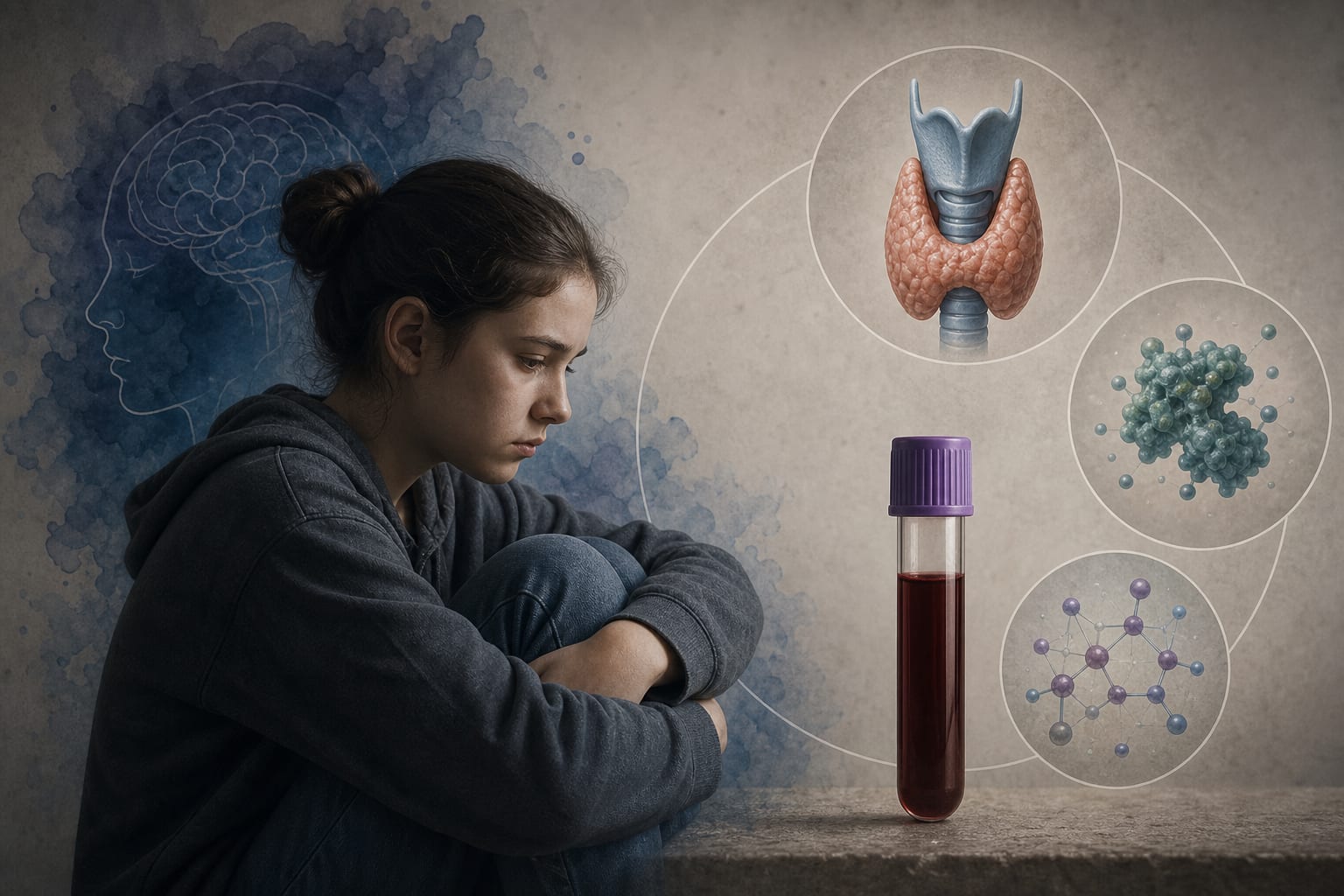
To investigate the predictive efficacy of combining antioxidant and thyroid biomarkers with clinical symptoms for non-suicidal self-injury (NSSI) in adolescents with major depressive disorder (MDD), highlighting the significance of understanding these associations.
Key Findings:
The prevalence of NSSI in adolescents with MDD was 57.4%.
Independent predictors of NSSI included female sex (P = 0.041), HAMD-17 score (P < 0.001), indirect bilirubin levels (P = 0.040), and TSH levels (P = 0.004).
The combination of sex, HAMD-17 score, indirect bilirubin, and TSH had an AUC of 0.776, indicating good predictive ability for NSSI.
Interpretation:
Adolescents with MDD, especially females, are at high risk for NSSI, with reduced indirect bilirubin and elevated TSH levels potentially indicating underlying pathophysiological mechanisms, which could inform clinical interventions.
Limitations:
The study's findings are based on a specific population and may not be generalizable.
The observational nature of the study limits causal inferences, potentially affecting the reliability of the results.
Conclusion:
Targeted interventions focusing on antioxidant defense and thyroid function may provide new therapeutic strategies for managing NSSI in adolescents with MDD, emphasizing the importance of these findings in adolescent mental health.