Conexiant’s news site is now MDSpire News. Learn more
Advertisement
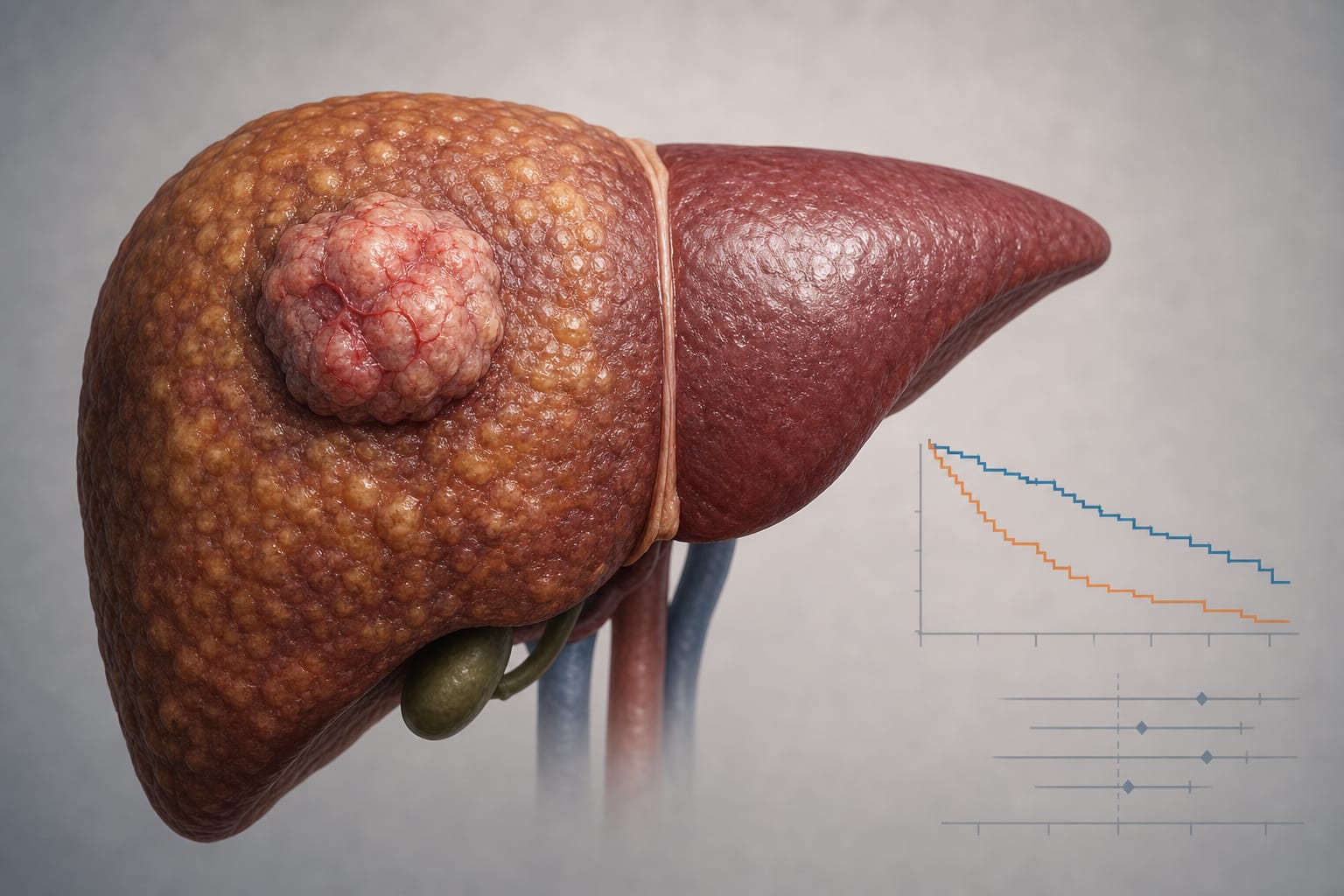
Outcomes Following Curative Hepatectomy for Hepatocellular Carcinoma in Patients With and Without Metabolic-Associated Fatty Liver Disease: Insights from a Western Cohort Study
To determine whether metabolic-associated fatty liver disease (MAFLD) independently influences survival after hepatic resection for hepatocellular carcinoma (HCC) in a Western population.
Approach:
Study Design: Retrospective single-center cohort study evaluating adults who underwent curative-intent hepatic resection for HCC.
Patient Classification: Patients were classified as MAFLD-positive if they met MAFLD criteria without competing chronic liver disease etiology.
Statistical Analysis: Overall survival (OS) and disease-free survival (DFS) were assessed using Cox proportional-hazards models adjusted for various confounders.
Key Findings:
Out of 156 patients, 89 (57.1%) were classified as MAFLD-positive.
MAFLD-positive patients were older, more frequently obese and diabetic, and less likely to have cirrhosis.
Unadjusted analyses showed MAFLD-positive status associated with longer DFS and a trend towards longer OS, but these associations were not significant after multivariable adjustment.
MAFLD was not independently associated with OS (adjusted hazard ratio, 0.91) or DFS (adjusted hazard ratio, 0.58).
Cirrhosis, impaired performance status, elevated alpha-fetoprotein, and greater tumor burden were the main predictors of postoperative outcomes.
Interpretation:
In this Western cohort, MAFLD did not independently influence overall or disease-free survival after curative hepatectomy when accounting for liver disease severity and tumor burden.
Limitations:
The study was conducted at a single center, which may limit generalizability.
The retrospective design may introduce selection bias.
Conclusion:
Prognosis after curative hepatectomy for HCC was primarily influenced by established hepatic and oncologic factors rather than metabolic etiology alone.
The goal of this clinical trial is to learn if Adaptive Radiation Therapy (ART) is safe and effective in treating patients with locally advanced pancreatic cancer.
The goal of this clinical trial is to find out if giving extra adaptive radiation therapy after standard chemoradiation treatment is safe and helpful for people with rectal cancer.