Novel insights into triple-negative breast cancer heterogeneity, prognosis, and treatment response based on matrix stiffness: a combined single-Cell and transcriptome analysis - Summary - MDSpire
Advertisement
Novel insights into triple-negative breast cancer heterogeneity, prognosis, and treatment response based on matrix stiffness: a combined single-Cell and transcriptome analysis
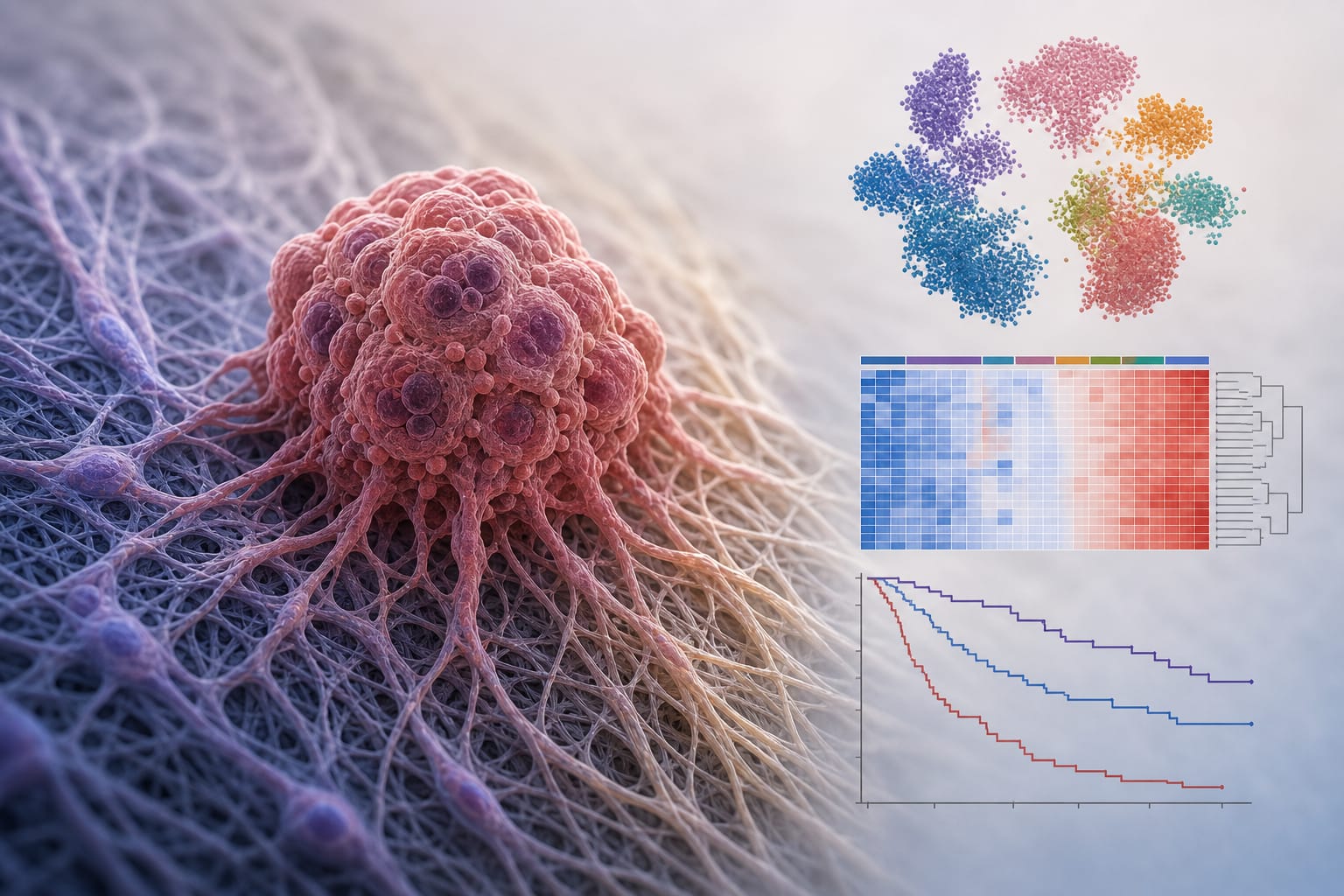
To explore the impact of matrix stiffness (MS) on the biological behaviors of triple-negative breast cancer (TNBC) and establish its clinical association with patient prognosis, particularly how MS influences treatment outcomes.
Key Findings:
Malignant epithelial cells with high MS scores exhibited unique functional states and pathway characteristics, suggesting potential therapeutic targets.
The MS-based prognostic model effectively predicted survival risk across multiple cohorts.
The MS score was confirmed as an independent prognostic factor.
A high MS score correlated with immunotherapy resistance and reduced chemotherapy sensitivity, indicating a need for tailored treatment approaches.
Interpretation:
The study highlights the significant role of matrix stiffness in TNBC heterogeneity and its implications for prognosis and treatment strategies.
Limitations:
The study relies on data from specific databases, which may limit generalizability; further validation in larger, diverse cohorts is needed to confirm findings and their applicability to broader populations.
Conclusion:
This research provides a theoretical basis and tools for prognostic assessment and precision treatment of TNBC, emphasizing the importance of matrix stiffness in tumor behavior and its implications for improving treatment strategies.