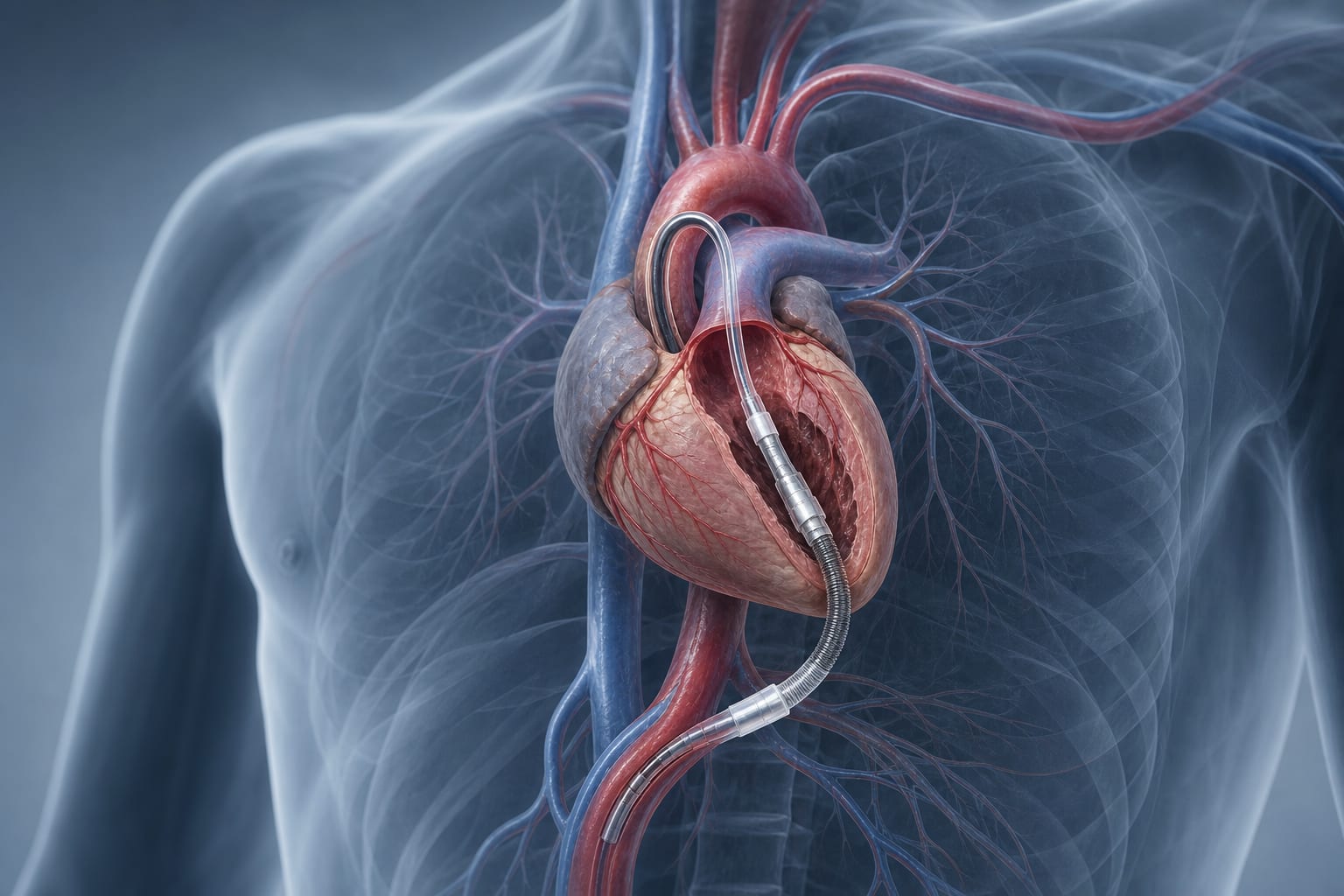
To evaluate the patterns, timing, and characteristics of five distinct temporary circulatory support escalation and de-escalation strategies, and their association with mortality, hemodynamic parameters, and laboratory outcomes in patients admitted to a tertiary referral center for cardiogenic shock.
Approach:
Study Design: Retrospective, non-interventional, single center study using Epic electronic health records from the Cardiogenic Shock registry at the University of Iowa Hospitals and Clinics.
Patient Selection: Patients over the age of 18 who had implantation of the Impella microaxial flow pump were selected, with a total of 110 patients included in the analysis.
Statistical Analysis: Continuous variables were compared using Wilcoxon rank-sum test, categorical variables with chi-square test, and survival analyzed using a Cox proportional hazards model.
Key Findings:
53 patients (48.18%) survived after treatment.
Survivors had a significantly lower average Impella power level (6.21 vs. 6.92, p=0.01) despite similar flow rates (3.16 L/min vs. 3.08 L/min, p=0.31).
72-hour cardiac power output was significantly better in survivors (1.15 watts vs. 0.69 watts, p<0.01).
Elevated cardiac power at 72 hours post-intervention was identified as an independent predictor of survival (OR 0.09; 95% CI 0.02-0.45; p=0.03).
Interpretation:
Limitations:
The study is retrospective and conducted at a single center, which may limit generalizability.
The selection of MCS was not protocolized and was determined by the treating team, potentially introducing bias.