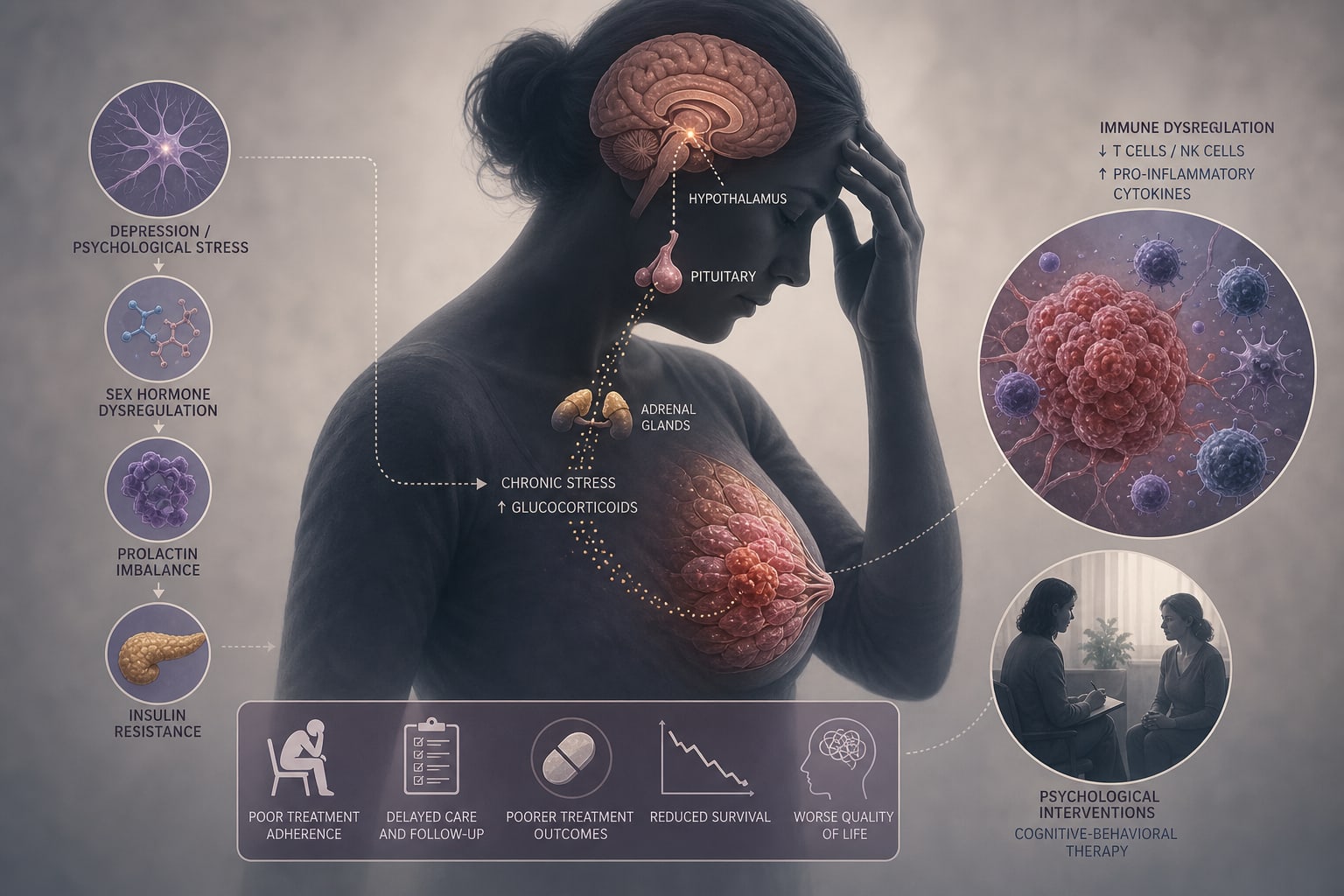
To review the association between depression and breast cancer, its underlying mechanisms, and clinical management strategies from an interdisciplinary perspective.
Key Findings:
Depression and breast cancer mutually influence each other, leading to poorer clinical outcomes and reduced quality of life.
Depression may cause dysregulation of the HPA axis, leading to elevated glucocorticoids, which can promote breast cancer progression.
Depressive states can impair immune function and promote inflammation, creating a favorable environment for tumor growth.
Standalone biomedical or psychological interventions have limited efficacy.
Interpretation:
The interplay between depression and breast cancer involves complex mechanisms, including neuroendocrine dysregulation and immune-inflammatory alterations.
Limitations:
Traditional single-discipline diagnostic and therapeutic models are inadequate for addressing the comorbidity of depression and breast cancer.
Fragmented management often leads to insufficient assessment and lack of coordinated treatment strategies.
Conclusion:
An interdisciplinary approach is essential for managing the comorbidity of depression and breast cancer.