Machine and deep learning based on magnetic resonance imaging to segment glioblastoma and predict the spread of recurrence: a multicenter retrospective protocol - Summary - MDSpire
Advertisement
Machine and deep learning based on magnetic resonance imaging to segment glioblastoma and predict the spread of recurrence: a multicenter retrospective protocol
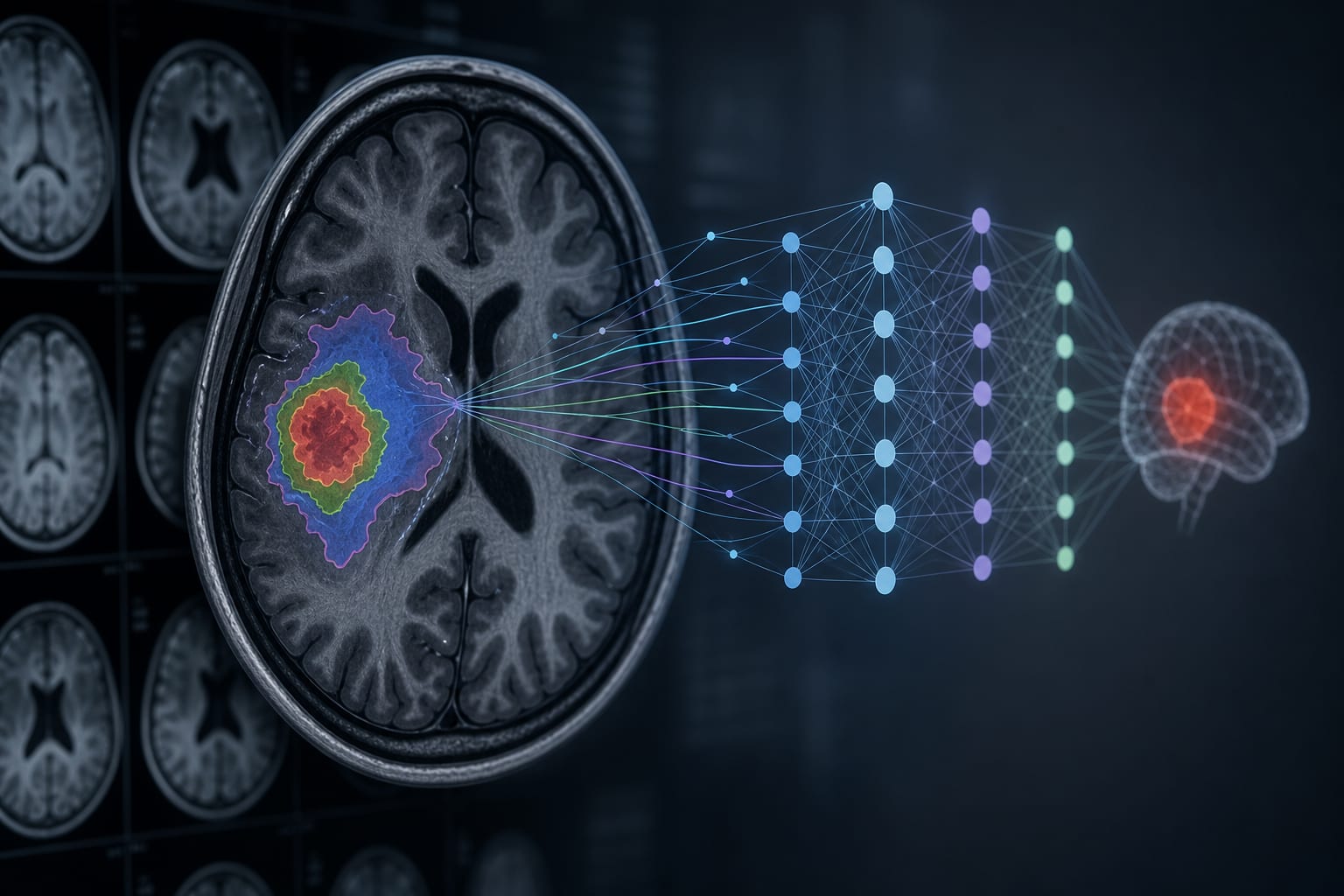
To develop predictive models for glioblastoma recurrence spread using machine learning and deep learning approaches on MRI data, integrating clinical, imaging, and instrumental data.
Approach:
Study Design: A multicenter retrospective collection of clinical and radiological variables from eligible glioblastoma patients will be performed.
Data Collection: Variables will include demographic, surgical, pathological, and preoperative MRI features.
Predictive Modeling: Classical ML algorithms and a 3D U-Net architecture for DL-based image segmentation will be utilized.
Performance Assessment: Model performance will be evaluated using metrics such as AUC, P-R curve, F-score, accuracy, sensitivity, specificity, confusion matrix, and Dice score.
Key Findings:
Glioblastoma has high recurrence rates and limited survival.
Local recurrence typically occurs within 2 cm of the resection cavity.
Machine learning and deep learning can aid in predicting the extent of tumor spread.
Interpretation:
The study aims to develop AI-based models for glioblastoma patients.
Limitations:
Retrospective design may introduce biases.
Dependence on the quality and completeness of collected data may affect results.
Conclusion:
The findings will provide a basis for future prospective multicenter validation studies.
by Luana Conte, Erica Lo Turco, Rosaria V. Abbritti, Caterina Accettura, Giuseppe Raso, Edvige Iaboni, Ugo De Giorgi, Giorgio De Nunzio, Donato Cascio, Maria Caffo