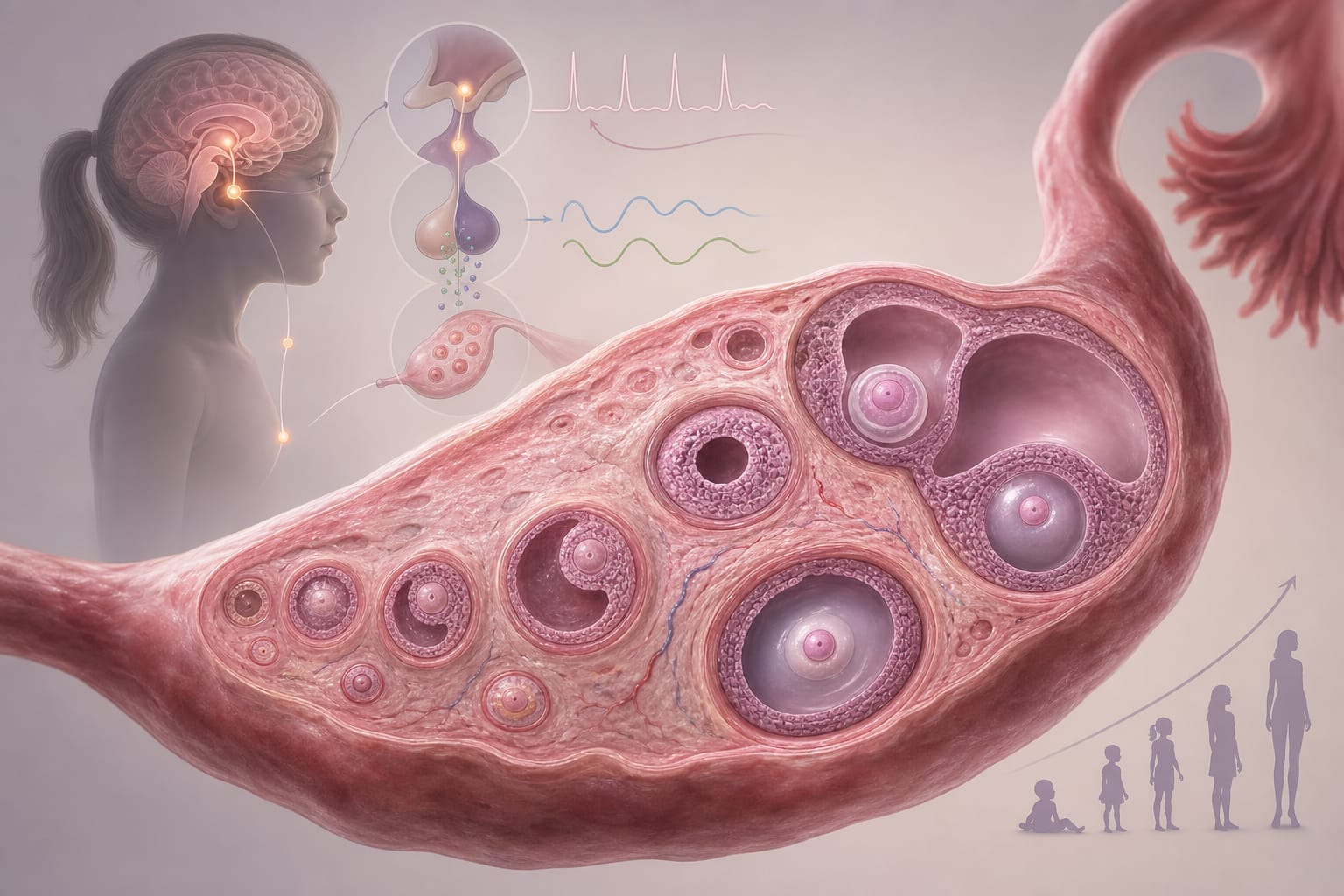
To summarize the literature on the endocrinology and morphology of follicle wave dynamics and follicular growth profiles from birth through reproductive maturity in humans and ruminant animal models, highlighting the significance of these dynamics for reproductive health.
Approach:
Key Findings:
Follicle and endocrine dynamics in Hereford cattle show distinct wave-like patterns from 2 weeks of age, which may inform understanding of similar processes in humans.
Maximal dominant follicle diameter and number of follicles per wave increase from 2 to 34 weeks of age, suggesting a critical period for follicular development.
Gonadotropin concentrations (FSH and LH) peak around 6-13 weeks, followed by a decline leading to puberty, indicating hormonal regulation during maturation.
Adult-like follicular and endocrine patterns emerge in Hereford females by 34-52 weeks, but some differences remain compared to adults, which may affect reproductive outcomes.
Interpretation:
The study highlights the importance of understanding the physiological and pathophysiological phases of reproductive maturity and their impact on ovarian antral follicle dynamics, particularly in relation to reproductive health challenges.
Limitations:
Translational potential between ruminants and humans is limited due to differences in reproductive milestones (first ovulation vs. menarche), and potential confounding factors in the studies reviewed should be considered.
Conclusion:
The review emphasizes the need for further research to clarify the dynamics of antral follicles and their implications for reproductive health, particularly in light of increasing reproductive health issues.