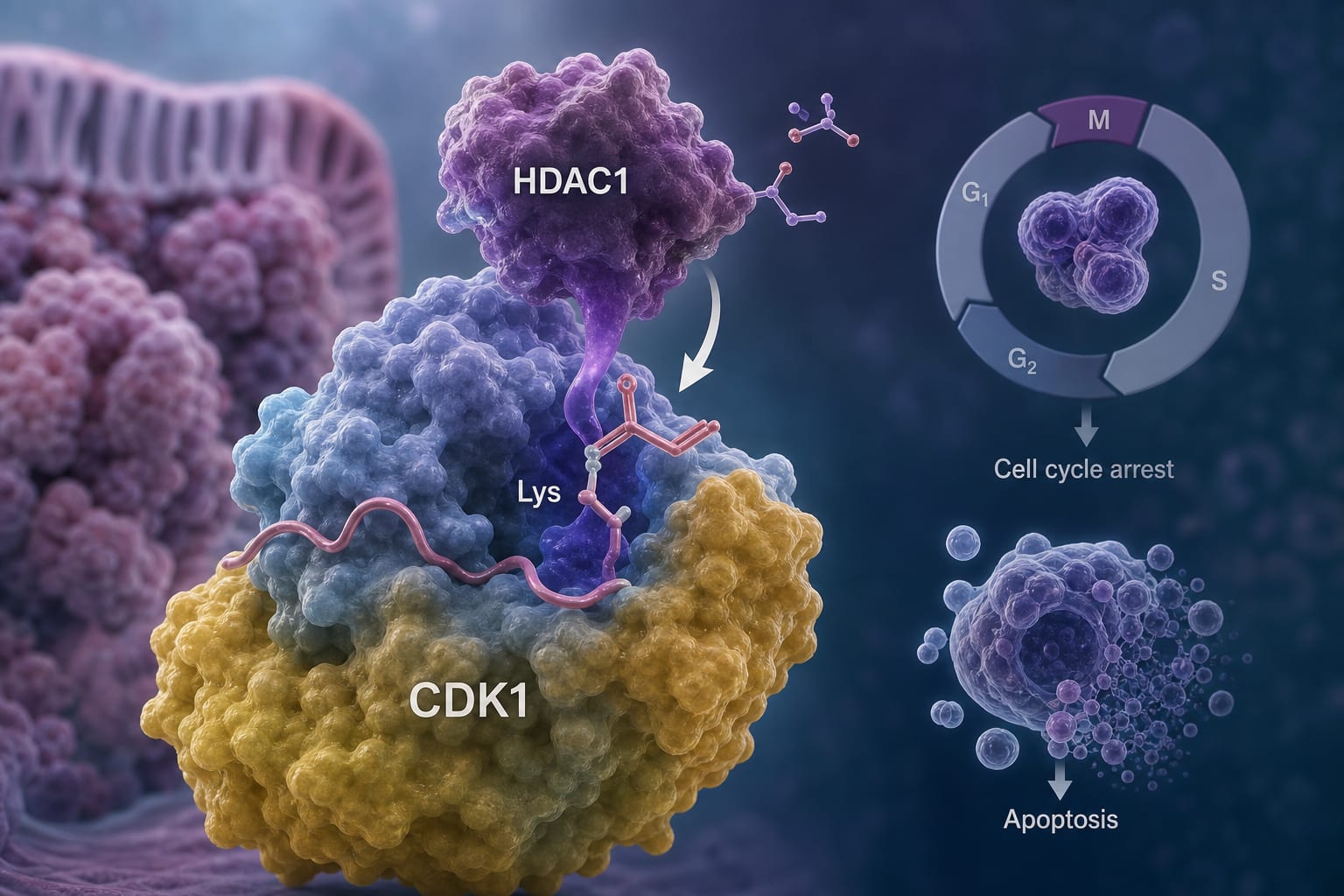
To investigate the role of lysine crotonylation in colorectal cancer (CRC) proliferation and the effects of CDK1 decrotonylation on tumor growth and apoptosis.
Approach:
Key Findings:
Significant elevation of global crotonylation in colorectal tumor specimens compared to adjacent normal tissues.
Decrotonylation of CDK1-K9 inhibited colorectal tumor proliferation and migration by arresting the cell cycle at the G2/M phase and inducing apoptosis.
Decrotonylated mutation decreased the interaction of CDK1 with cyclin and reduced kinase activity.
CDK1 K9 decrotonylation and CDK1 inhibitor RO-3306 exhibited synergistic effects.
Interpretation:
The study reveals the role of non-histone protein crotonylation in regulating CRC proliferation and migration, highlighting the potential of targeting CDK1 decrotonylation in cancer therapy to improve treatment outcomes.
Limitations:
Limited exploration of other potential crotonylation sites and their effects on CRC, which may provide additional insights.
The study primarily focuses on CDK1 without extensive investigation into other proteins involved in CRC proliferation, potentially overlooking important interactions.
Conclusion:
Decrotonylation of CDK1 impairs CRC growth and enhances sensitivity to CDK1 inhibitors, suggesting a novel mechanism in CRC regulation that could inform future therapeutic strategies.