Fumarate hydratase-deficient uterine leiomyoma: A rare case report and literature review - Summary - MDSpire

Fumarate hydratase-deficient uterine leiomyoma: A rare case report and literature review

  • By

  • Qiang Wang

  • Yanqing Li

  • Yanshe Shao

  • Ying Chen

  • Hui Ren

  • Xia Ji

  • Jinying Fu

  • June 24, 2026

  • 0 min

Share

Objective:

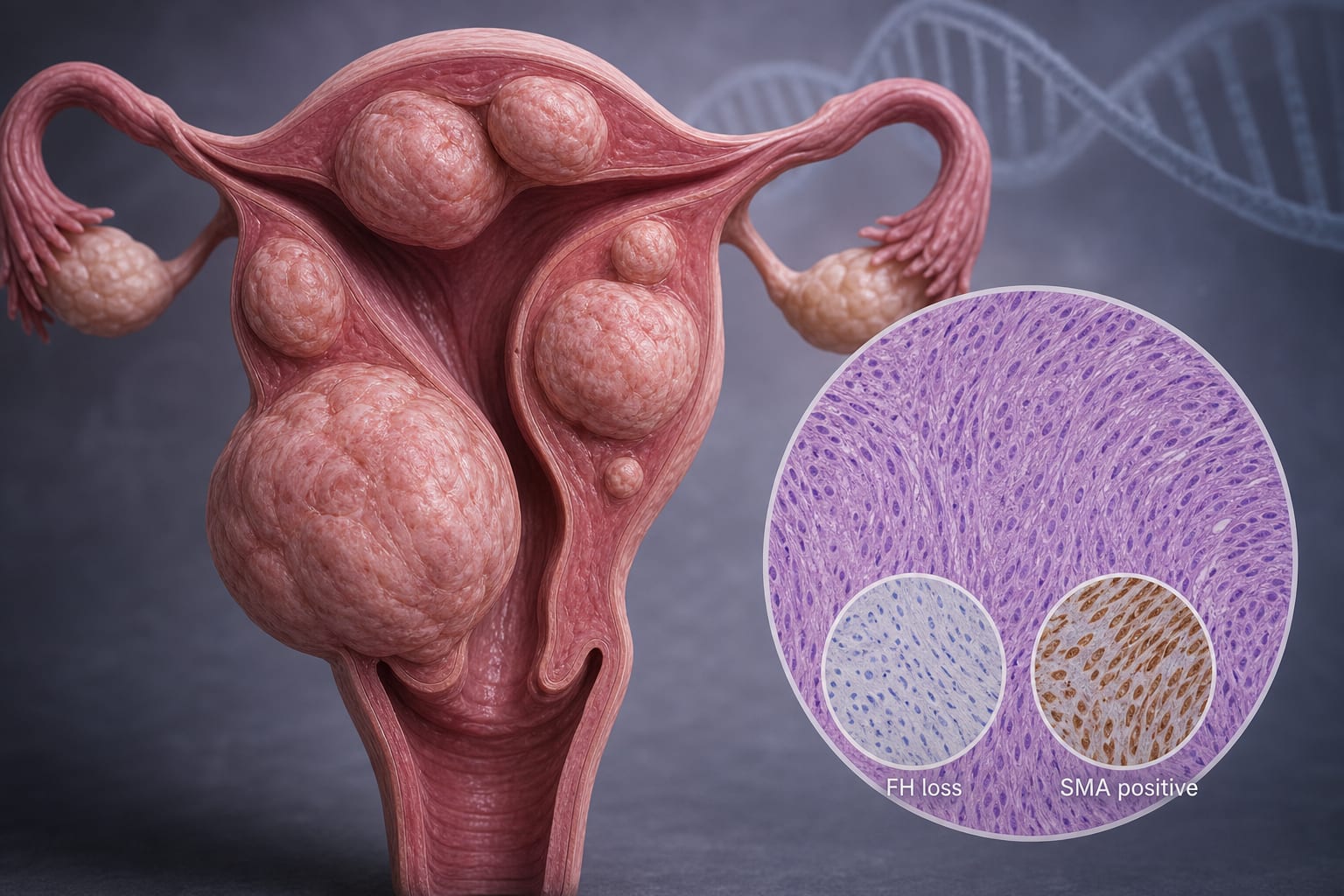
To report a case of fumarate hydratase-deficient uterine leiomyoma and review existing literature on its characteristics and management.

Approach:
  • Method: A
  • Method: 3
  • Method: 5
  • Method: -
  • Method: y
  • Method: e
  • Method: a
  • Method: r
  • Method: -
  • Method: o
  • Method: l
  • Method: d
  • Method: H
  • Method: a
  • Method: n
  • Method: C
  • Method: h
  • Method: i
  • Method: n
  • Method: e
  • Method: s
  • Method: e
  • Method: w
  • Method: o
  • Method: m
  • Method: a
  • Method: n
  • Method: p
  • Method: r
  • Method: e
  • Method: s
  • Method: e
  • Method: n
  • Method: t
  • Method: e
  • Method: d
  • Method: w
  • Method: i
  • Method: t
  • Method: h
  • Method: m
  • Method: u
  • Method: l
  • Method: t
  • Method: i
  • Method: p
  • Method: l
  • Method: e
  • Method: u
  • Method: t
  • Method: e
  • Method: r
  • Method: i
  • Method: n
  • Method: e
  • Method: l
  • Method: e
  • Method: i
  • Method: o
  • Method: m
  • Method: y
  • Method: o
  • Method: m
  • Method: a
  • Method: s
  • Method: ,
  • Method: u
  • Method: n
  • Method: d
  • Method: e
  • Method: r
  • Method: w
  • Method: e
  • Method: n
  • Method: t
  • Method: m
  • Method: y
  • Method: o
  • Method: m
  • Method: e
  • Method: c
  • Method: t
  • Method: o
  • Method: m
  • Method: y
  • Method: ,
  • Method: a
  • Method: n
  • Method: d
  • Method: l
  • Method: a
  • Method: t
  • Method: e
  • Method: r
  • Method: t
  • Method: o
  • Method: t
  • Method: a
  • Method: l
  • Method: h
  • Method: y
  • Method: s
  • Method: t
  • Method: e
  • Method: r
  • Method: e
  • Method: c
  • Method: t
  • Method: o
  • Method: m
  • Method: y
  • Method: d
  • Method: u
  • Method: e
  • Method: t
  • Method: o
  • Method: r
  • Method: e
  • Method: c
  • Method: u
  • Method: r
  • Method: r
  • Method: e
  • Method: n
  • Method: t
  • Method: s
  • Method: y
  • Method: m
  • Method: p
  • Method: t
  • Method: o
  • Method: m
  • Method: s
  • Method: a
  • Method: n
  • Method: d
  • Method: i
  • Method: m
  • Method: a
  • Method: g
  • Method: i
  • Method: n
  • Method: g
  • Method: f
  • Method: i
  • Method: n
  • Method: d
  • Method: i
  • Method: n
  • Method: g
  • Method: s
  • Method: o
  • Method: f
  • Method: m
  • Method: u
  • Method: l
  • Method: t
  • Method: i
  • Method: p
  • Method: l
  • Method: e
  • Method: l
  • Method: a
  • Method: r
  • Method: g
  • Method: e
  • Method: h
  • Method: y
  • Method: p
  • Method: e
  • Method: r
  • Method: v
  • Method: a
  • Method: s
  • Method: c
  • Method: u
  • Method: l
  • Method: a
  • Method: r
  • Method: u
  • Method: t
  • Method: e
  • Method: r
  • Method: i
  • Method: n
  • Method: e
  • Method: m
  • Method: a
  • Method: s
  • Method: s
  • Method: e
  • Method: s
  • Method: .
Key Findings:
  • FH-deficient uterine leiomyomas account for approximately 1%-2% of all uterine leiomyomas.
  • These tumors exhibit distinctive histopathological features and are associated with hereditary leiomyomatosis and renal cell carcinoma (HLRCC) syndrome.
  • The patient had a family history of uterine fibroids and experienced rapid recurrence of leiomyomas post-myomectomy.
Interpretation:

FH-deficient uterine leiomyoma should be suspected in young women with large, recurrent, hypervascular leiomyomas and a family history of fibroids.

Limitations:
  • The patient declined genetic testing despite recommendations for FH genetic testing and lifelong surveillance.
Conclusion:

Early immunohistochemical screening for FH/2SC and genetic counseling are important for managing suspected HLRCC risk.

Original Source(s)

Related Content