Evaluation of the efficacy and safety of tegileridine at different doses in patients with postoperative pain: a meta-analysis of randomized controlled trials - Summary - MDSpire
Advertisement
Evaluation of the efficacy and safety of tegileridine at different doses in patients with postoperative pain: a meta-analysis of randomized controlled trials
To comprehensively evaluate the efficacy and safety of tegileridine at different doses in patients with postoperative acute pain through a meta-analysis.
Approach:
Literature Search: Systematic literature search across six databases to identify randomized controlled trials involving tegileridine for postoperative acute pain.
Meta-Analysis: Meta-analyses performed using RevMan 5.4 software on data from included studies.
Key Findings:
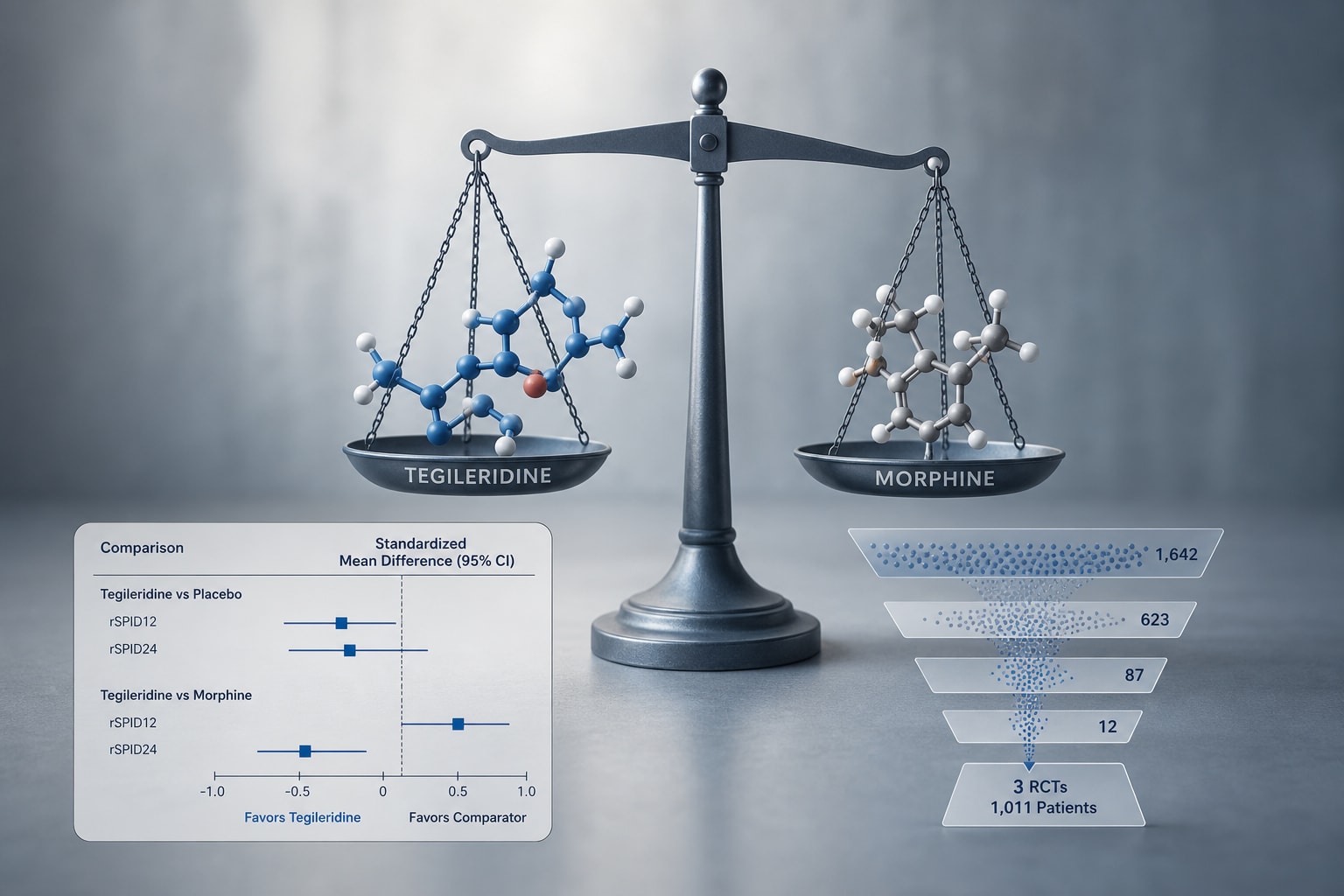
Tegileridine significantly reduced rSPID24 and rSPID12 compared to placebo.
No significant difference in efficacy was observed between tegileridine and morphine at rSPID12, but tegileridine was significantly weaker than morphine at rSPID24.
Total adverse events with tegileridine were higher than placebo but comparable to morphine.
Incidence of nausea and vomiting with tegileridine was similar to placebo and significantly lower than morphine.
No significant difference in respiratory depression incidence between tegileridine and morphine.
Interpretation:
Tegileridine demonstrates significant efficacy over placebo and a more favorable safety profile than morphine regarding nausea and vomiting.
Limitations:
Limited number of studies included in the meta-analysis.
Potential biases in the included studies as assessed by the Cochrane Risk of Bias tool.
Conclusion:
Tegileridine may serve as a viable alternative for postoperative acute pain management.