Conexiant’s news site is now MDSpire News. Learn more
Advertisement
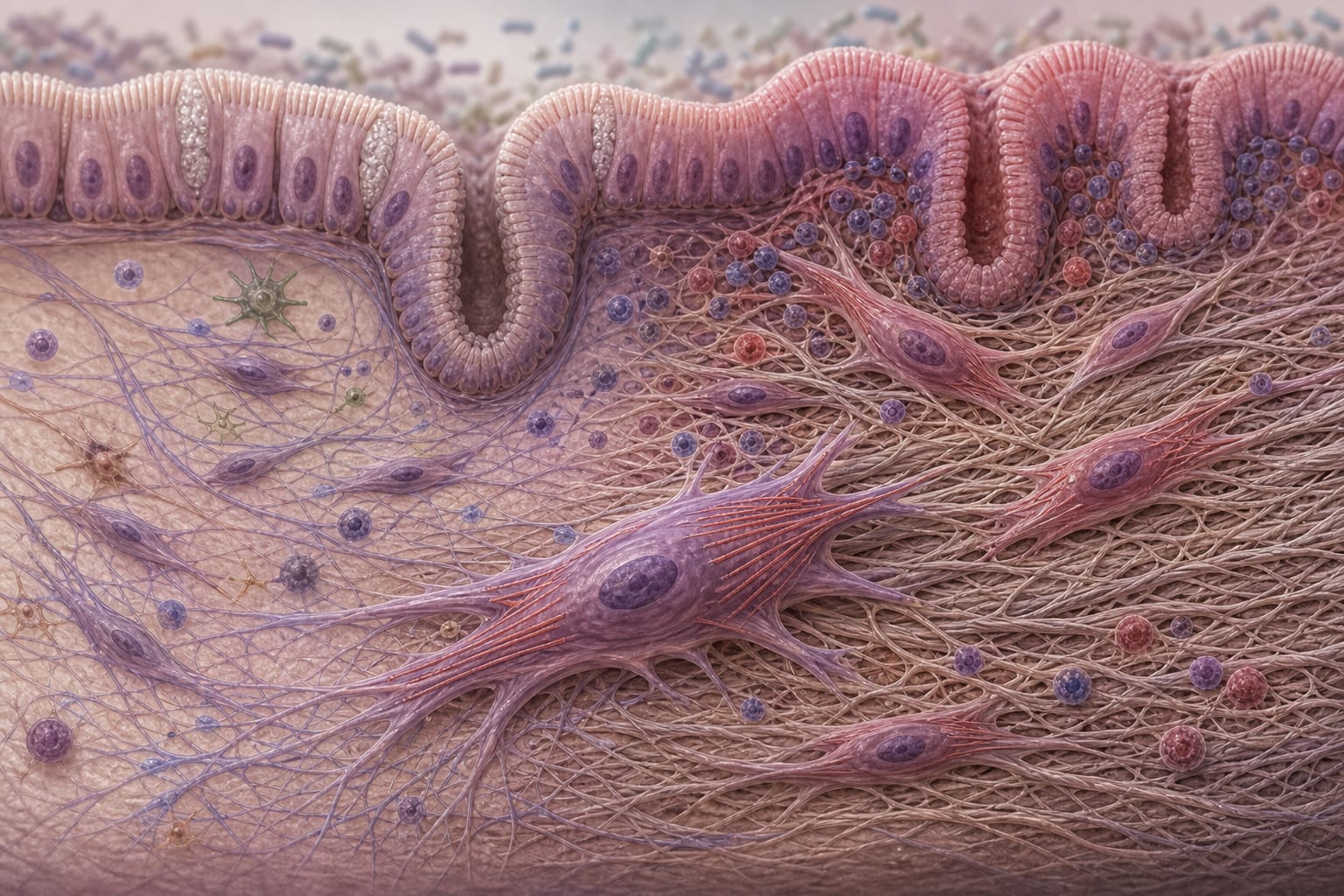
Subepithelial Myofibroblasts in the Intestine and Their Role in Inflammatory Bowel Disease: Exploring Fibroblast Diversity, Fibrosis, and Potential Therapeutic Approaches
To provide a comprehensive overview of the physiological and pathological roles of intestinal subepithelial myofibroblasts (ISEMFs) in inflammatory bowel disease (IBD) and to explore therapeutic strategies targeting these cells.
Approach:
Physiological Role of ISEMFs: Discusses ISEMF functions in maintaining epithelial integrity, supporting the intestinal stem-cell niche, and coordinating tissue repair.
Pathological Activation Mechanisms: Examines mechanisms of ISEMF activation during chronic inflammation, including immune-stromal crosstalk and key signaling pathways.
Fibroblast Heterogeneity: Highlights recent advances in single-cell and spatial transcriptomics revealing fibroblast diversity and pathogenic subsets.
Therapeutic Strategies: Summarizes current and emerging therapies targeting stromal pathways, including antifibrotic agents and biomarker-guided approaches.
Key Findings:
ISEMFs are central regulators of epithelial homeostasis and mucosal repair.
Persistent activation of ISEMFs leads to excessive matrix deposition and progressive fibrosis.
Fibroblast populations in the intestine are heterogeneous, with distinct roles in inflammation and fibrosis.
Chronic inflammation can lead to irreversible scarring and fibrostenosis, even in the absence of active inflammation.
Interpretation:
ISEMFs are implicated in intestinal fibrosis in IBD, and their persistent activation may contribute to the development of fibrostenotic complications.
Limitations:
Direct evidence for inflammation-independent progression of intestinal fibrosis is limited.
The understanding of fibroblast heterogeneity and its implications in IBD is still evolving.
Conclusion:
ISEMFs may represent targets for future disease-modifying therapies in IBD.