Machine learning-based identification of inflammatory biomarkers for predicting pulmonary consolidation in children with Chlamydia pneumoniae infection - Summary - MDSpire
Advertisement
Machine learning-based identification of inflammatory biomarkers for predicting pulmonary consolidation in children with Chlamydia pneumoniae infection
To identify core inflammatory biomarkers and develop an online risk calculator for predicting pulmonary consolidation in children with Chlamydia pneumoniae infection, addressing the need for effective early warning tools.
Key Findings:
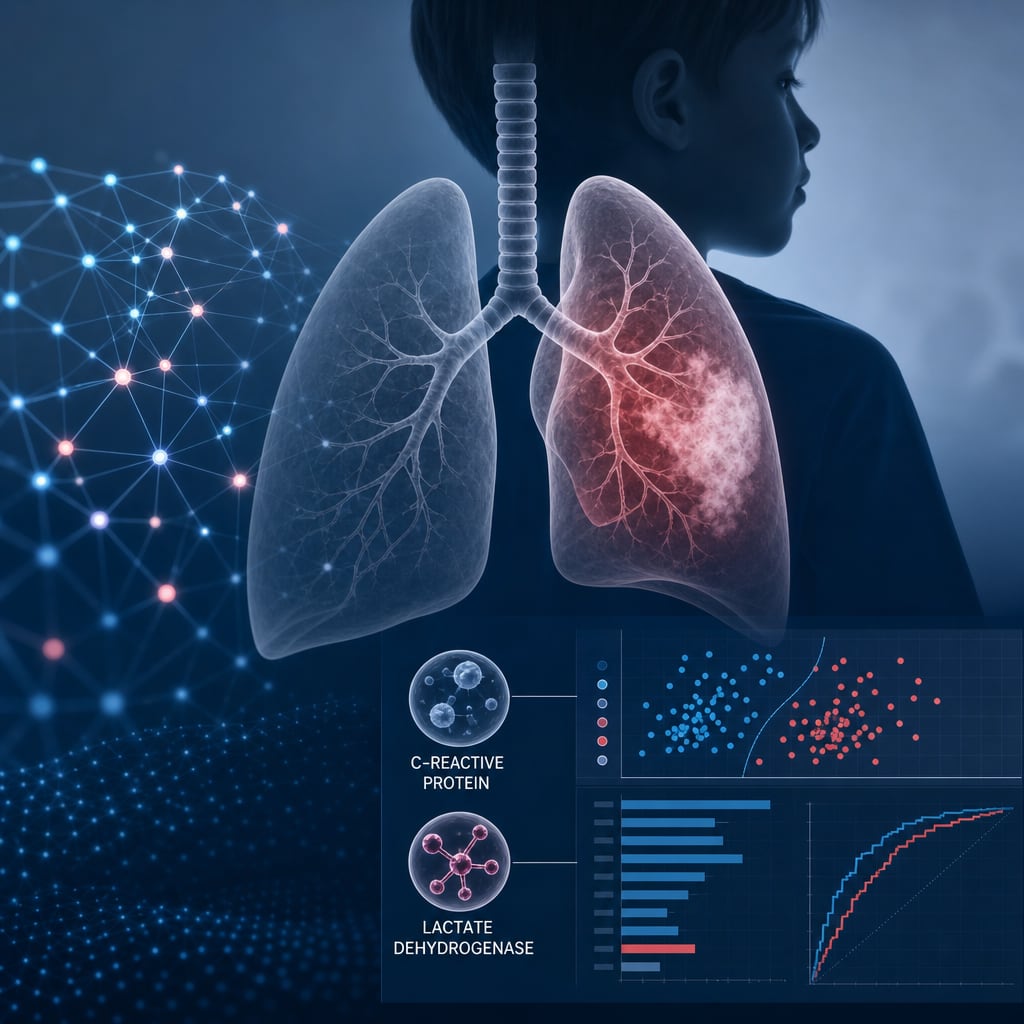
LDH, CRP, and ESR were identified as core inflammatory markers for predicting pulmonary consolidation, with significant implications for early intervention.
These markers were significantly higher in the consolidation group (P < 0.001), indicating their potential as reliable indicators.
K-means clustering revealed a high-inflammation group with a 100% consolidation rate compared to 51.5% in the low-inflammation group (P = 0.008), highlighting the importance of stratification.
The risk assessment system showed excellent predictive performance (AUC = 0.993), suggesting its utility in clinical settings.
Interpretation:
The identified biomarkers and the developed risk assessment system can facilitate early identification of high-risk pediatric patients with C. pneumoniae infection, potentially guiding treatment decisions.
Limitations:
Retrospective design may introduce selection bias, potentially affecting the reliability of the findings.
Limited sample size may affect generalizability, necessitating further validation in larger cohorts.
Conclusion:
LDH, CRP, and ESR are key indicators for predicting pulmonary consolidation in children with C. pneumoniae infection, and the online risk assessment system is clinically usable for early risk identification, potentially improving patient outcomes.