Surgical outcomes of indocyanine green fluorescent cholangiography in emergency laparoscopic cholecystectomy performed by junior surgeons for acute cholecystitis - Summary - MDSpire
Advertisement
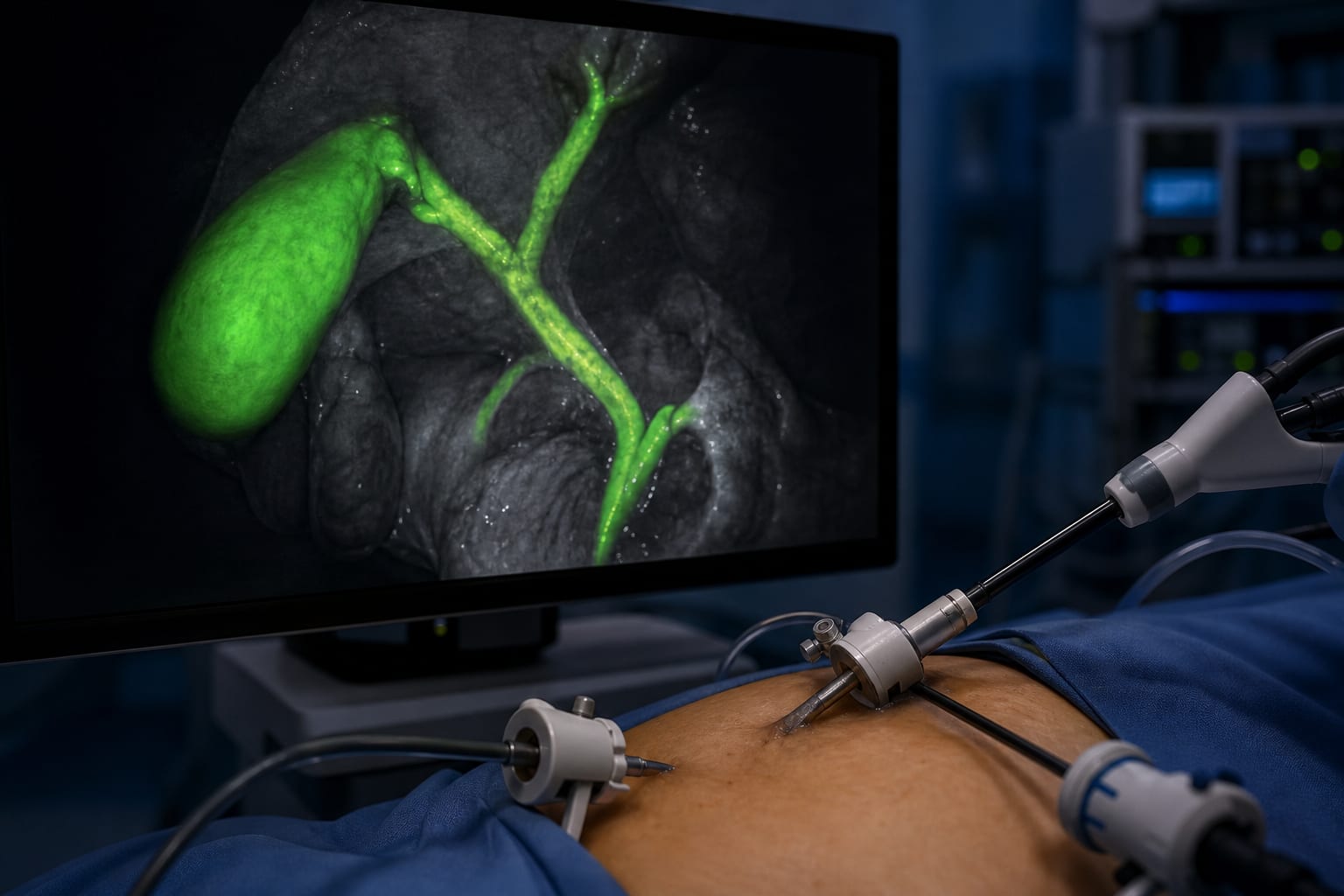
Surgical outcomes of indocyanine green fluorescent cholangiography in emergency laparoscopic cholecystectomy performed by junior surgeons for acute cholecystitis
To evaluate the surgical outcomes of ICG fluorescent cholangiography during emergency laparoscopic cholecystectomy performed by junior surgeons.
Approach:
Data Collection: Demographic and clinical characteristics were collected, including operative time, bile duct injury incidence, conversion to open surgery, postoperative complications, hospital stay duration, and costs.
Key Findings:
ICG group had a significantly shorter operative time (65 min vs. 72.5 min, P = 0.007).
No significant differences in bile duct injury incidence, conversion to open surgery, postoperative complications, hospital stay duration, or hospitalization costs between groups.
ICG use was independently associated with decreased operative time.
Interpretation:
The use of ICG fluorescent cholangiography during emergency laparoscopic cholecystectomy may help junior surgeons reduce operative time without increasing perioperative complications.
Limitations:
Retrospective study design may introduce selection bias.
Limited to a single institution, which may affect generalizability.
Conclusion:
Utilization of ICG fluorescent cholangiography could assist junior surgeons in shortening operative time during emergency laparoscopic cholecystectomy.