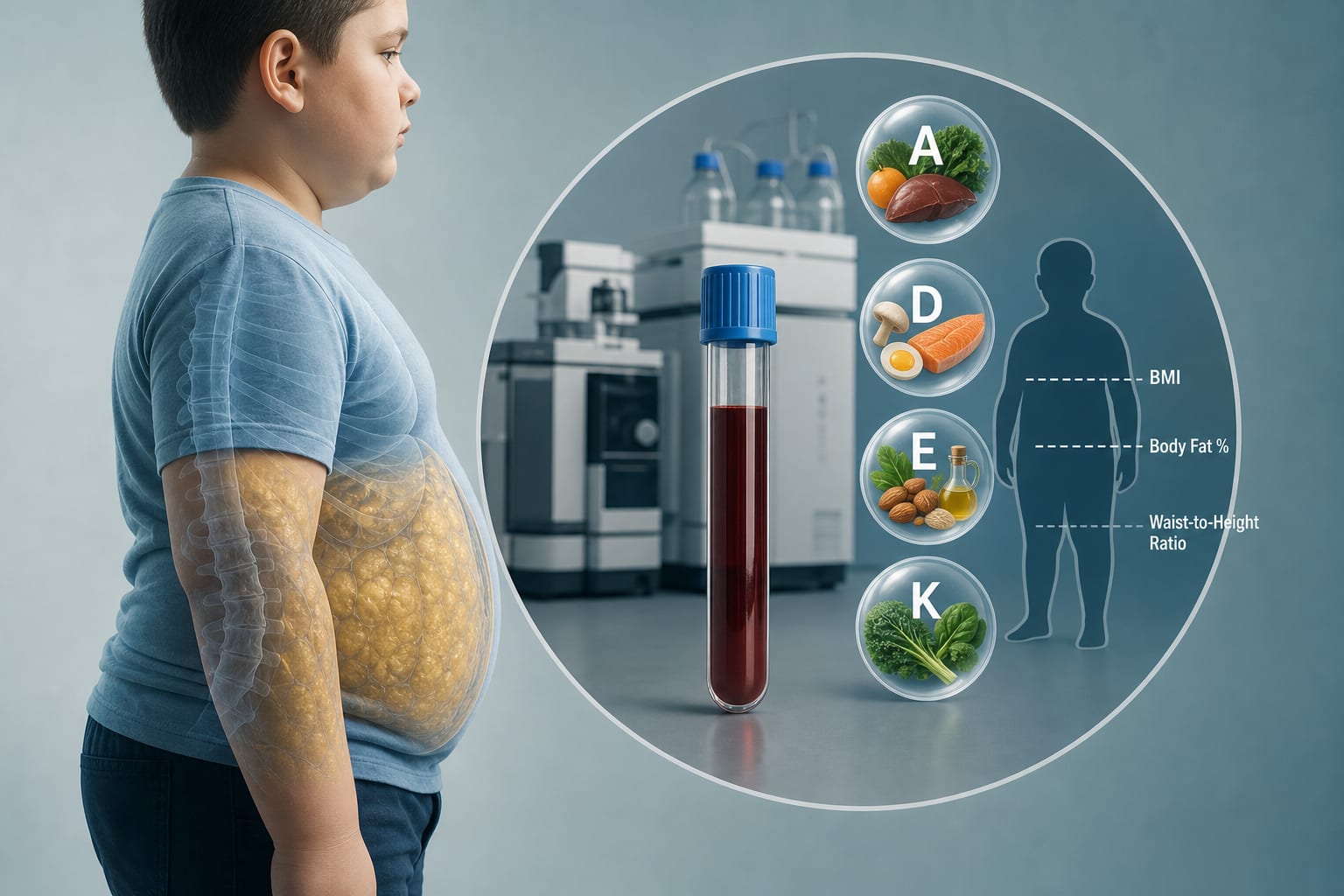
To examine maternal vitamins A, D, and E concentrations during the second and third trimesters of pregnancy and their associations with birth weight in individuals with pre-pregnancy overweight or obesity, specifically focusing on a high-income setting.
Key Findings:
Mean maternal retinol and 25(OH)D concentrations declined significantly from the second to the third trimester.
Vitamin E levels increased during the same period.
Vitamin A insufficiency, vitamin D deficiency/insufficiency, and macrosomia were prevalent among participants.
Maternal vitamins A, D, and E were not associated with birth weight, indicating no significant impact on fetal growth.
Interpretation:
Maternal fat-soluble vitamin levels did not independently influence birth weight in overweight or obese pregnant individuals, suggesting limited impact on fetal growth in this high-risk population and highlighting the need for further research.
Limitations:
Small sample size of 57 mother-infant pairs may limit the robustness of findings.
Study conducted in a high-income setting, limiting generalizability to other populations.
Potential biases or confounding factors not fully addressed.
Conclusion:
Maternal vitamin A and D concentrations declined while vitamin E increased during pregnancy, but these changes did not correlate with birth weight, indicating that vitamin status may not be a major determinant of fetal growth in this context.
by Astrid Kamilla Stunes, Unni Syversen, Anna Hundere Øvreseth, Ingvild Tapio Kinge, Siv Mørkved, Kjell Åsmund Salvesen, Kirsti Krohn Garnæs, Trine Moholdt
Researchers found that patients with higher waist circumference and lower grip strength had the greatest risk for developing type 2 diabetes during long-term follow-up.