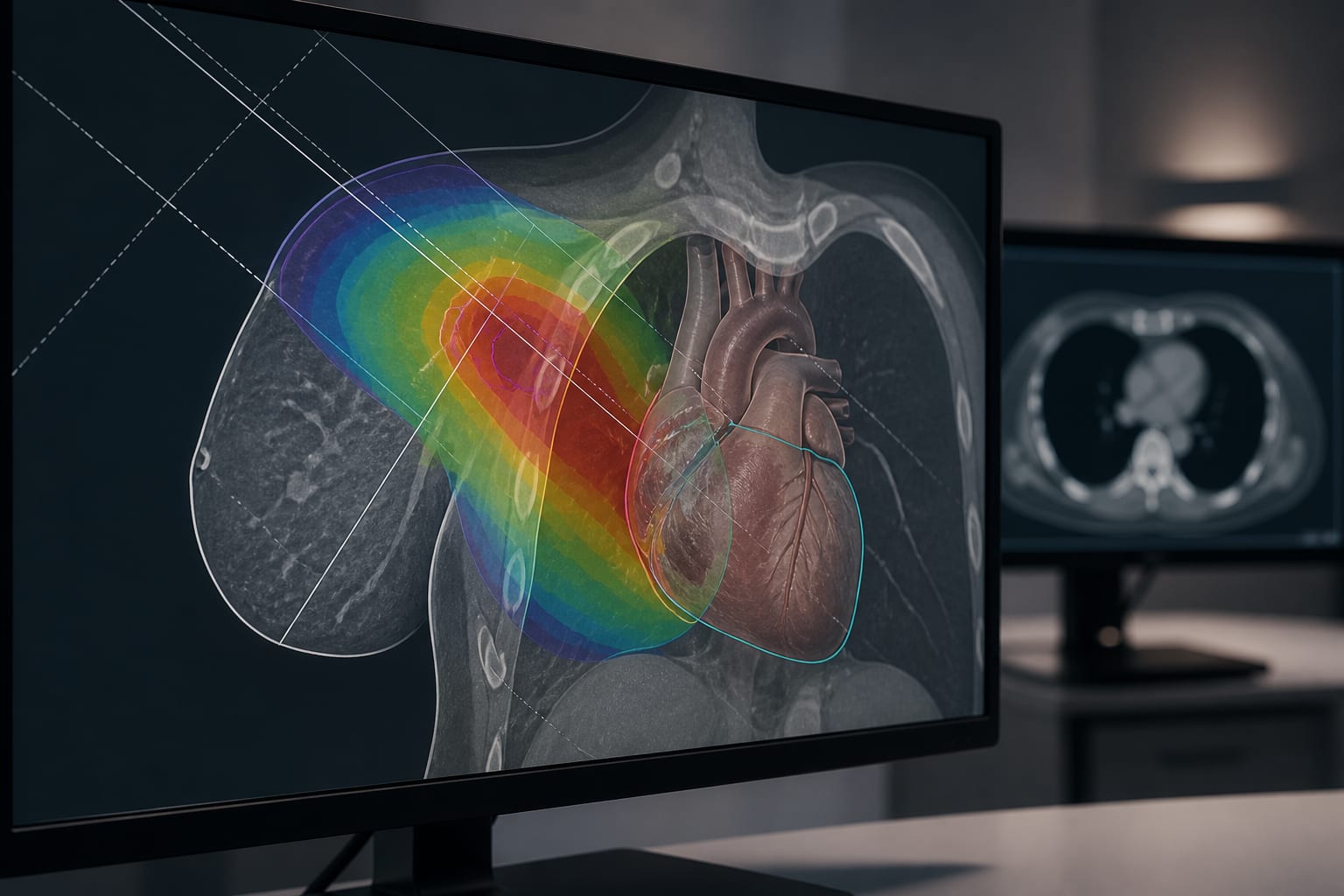
To examine the impact of a dedicated inpatient radiation oncology consult (IROC) service on the delivery of potentially nonbeneficial radiotherapy (RT) at the end of life.
Approach:
Key Findings:
450 patients identified; 101 (22.4%) received RT and 349 (77.6%) had RT deferred, indicating a significant portion of patients did not undergo potentially nonbeneficial treatment.
RT rate decreased from 31.7% before IROC implementation to 20.2% after (P = .03), suggesting improved treatment selection.
Incomplete RT courses reduced from 18.3% before to 10.0% after IROC implementation (P = .02), highlighting better adherence to treatment protocols.
Hospital deaths after RT receipt decreased from 23.9% to 14.4% post-IROC implementation (P = .02), indicating improved patient outcomes.
Interpretation:
Implementation of the IROC service was associated with reduced delivery of RT and fewer hospital deaths among patients receiving RT, suggesting that the service may enhance treatment selection and reduce nonbeneficial interventions near end of life.
Limitations:
Retrospective design limits causal inferences and may introduce bias.
Potential unmeasured confounders, including practice changes and patient selection, could affect the validity of the findings.
Outcome measurement based on 14-day mortality may not fully capture the long-term benefits or harms of RT.
Conclusion:
The study suggests that a dedicated IROC service may decrease nonbeneficial RT interventions in terminal cancer patients, warranting further investigation into its broader implications.