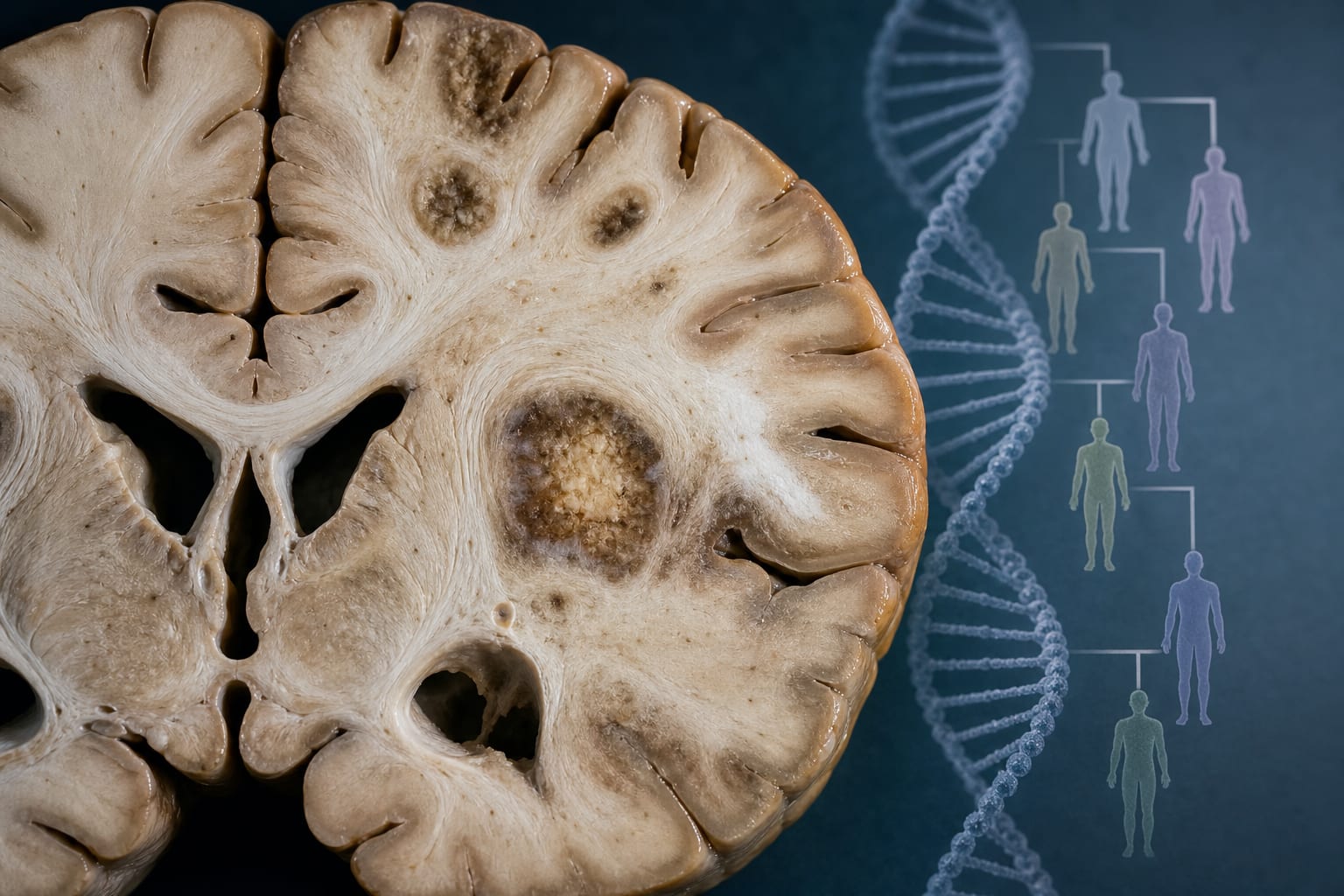
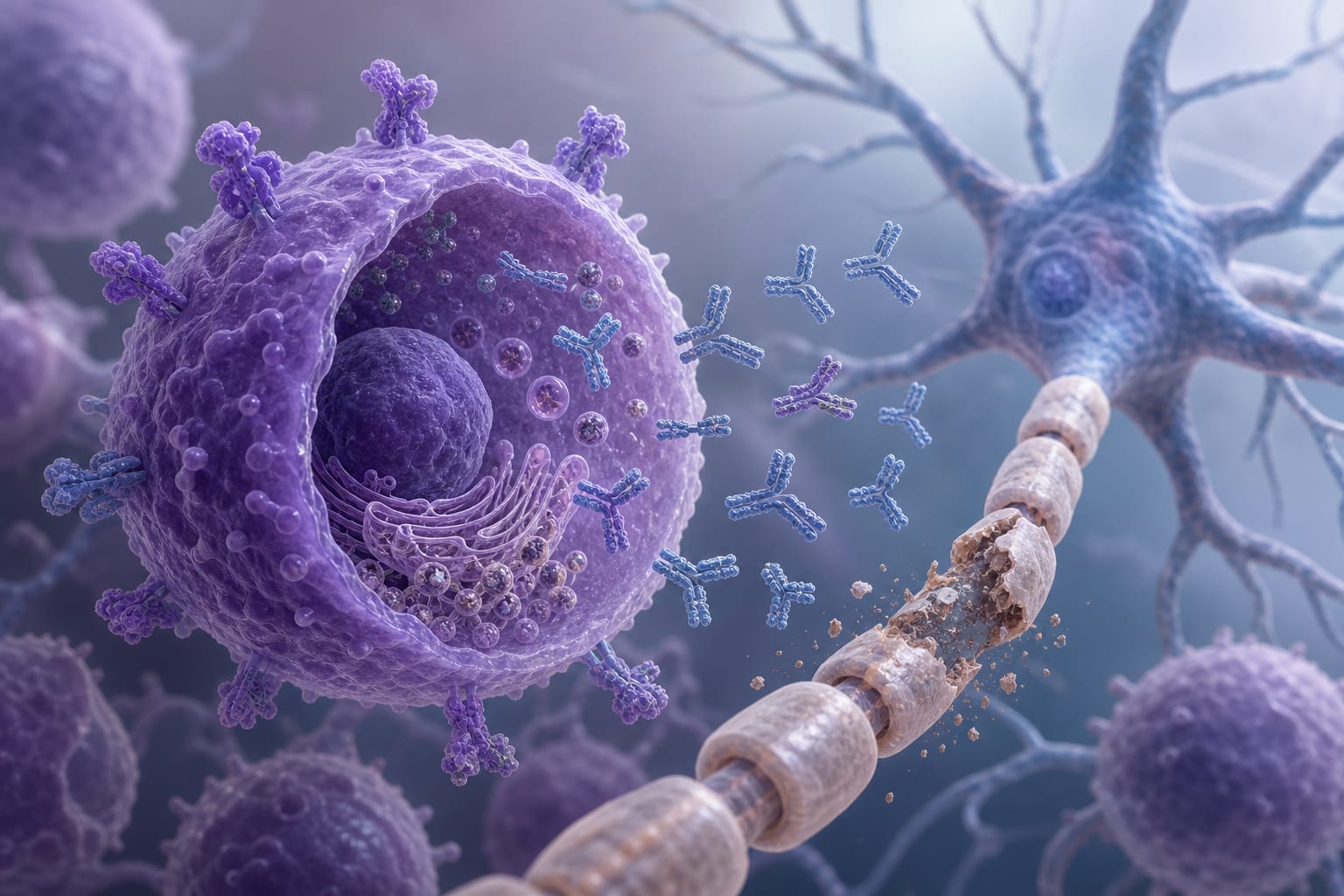
Donor-specific pathological features associate with genetic background, lesion type distribution, and clinical heterogeneity in multiple sclerosis - Summary - MDSpire
To investigate whether donor-specific pathological features in MS reflect biological processes associated with genetics, lesion patterns, and clinical disease course.
Approach:
Study Cohort: Utilized a well-characterized Netherlands Brain Bank MS autopsy cohort (NBB-MS) comprising 287 donors with confirmed MS pathology.
Tissue Sampling: Post-mortem brain tissue was dissected from standardized locations, with lesions identified macroscopically and through MRI.
Histopathological Analysis: Tissue blocks were double-immunostained to visualize activated microglia/macrophages and myelin, and lesions were classified based on inflammatory activity and myelin status.
Donor Stratification: Donors were stratified based on the presence of pathological features such as perivascular cuffs, microglial nodules, broad rim lesions, and remyelination efficiency.
Key Findings:
Substantial inter-individual heterogeneity in MS was observed, influenced by donor-specific pathological features.
Higher lesion load and mixed lesions correlate with faster disability accumulation.
Pathological features may reflect persistent inflammatory and reparative processes in MS.
Interpretation:
Limitations:
Exclusion of donors with relevant neurological or systemic comorbidities may limit generalizability.
Only donors with Braak scores ≤ 3 were included, potentially affecting the findings.
Federal prosecutors allege that a Florida physician and research staff fabricated clinical trial records that were submitted into database systems used to evaluate investigational drugs.