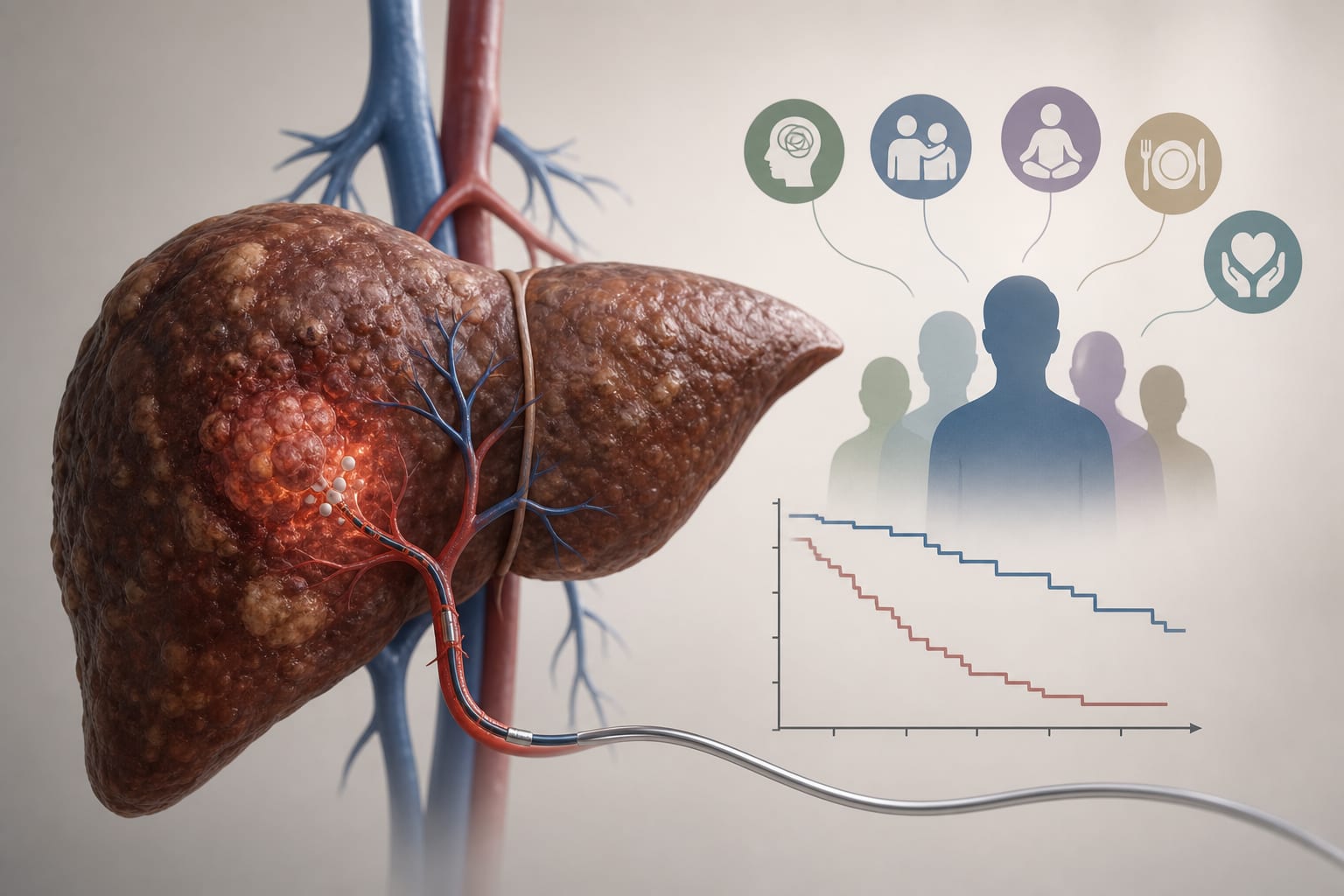
To identify factors associated with longitudinal supportive care needs (SCN) and examine the prognostic value of SCN in patients with advanced liver cancer.
Approach:
Key Findings:
Follow-up time, treatment response, HADS score, KPS score, ZBI score, education level, economic burden, and Child-Pugh grade were significantly associated with longitudinal SCNS total score.
Progressive disease (PD) correlated with higher SCNS total score, while partial response (PR) correlated with lower SCNS total score.
Higher SCN was significantly associated with increased mortality risk; each 1-SD increase in baseline SCNS total score was linked to a hazard ratio (HR) of 1.95 (95% CI: 1.44–2.65).
The association remained significant in various survival models, indicating SCN as a dynamic prognostic indicator.
Interpretation:
Limitations:
The study was conducted at a single center, which may limit generalizability.
The sample size may not be large enough to capture all variations in SCN and survival outcomes.