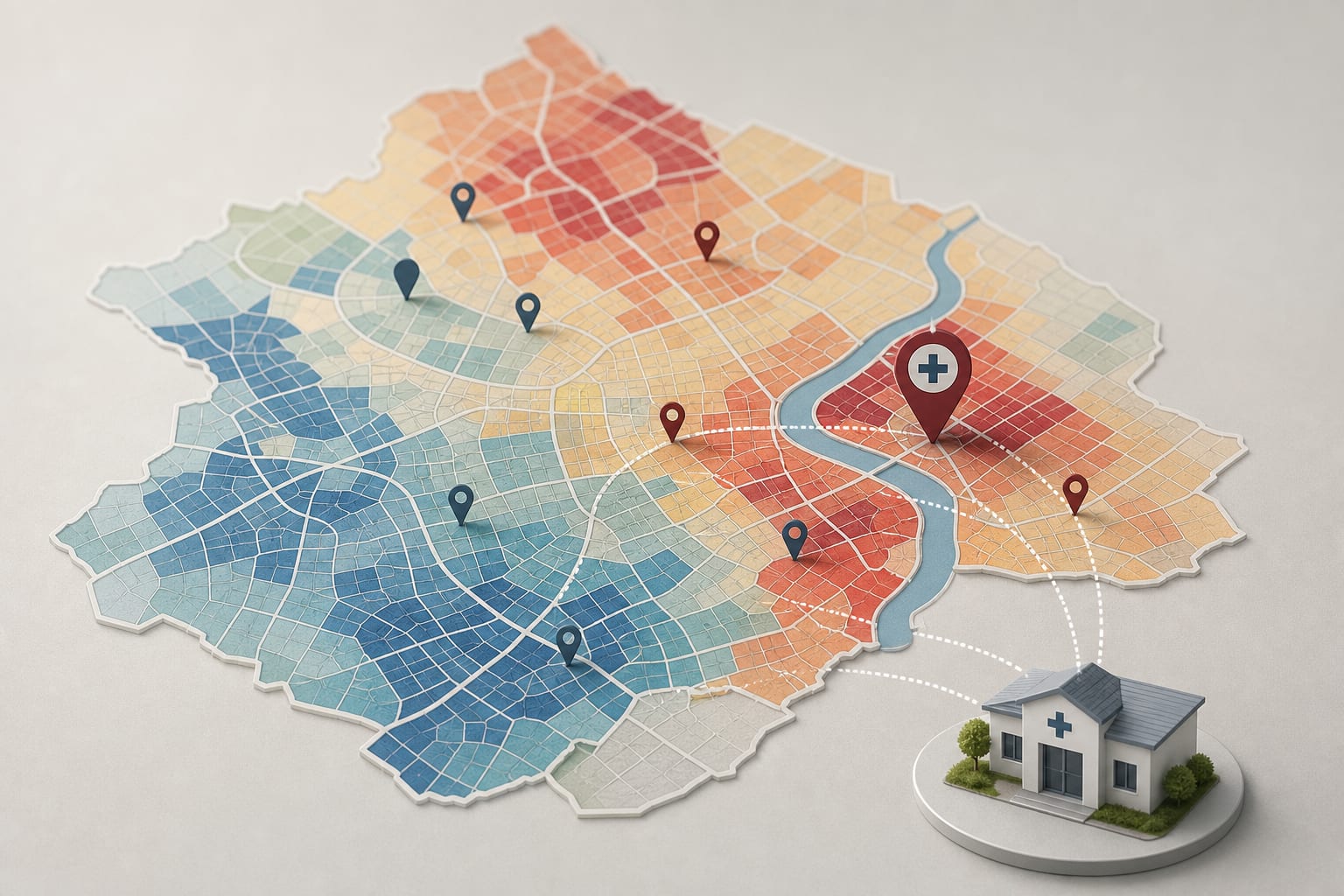
To guide researchers on how to include social risk in analyses when small area location data is unavailable.
Approach:
Data Source: Utilized a large primary care dataset from the American Family Cohort, covering January 1, 2019, to December 31, 2021.
Social Risk Indices: Calculated three area-based social risk indices: Reproducible Area Deprivation Index (ReADI), Social Deprivation Index (SDI), and Social Vulnerability Index (SVI) using American Community Survey data.
Analyses Conducted: Performed two analyses: correlation of social risk indices across geographic levels and regression analysis of social risk indices against chronic disease outcomes.
Key Findings:
Social risk indices at clinic locations did not correlate meaningfully with those at patients' homes.
Correlation of indices at the block group level with 3-digit ZCTA ranged from 0.34 to 0.48.
Correlation decreased as the geographic scale increased.
Interpretation:
The study identifies limitations in using higher-level geographic data for social risk indices and highlights the necessity for small-area data for accurate assessments.
Limitations:
Race and/or ethnicity data was missing for 17% of patients and was imputed.
Social risk indices calculated at higher geographic levels may not accurately reflect individual-level risks.
Conclusion:
Caution is advised when using social risk indices derived from larger geographic areas in health outcome studies.
Shear wave velocity measurements in the basal anteroseptal and right ventricular walls differed between transthyretin and light chain cardiac amyloidosis when conventional echocardiographic parameters did not.