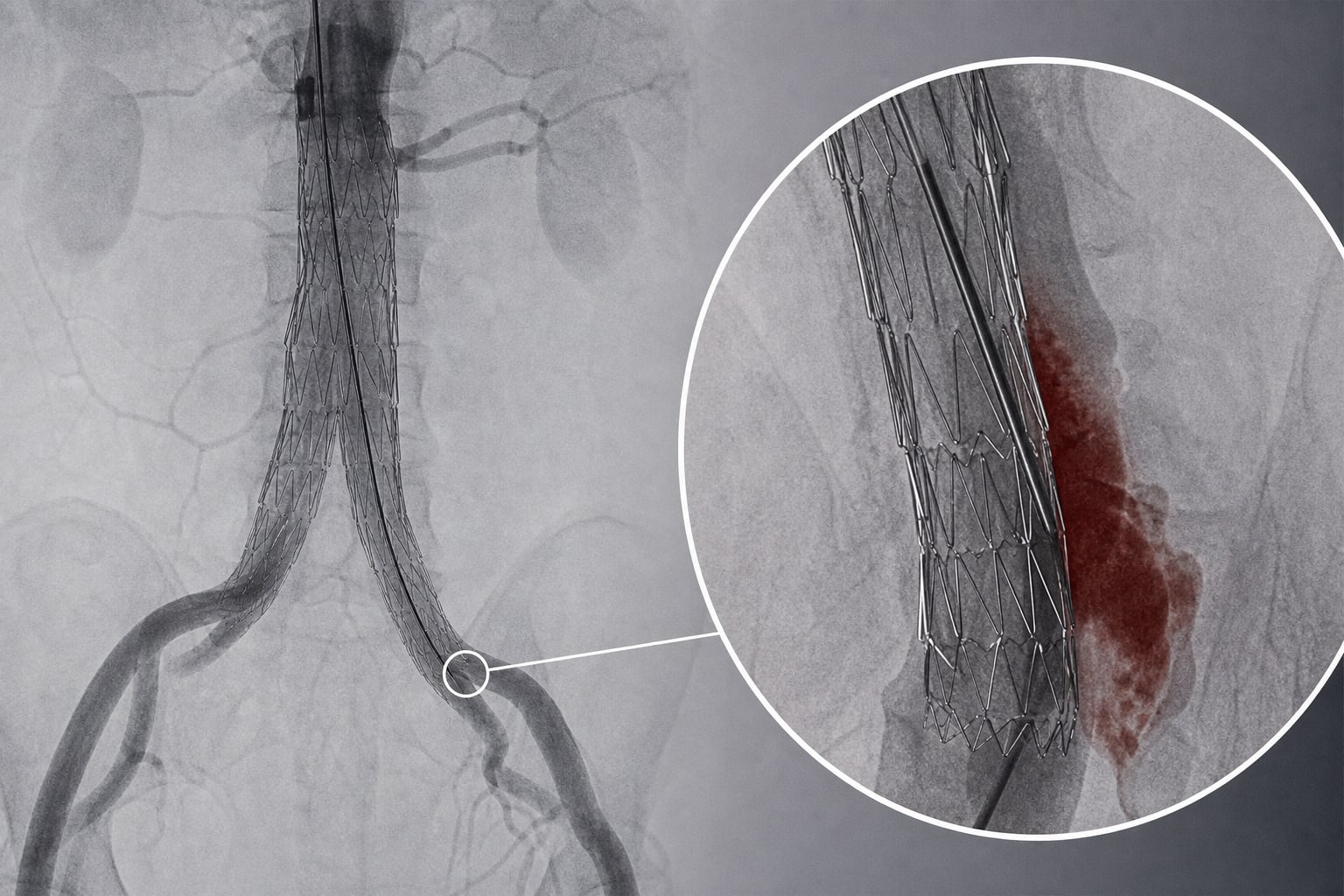
To highlight the risks associated with the retention of a stiff guidewire during endovascular aneurysm repair (EVAR) and its potential to mislead intraoperative assessments, particularly regarding the detection of type Ib endoleaks.
Approach:
Case Presentation: A woman in her late 70s with a history of abdominal aortic aneurysm (AAA) and significant comorbidities, including hypertension, atrial fibrillation, and chronic heart failure, underwent EVAR. Preoperative imaging revealed a type Ib endoleak, and a secondary endovascular intervention was planned.
Key Findings:
Retention of a stiff guidewire may lead to false-negative completion angiograms.
Type Ib endoleaks can occur despite initial angiographic assessments showing no leaks.
Intraoperative imaging misinterpretation can be exacerbated by anatomical challenges, such as severe vessel tortuosity.
Interpretation:
The case illustrates a technical pitfall in EVAR that can result in misdiagnosis of sealing adequacy.
Limitations:
Lack of detailed records from the initial EVAR procedure limited the understanding of prior interventions and their impact on the current case analysis.
The case report is based on a single patient experience, which may not be generalizable.
Conclusion:
Awareness of the risks associated with retained guidewires is crucial for improving technical assessments in EVAR.