Association between perfluoroalkyl and polyfluoroalkyl substances and response to the COVID-19 vaccine in a paediatric prospective observational cohort in Arizona - Summary - MDSpire
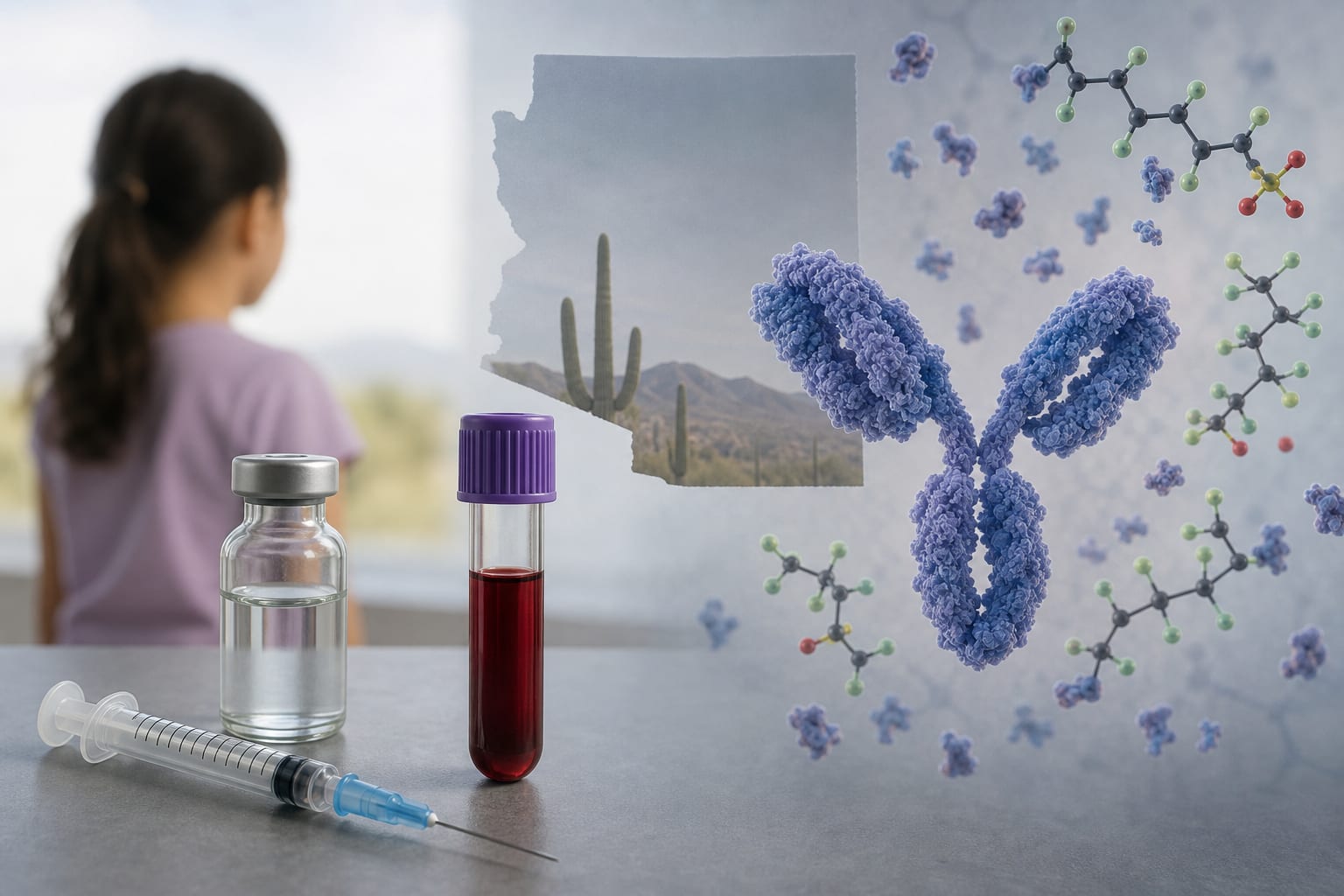
To explore the relationship between serum PFAS concentration and antibody response to COVID-19 vaccinations in children.
Approach:
Study Design: A prospective cohort study using data from the AZ-HEROES Kids study, recruiting participants aged 6 months to 17 years who received a full primary mRNA COVID-19 vaccine series.
Sample Collection: Participants submitted blood specimens 14–60 days post-vaccination, with 13 PFAS chemicals measured in serum samples.
Antibody Measurement: Antibody binding to the SARS-CoV-2 spike protein was measured using a semi-quantitative ELISA, and regression models assessed the relationship between PFAS concentration and antibody response.
Key Findings:
Increased total log-PFOS concentration was associated with a 5.0% decrease in RBD AUC.
Linear and branched isomers of PFOS were associated with a 4.8% and 4.9% decrease in RBD AUC, respectively.
Interpretation:
Limitations:
The study sample size was limited to 120 individuals.
The research focused only on specific PFAS chemicals and may not represent all PFAS compounds.