To evaluate the efficacy and safety of JAK inhibitors in treating rheumatoid arthritis-associated interstitial lung disease (RA-ILD).
Approach:
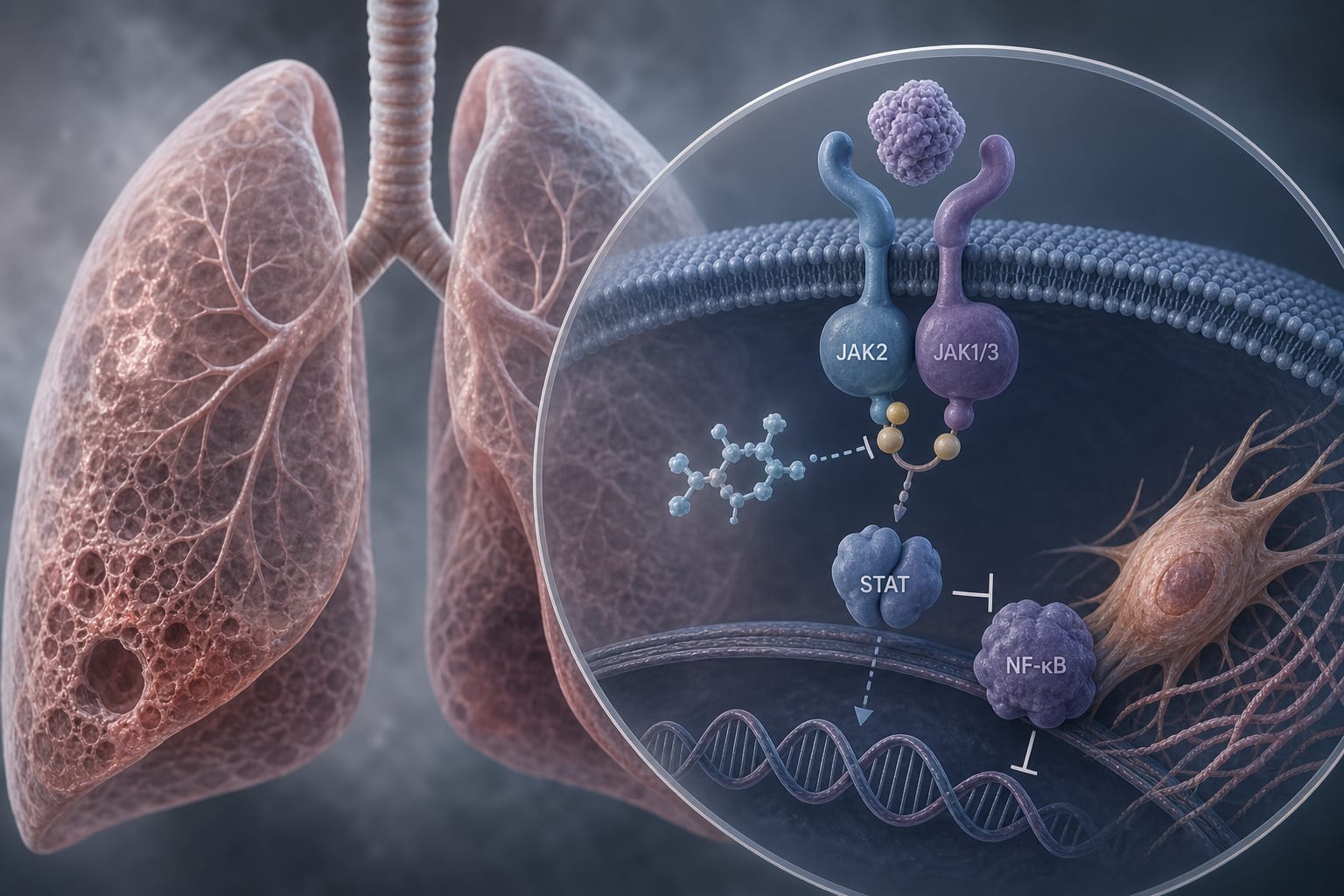
Mechanistic Insights: Preclinical studies suggest JAK inhibitors inhibit the IL-17A/JAK2/NF-κB axis in lung fibroblasts and modulate lung immunity.
Clinical Evidence: Observational studies and meta-analyses indicate JAK inhibitors do not increase ILD risk and may stabilize/improve lung function in established RA-ILD.
Key Findings:
JAK inhibitors show comparable efficacy to abatacept or rituximab in RA-ILD.
Real-world data suggest a higher risk of mortality and severe outcomes compared to TNF inhibitors, particularly in older patients or those with cardiovascular comorbidities.
Current evidence on JAK inhibitors in RA-ILD is primarily from observational studies, limiting the strength of recommendations.
Interpretation:
While JAK inhibitors are effective in RA-ILD, careful patient selection and risk-benefit assessment are necessary.
Limitations:
Evidence mainly derived from observational studies and case series.
Limited data on long-term safety and efficacy.
Conclusion:
Confirmatory randomized controlled trials are needed to validate the findings regarding JAK inhibitors in RA-ILD.