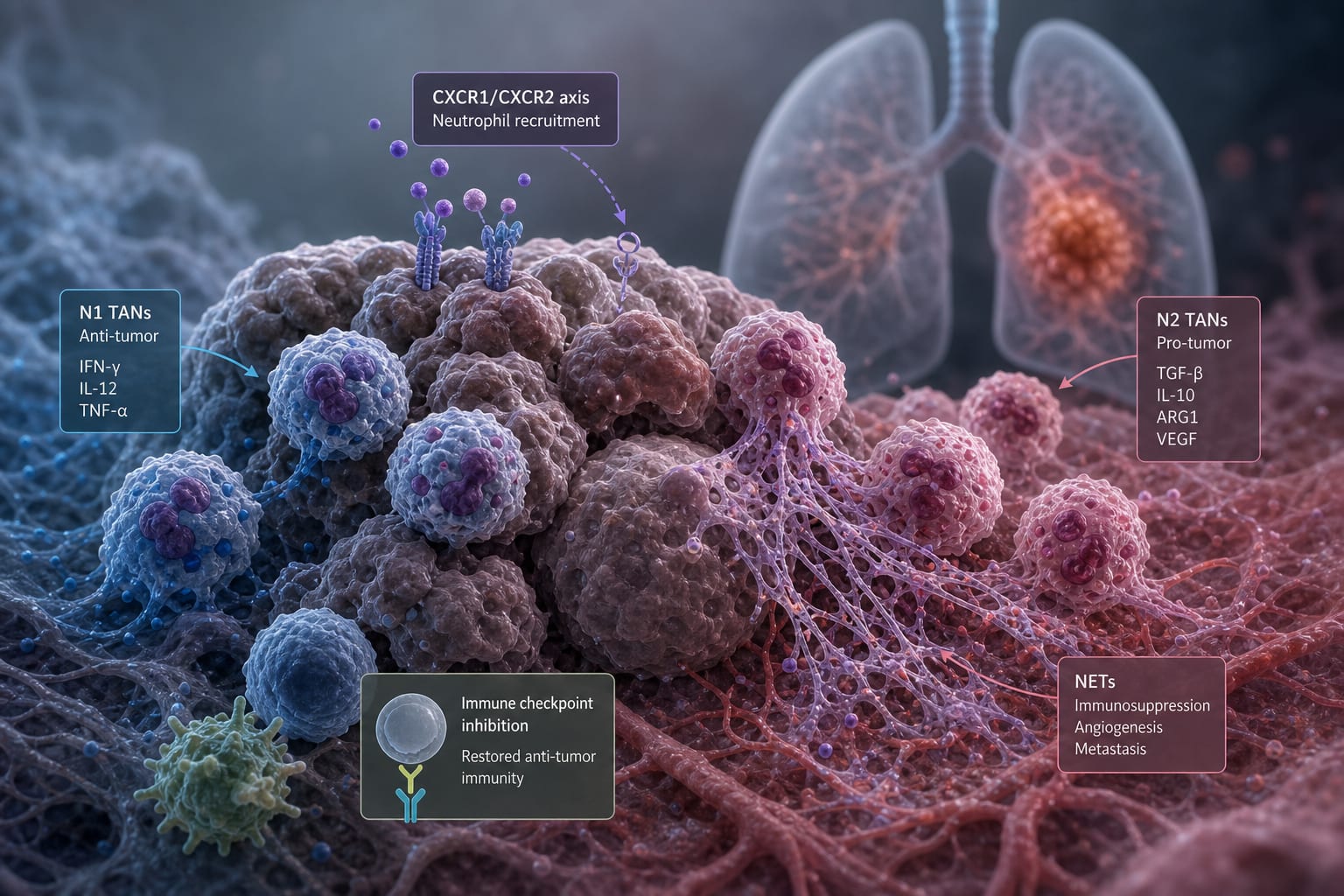
To systematically integrate the regulatory network of tumor-associated neutrophils (TANs) within the lung adenocarcinoma (LUAD) microenvironment and evaluate therapeutic strategies targeting TANs.
Approach:
Regulatory Network of TANs: The review dissects TAN recruitment via the CXCR1/CXCR2 axis, polarization into N1 and N2 phenotypes influenced by TGF-β and IFN-γ, and the formation of neutrophil extracellular traps (NETs).
Therapeutic Strategies: Current strategies targeting TANs include CXCR1/2 inhibitors, PAD4 inhibitors, NET-degrading enzymes, and TGF-β inhibitors, supported by preclinical and clinical evidence.
Key Findings:
TANs exhibit dual functions in tumor promotion (immunosuppression, angiogenesis, metastasis) and tumor suppression (direct cytotoxicity, antigen presentation).
TANs are recruited to tumors via the CXCR1/CXCR2 axis, with distinct subpopulations identified through single-cell RNA sequencing.
The polarization of TANs into N1 and N2 phenotypes is influenced by the tumor microenvironment, particularly by TGF-β.
Interpretation:
The review provides a comprehensive framework for understanding TANs in LUAD, highlighting their complex roles and the potential for targeted therapies to address immunotherapy resistance.
Limitations:
Existing studies often focus on single molecules or cell types, lacking a multi-dimensional framework.
Challenges include off-target toxicity, infection risk, and the lack of predictive biomarkers for TAN-targeted therapies.
Conclusion:
This review bridges mechanistic insights with translational opportunities for developing neutrophil-targeted combination therapies in LUAD.