TRPV1-mediated calcium signaling underlies the synergistic pro-apoptotic effects of lidocaine and melatonin in SH-SY5Y neuroblastoma cells - Summary - MDSpire
Advertisement
TRPV1-mediated calcium signaling underlies the synergistic pro-apoptotic effects of lidocaine and melatonin in SH-SY5Y neuroblastoma cells
To investigate the individual and combined effects of lidocaine and melatonin on SH-SY5Y neuroblastoma cells, focusing on TRPV1-dependent intracellular mechanisms.
Apoptosis Evaluation: Assessed apoptosis, reactive oxygen species (ROS) production, mitochondrial membrane potential, and caspase activities using spectrofluorometric methods.
Key Findings:
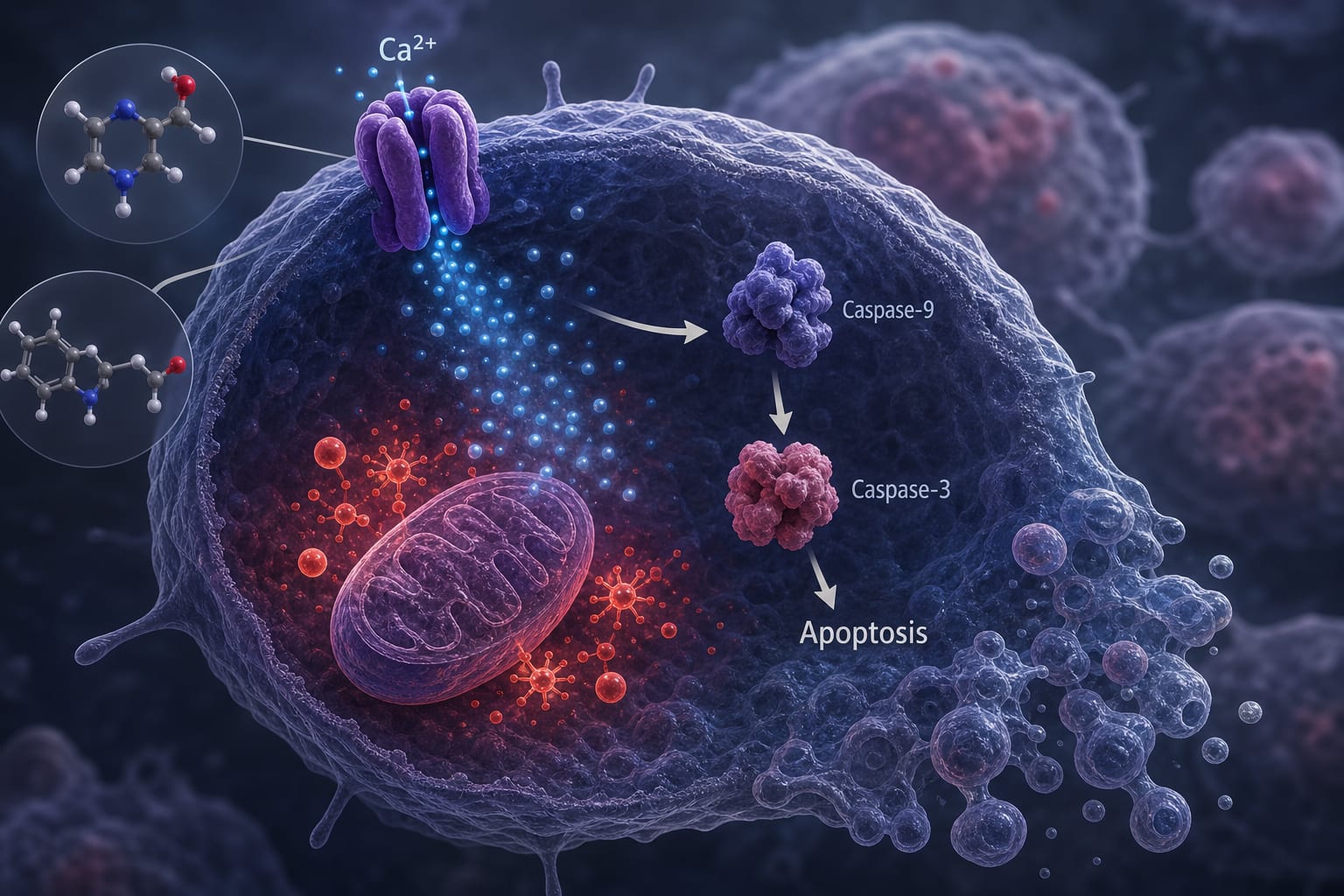
The combination of lidocaine and melatonin significantly increased cytosolic Ca²+ levels, ROS production, mitochondrial depolarization, caspase activation, and apoptosis compared to control and single-treatment groups.
The pro-apoptotic effects were attenuated by capsazepine, indicating TRPV1-mediated Ca²+ influx as a central mechanism.
The study indicates a Ca²+–mitochondria–ROS feed-forward axis leading to mitochondrial dysfunction and caspase-dependent apoptosis.
Interpretation:
Lidocaine and melatonin synergistically promote apoptosis in SH-SY5Y neuroblastoma cells through TRPV1-linked calcium-dependent pathways.
Limitations:
The study is based on in vitro findings, which may not directly translate to systemic clinical exposure.
Careful monitoring is required for systemic lidocaine administration due to potential toxicity.
Conclusion:
These findings provide a mechanistic basis for further investigation of anesthetic–adjunct interactions in translational oncology research.