Independent factors associated with renal impairment in preeclampsia and its association with maternal and neonatal adverse outcomes - Summary - MDSpire
Advertisement
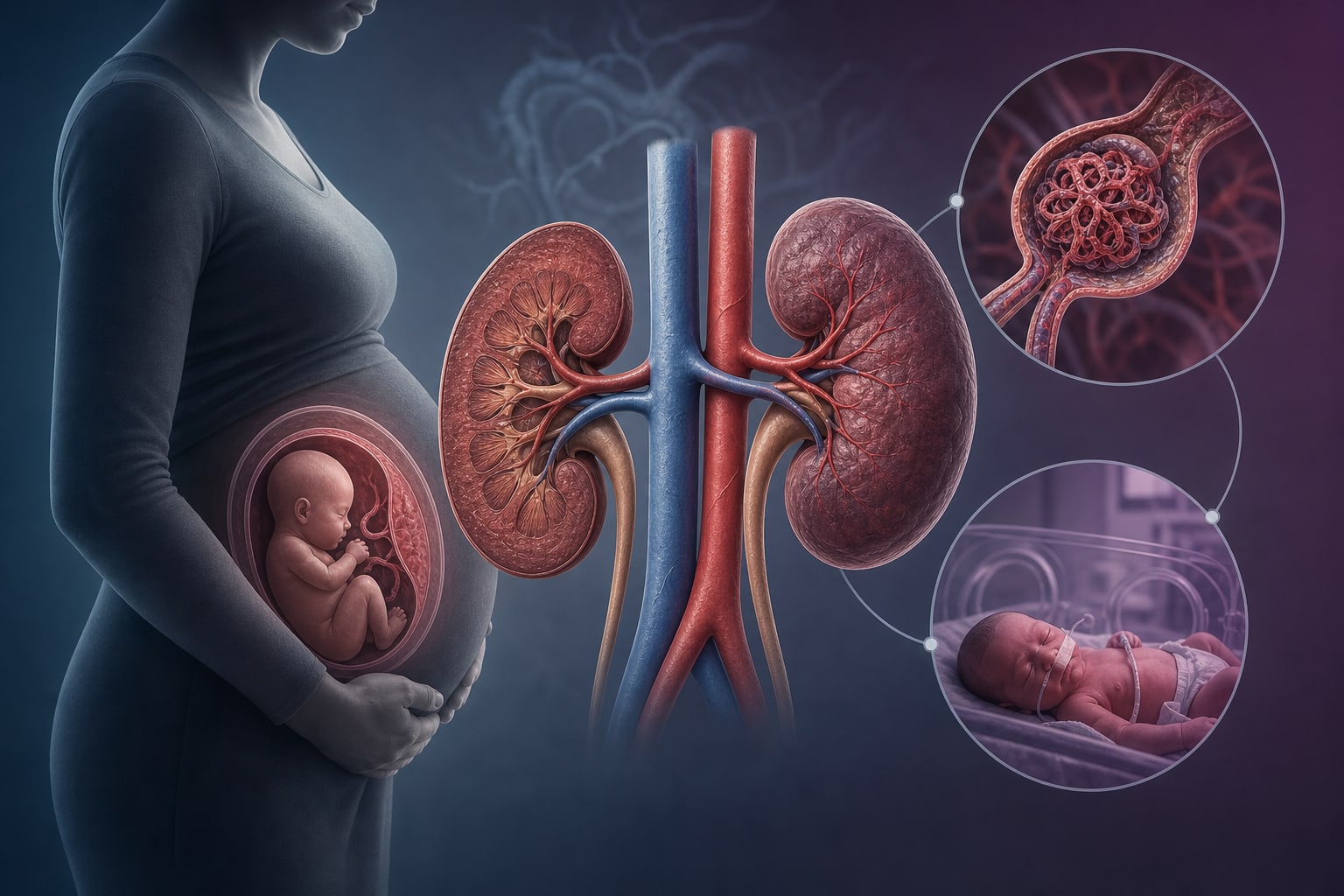
Independent factors associated with renal impairment in preeclampsia and its association with maternal and neonatal adverse outcomes
To evaluate independent factors associated with renal impairment in preeclampsia and examine the association between renal impairment and in-hospital maternal and neonatal adverse outcomes.
Approach:
Study Design: Retrospective cohort study including 333 women with preeclampsia managed between June 2021 and June 2022.
Key Findings:
Higher BMI, MAP, and uric acid were independently associated with renal impairment.
Later gestational age, higher albumin, and higher platelet count were inversely associated with renal impairment.
Renal impairment was associated with increased odds of composite adverse maternal outcomes, ICU admission, eclampsia, preterm birth, low birth weight, low 5-min Apgar score, and neonatal ICU admission.
Interpretation:
Renal impairment in preeclampsia is linked to hemodynamic severity and biochemical markers, indicating a potential marker for in-hospital risk stratification.
Limitations:
Retrospective design may introduce bias.
Findings require prospective validation.
Conclusion:
Renal impairment in preeclampsia is associated with significant maternal and neonatal adverse outcomes, warranting further investigation.