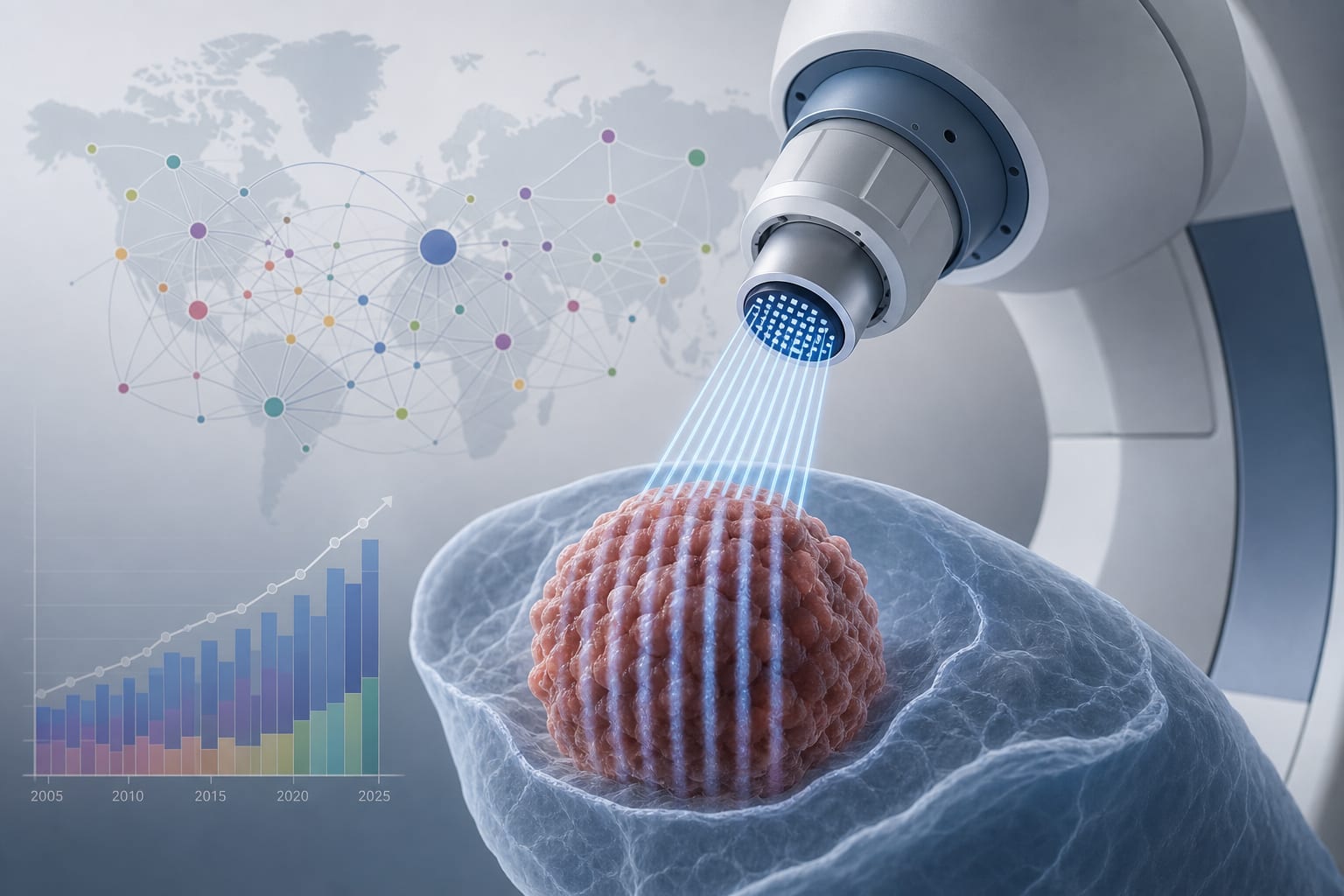
To provide a comprehensive bibliometric evaluation of Spatially Fractionated Radiotherapy (SFRT) research, mapping trajectories and identifying future priorities, including a detailed analysis of publication trends and institutional contributions.
Key Findings:
SFRT research shows a three-phase evolutionary pattern with a significant increase in publications and citations from 2020 to 2025.
The United States has the highest cumulative research output, while France leads in institutional productivity and citation impact.
Foundational works in physical dosimetry and early preclinical models have established the knowledge base for SFRT.
Thematic evolution indicates a shift from microbeam technology and cellular radiobiology to advancements in proton minibeam therapy and clinical feasibility.
Interpretation:
SFRT is evolving as an interdisciplinary field that integrates complex radiobiological responses with dose heterogeneity, indicating a growing interest and potential for clinical application in oncology.
Limitations:
The study is limited to publications indexed in WoSCC and PubMed, potentially excluding relevant research in other databases, which may affect the comprehensiveness of the findings.
The analysis is constrained to the specified time frame, which may not capture the most recent developments post-2025.
Conclusion:
Future research should focus on identifying biological markers, refining delivery technologies, and establishing standardized protocols through large-scale prospective trials to enhance clinical implementation of SFRT.