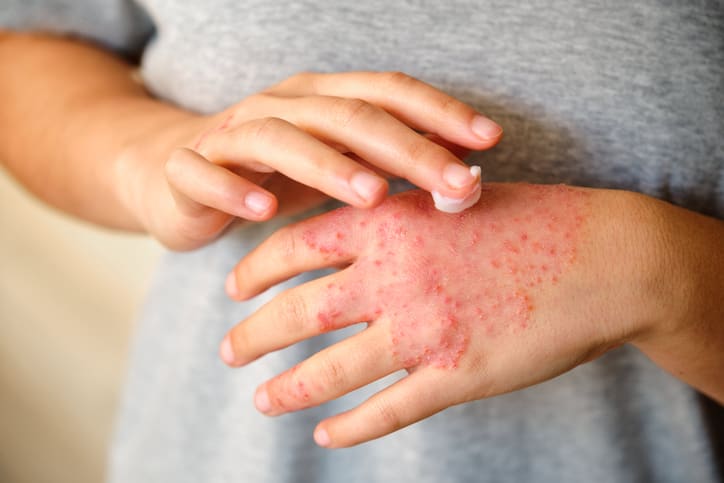
Two companion guidelines provide 41 evidence-based recommendations on treatment and prevention, along with 29 statements on comorbidity associations in patients under 18
To provide updated guidelines for the treatment and prevention of pediatric atopic dermatitis (AD), including primary prevention and awareness of associated comorbidities.
Approach:
Key Findings:
Moisturizers are foundational and effective in reducing disease severity.
Topical calcineurin inhibitors are recommended for both active treatment and maintenance.
Dupilumab is strongly recommended for patients as young as 6 months.
Regular moisturizing before age 2 may reduce AD development in high-risk infants.
AD is associated with several comorbidities, including allergic rhinitis and asthma.
Interpretation:
The guidelines reflect a comprehensive approach to managing pediatric AD, emphasizing both treatment and prevention while acknowledging the need for individualized care.
Limitations:
Short trial durations limit long-term safety and efficacy conclusions.
Lack of pediatric-specific data for older systemic agents, which may affect treatment decisions.
Cost remains a barrier for newer biologic and targeted therapies.
Conclusion:
The guidelines highlight the evolving treatment landscape for pediatric AD, emphasizing the importance of shared decision-making and individualized care in managing the condition.