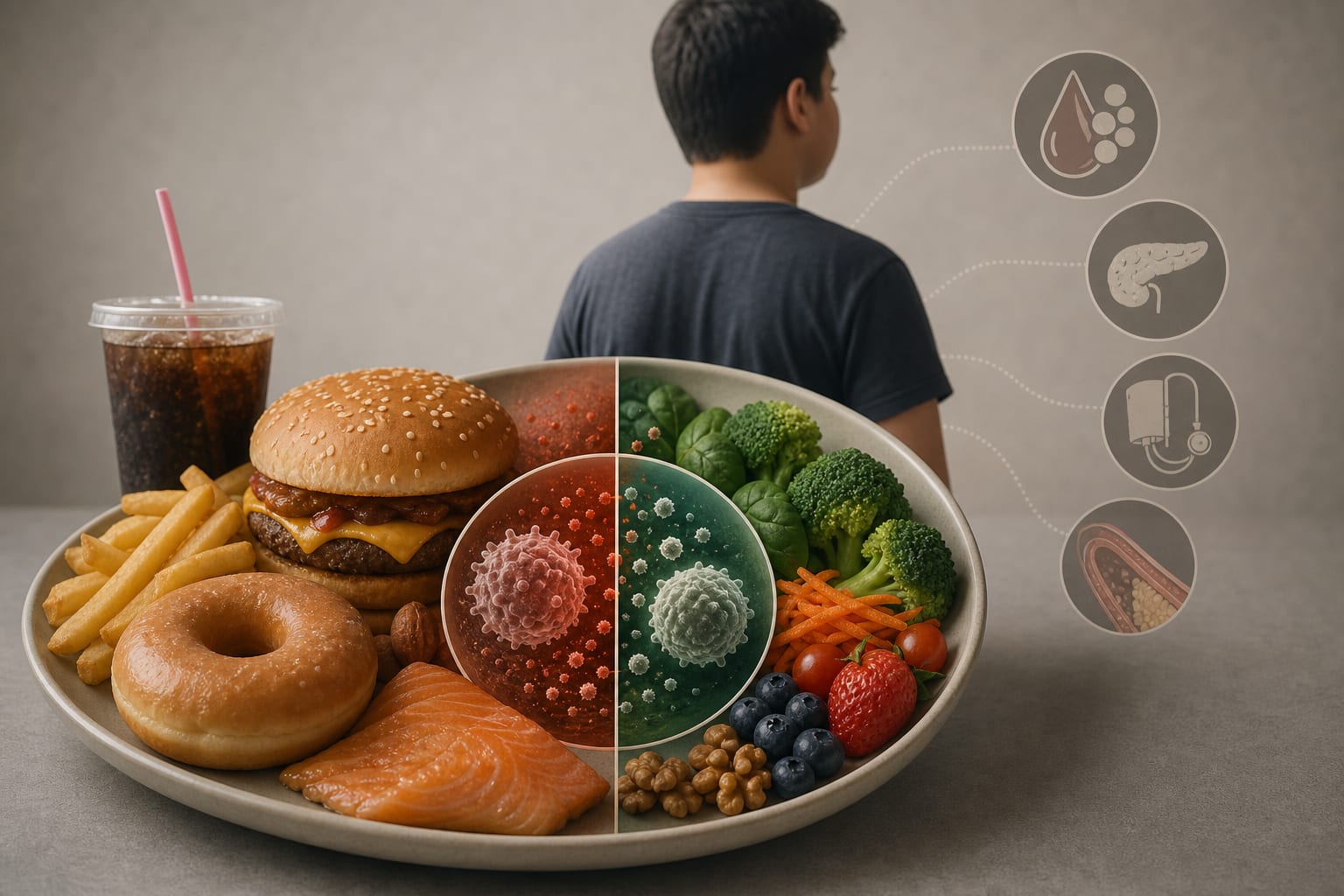
To evaluate the associations between the Dietary Inflammatory Index (DII) and Children's Dietary Inflammatory Index (C-DII) and cardiometabolic risk indicators in school-aged adolescents from a major Brazilian city.
Approach:
Study Design: Cross-sectional study involving 552 adolescents aged 10 to 17 years from public state schools in Salvador, Bahia, Brazil.
Data Collection: Collected socioeconomic, demographic, lifestyle, clinical, anthropometric, and dietary intake data by a trained research team between 2016 and 2018.
Key Findings:
The DII and C-DII are tools to quantify dietary inflammatory potential based on nutrient intake.
The C-DII was adapted for children and adolescents but still relies on an adult-based database.
This study is the first to apply the C-DII in Brazilian adolescents.
Interpretation:
Limitations:
The C-DII is based on an adult dietary database, which may affect its validity in children.
Limited studies validating the C-DII across different age groups and cultural contexts may impact the findings.
Conclusion:
The study provides a pioneering assessment of the C-DII in Brazilian adolescents, emphasizing the importance of dietary factors in cardiometabolic health during adolescence.
by Luana de Oliveira Leite, Mônica Leila Portela de Santana, Nadjane Ferreira Damascena, Jacqueline Costa Dias Pitangueira, Priscila Ribas de Farias Costa