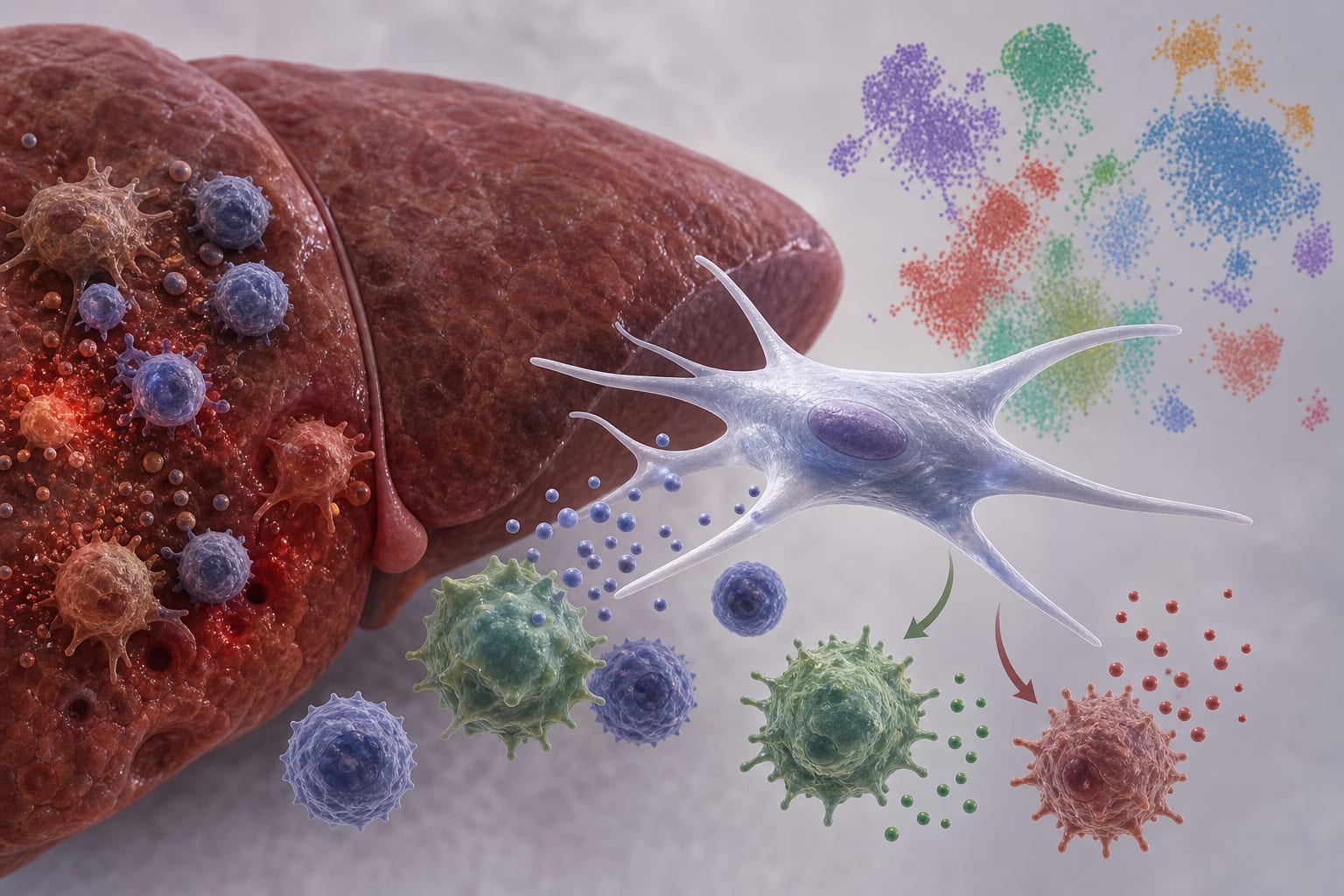
To investigate the role of mesenchymal stem cells (MSCs) in modifying the hepatic immune microenvironment during Concanavalin A (ConA)-induced acute hepatitis.
MSC treatment altered the composition of immune cells, decreasing MDSCs, Tregs, NK cells, and proliferating CD8+ T cells while increasing monocyte-derived macrophages (MoMFs).
MoMFs exhibited diverse states linked to inflammatory and tissue-remodeling pathways.
Cell–cell communication analysis identified complement-related signaling as a key module influencing MDSCs and NK cells.
Interpretation:
MSCs improve acute immune-driven liver damage by selectively restructuring the hepatic immune microenvironment, particularly enhancing MoMFs and modulating complement signaling pathways.
Limitations:
The study primarily focuses on a murine model, which may not fully replicate human conditions.
Further research is needed to explore long-term effects and clinical applicability of MSC therapy.
Conclusion:
MSCs provide a promising therapeutic strategy for acute immune-mediated liver injury by modulating the immune landscape and enhancing macrophage function, particularly through complement-related interactions.