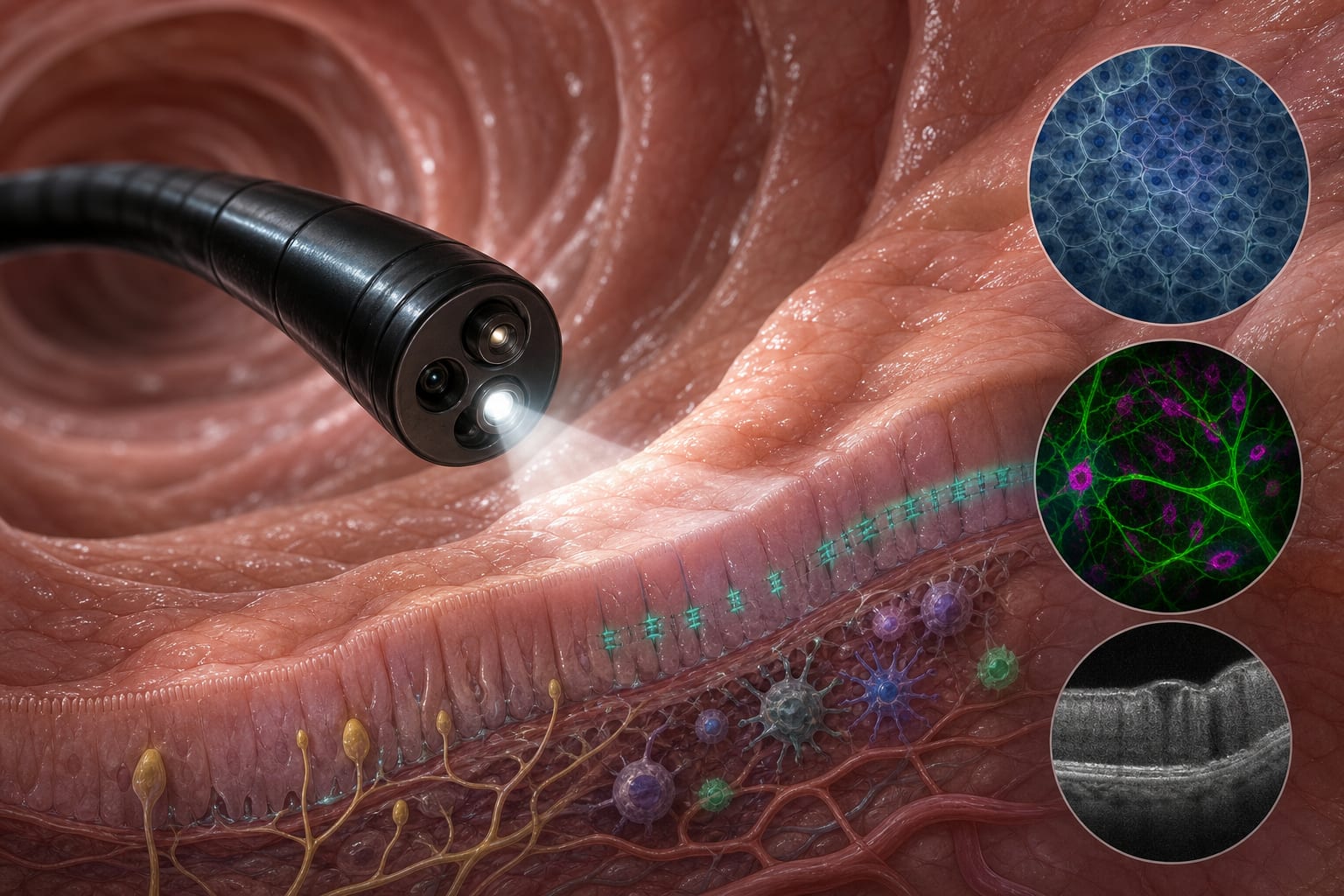
To propose a fundamental shift in the role of gastrointestinal endoscopy from a tool for excluding organic pathology to a platform for dynamic physiological assessment in functional gastrointestinal disorders, addressing the limitations of current practices.
Approach:
Redefining Endoscopy: Endoscopy is redefined as an active intraluminal physiological probing platform that captures motility patterns, barrier competence, and sensory thresholds in real-time.
Integration of Technologies: Emerging technologies such as confocal laser endomicroscopy and high-resolution manometry are integrated into endoscopy to enhance diagnostic capabilities.
Key Findings:
Current endoscopic practices primarily serve to exclude organic pathology, leading to diagnostic delays and patient distress.
Functional gastrointestinal disorders involve a complex interplay of motility, hypersensitivity, barrier function, immune activation, and microbiota dysbiosis.
Conventional white-light endoscopy lacks the capacity to visualize core pathophysiological processes, necessitating advanced imaging techniques.
The biological events that drive symptom generation remain categorically invisible to conventional visualization.
Interpretation:
A shift towards functional endoscopy could bridge the gap between structural and functional disease.
Limitations:
The proposed functional endoscopy framework requires further validation and integration into clinical practice.
Existing technologies may not yet be widely available or standardized across clinical settings.
Conclusion:
Functional endoscopy represents a multidimensional approach to diagnosing disorders of gut-brain interaction, moving beyond traditional morphological assessments.