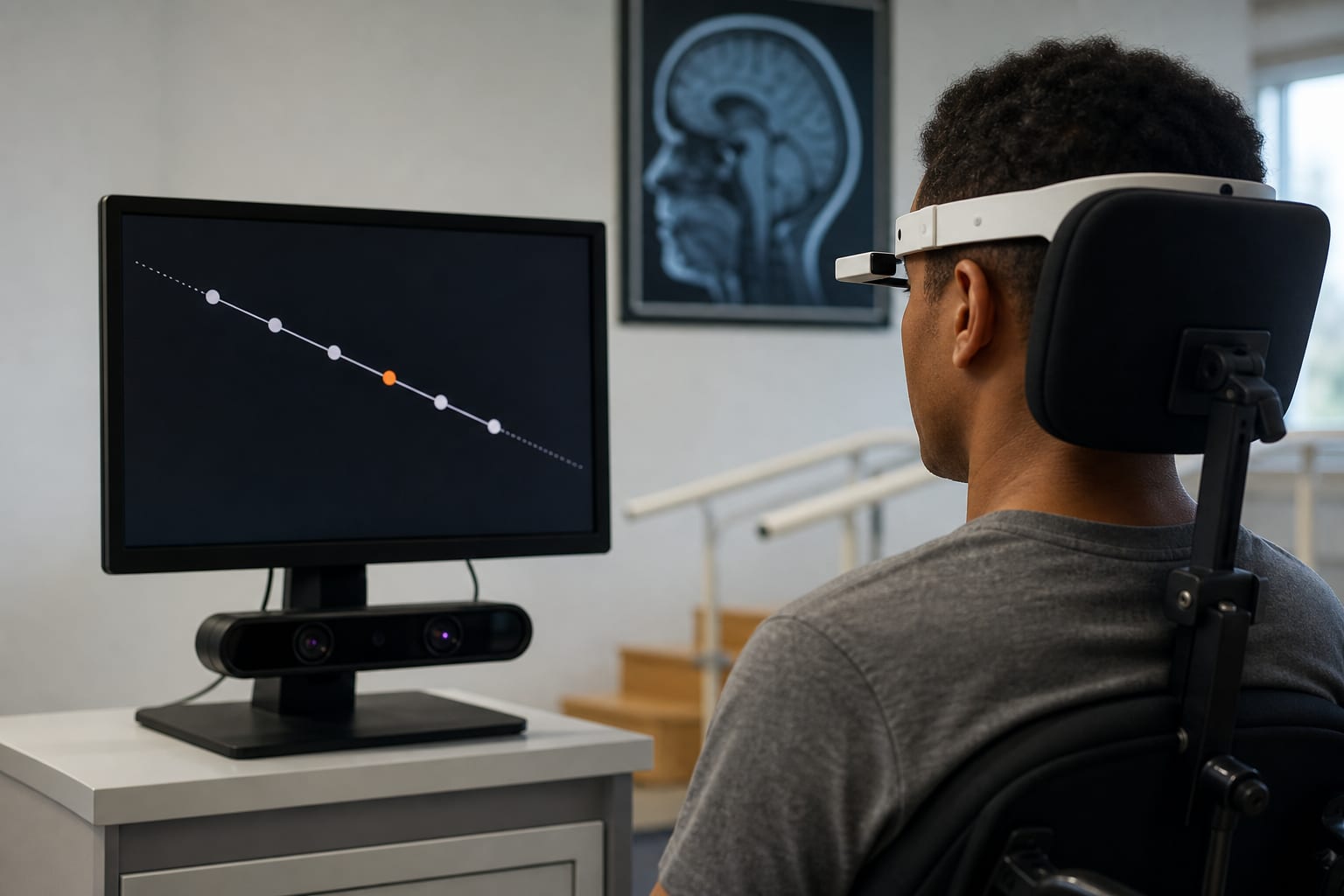
To assess oculomotor dysfunction in TBI patients using a bedside eye-tracking paradigm and its correlation with functional status during rehabilitation.
Approach:
Study Design: A bedside, head-free eye-tracking paradigm was used to evaluate oculomotor indices in 30 TBI patients undergoing inpatient rehabilitation and 30 age-matched controls.
Oculomotor Indices: Multiple indices were extracted, including saccadic pursuit, tracking deviation under occlusion, initial tracking speed, initial catch-up saccade latency, pupil response, and vergence instability.
Key Findings:
TBI patients showed widespread deficits in oculomotor indices compared to controls (AUC = 0.71-0.84).
Oculomotor measures correlated significantly with functional status as indexed by the Functional Independence Measure (R = 0.39-0.77, p < 0.001).
No association was found between oculomotor measures and initial injury severity as indexed by the Glasgow Coma Scale.
Interpretation:
The findings suggest that TBI disrupts multiple components of the oculomotor system, indicating the potential for eye-tracking assessments to evaluate current functional status during rehabilitation.
Limitations:
The study design is observational, limiting causal interpretations of the findings.
Initial Glasgow Coma Scale scores do not reflect the patients' cognitive status during testing.
Conclusion:
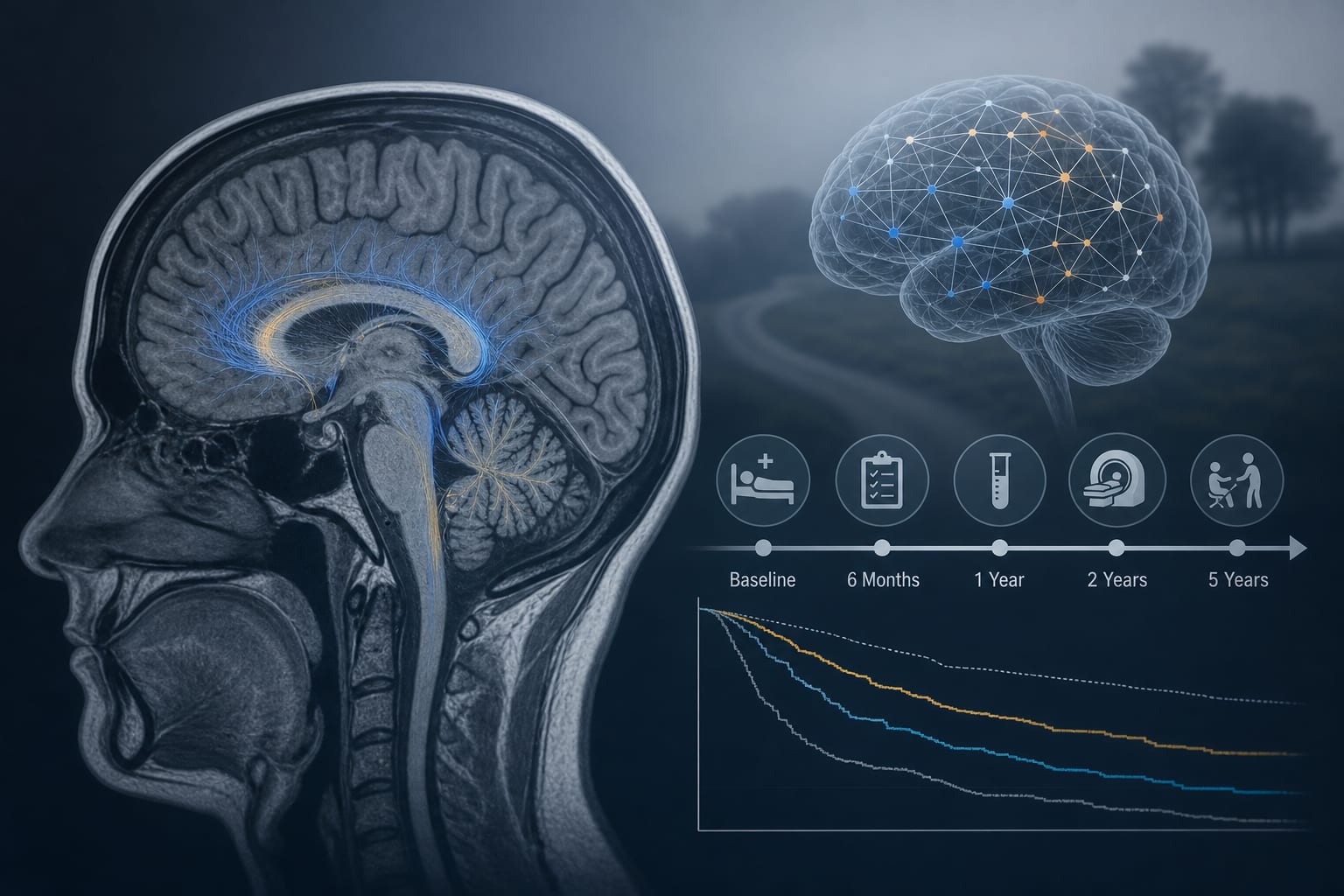
The study supports the use of brief eye-tracking assessments as a quantitative approach for evaluating functional status in TBI, with potential for longitudinal monitoring.